
What the Dog Saw (2009)
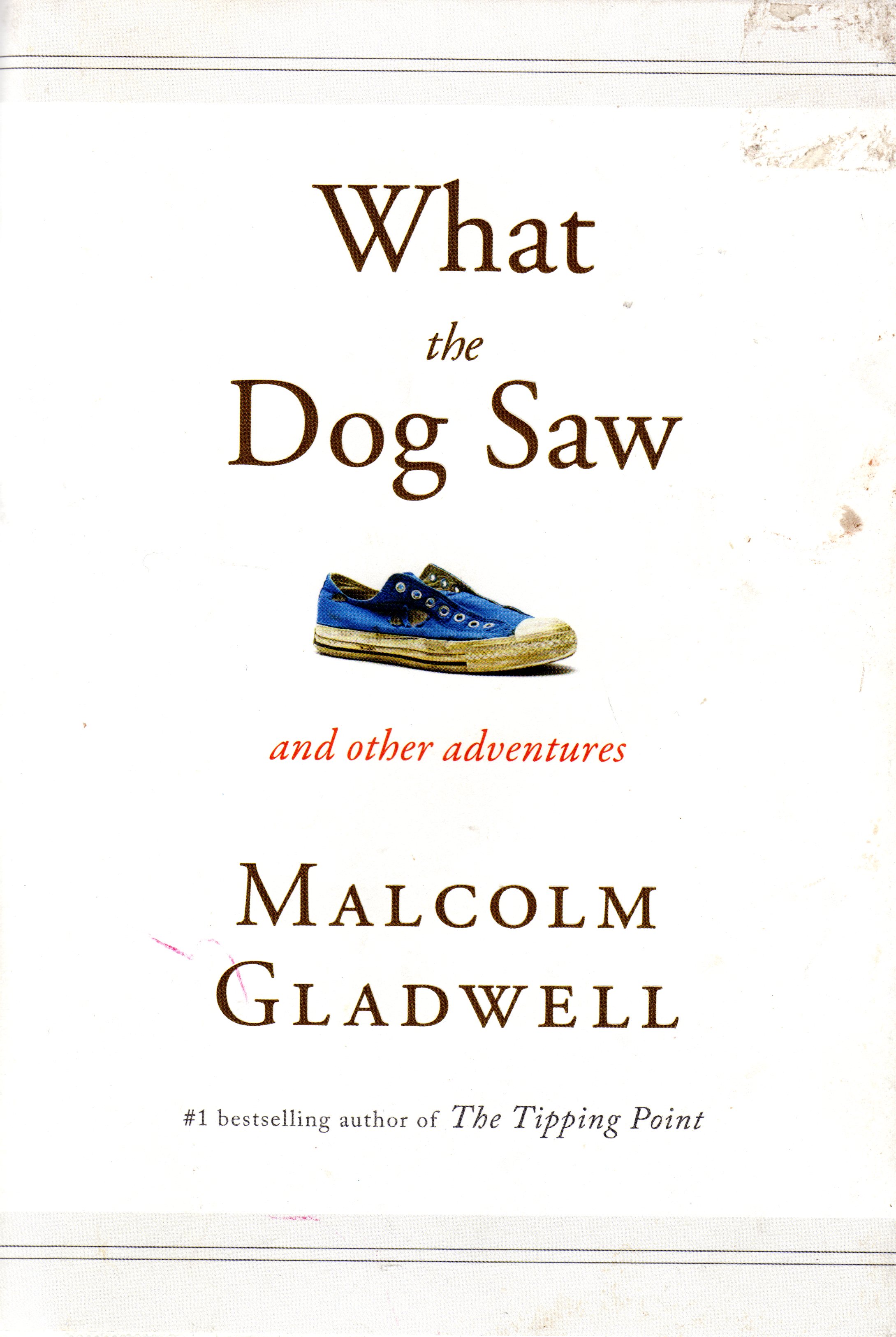
After my wife’s cousin’s third husband died, I was offered some of his books to keep (and read). This one was in the mix, but I hadn’t got around to it until this week, while we were away for a few days.
I have to admit to skipping a couple of chapters, mainly because they didn’t interest me, but most of them did (interest me), so let’s review them:
Part One: Obsessives, Pioneers, and Other Varieties of Minor Genius
The Pitchman: Ron Popeil and the Conquest of the American Kitchen. This is the story of how Ronco became a leader in its field of machines to make chopping, dicing and cooking easier for the consumer.
The Ketchup Conundrum: Mustard Now Comes in Dozens of Varieties, Why Has Ketchup Stayed the Same? (I skipped this one.)
Blowing Up: How Nassim Taleb Turned the Inevitability of Disaster into an Investment Strategy. The events of September 11 (and later, the financial crisis of 2008-2009) made Taleb a very rich man.
True Colors: Hair Dye and the Hidden History of Postwar America. (I skipped this one, too.)
John Rock’s Error: What the Inventor of the Birth Control Pill Didn’t Know About Women’s Health. A strict Roman Catholic, Rock saw the pill as a natural way of controlling women’s periods so that they would never have to become pregnant (if they didn’t want to), but he forced them to suffer more during their monthly flow than was essentially necessary. Pregnancy and breastfeeding were more ‘natural’.
What the Dog Saw: Cesar Millan and the Movements of Mastery. Earlier this week, we watched a recent episode of “Better Human Better Dog” which demonstrated his training methods with the owners of dogs. He is masterful, but flawed: he has more regard for dogs than human beings.
Part Two: Theories, Predictions, and Diagnosis
Open Secrets: Enron, Intelligence, and the Perils of Too Much Information. Evidently, Enron used an accounting trick of writing earnings of their future profits into their annual reports which fooled a lot of people, including themselves. Their annual tax returns showed that they lost money for years before their collapse.
Million-Dollar Murray: Why Problems like Homelessness May Be Easier to Solve Than to Manage. These days, this is a hot topic. But most people, especially in the States, don’t realize that having homeless people visit shelters and soup kitchens is actually more expensive for the taxpayer than giving them housing and the wherewithal to thrive financially. When will we aver learn?
The Picture Problem: Mammography, Air Power, and the Limits of Looking. Equating Scud missile reconnaissance (from the Gulf War) and looking for cancer in women’s breasts seems a little disjointed, but it makes sense in the bigger scheme of things. The viewer has to be aware that something may be missed.
Something Borrowed: Should a Charge of Plagiarism Ruin Your Life? We all do it, borrowing ideas from other people and identifying it as our own. I’m doing it right now, in this post. But acknowledging the source of the ideas is the best protection from a charge of plagiarism.
Connecting the Dots: The Paradoxes of Intelligence Reform. Nine-eleven sits heavy on everyone’s mind and the subsequent tightening of focus on Muslim extremists made the obvious connection for the underground bombings in London in 2005 a little muddied, because the extremists just chose different nationalities to carry out the attacks.
The Art of Failure: Why Some People Choke and Others Panic. This one seems a no-brainer, because we’ve all seen athletes do it in clutch play situations, especially at Wimbledon. Is it the audience, the situation or the person, themselves? Or a combination of the three? We’ve all been there, right?
Blowup: Who Can Be Blamed for a Disaster like the Challenger Explosion? No One, and We’d Better Get Used to It. The public demand answers when something goes wrong. There is a public enquiry, suggestions to fix the problem are made, and everyone hopes that we will remove the unknown cause of the disaster, because we’ve done our 20/20 hindsight of the problems. Not so: we all have a built-in acceptance of ‘risk’; just ask a speeding motorist.
Part Three: Personality, Character, and Intelligence
Late Bloomers: Why Do We Equate Genius with Precocity? Picasso was considered a great artist from the ‘get-go”. Cezanne didn’t succeed until very late in life. Which one was the better artist? Hmm.
Most Likely to Succeed: How Do We Hire When We Can’t Tell Who’s Right for the Job? Everyone who has ever been the hirer of personnel has this dilemma. Here, the focus on NFL draft picks demonstrates how one cannot always predict who will do well on the job and who won’t. Sometimes, only your ‘gut’ tells you.
Dangerous Minds: Criminal Profiling Made Easy. It’s a precarious position to be in, profiling criminals. They say you have to get inside the mind of the person, but is that all there is? Mediums and psychics have just as much chance of zeroing in on the perpetrator as the FBI profiler. There are more misses than hits.
The Talent Myth: Are Smart People Overrated? It’s the perennial question, isn’t it? The theory is that ordinary folk are a better fit for most companies because they are willing to do the work. Geniuses get paid extraordinary amounts of money just to keep them, but do they add value to the finished product?
The New-Boy Network: What Do Job Interviews Really Tell Us? This seems an extension of the Most Likely to Succeed chapter. Given a choice of two employers, which one is the better fit? From a perspective employee point of view, this is always going to be a matter of trusting your ‘gut’ again.
Troublemakers: What Pit Bulls Teach Us About Crime. The answer? We generalize people into groups, just so we can pretend that we know what we’re doing. Lots of dogs bite people, but pit bulls are the species that everyone decides to make the scapegoat. In doing so, we feel we’ve identified and eliminated the problem. But have we, really?
Ditto.


 cdsmiller17