
Nineteenth Century Close Encounters
You know I can’t resist historical events, especially when they involve close encounters of some kind.
At 3:15 on the morning of 4 October 1871, an undertaker named William Robert Loosley awoke and took a walk in his garden in the town of High Wycombe, Buckinghamshire, England. Mr. Loosley recorded subsequent events in a manuscript that was locked away until 1941. The ms. has been authenticated by British antiquarians. It probably represents an example of a “probe” from some sort of nonhuman intelligence.
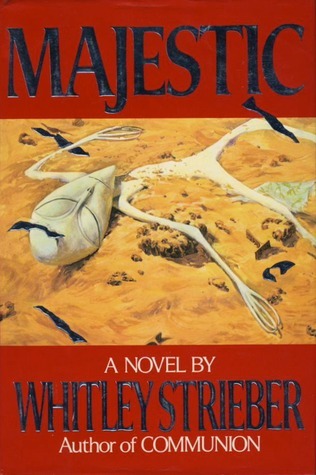
Strieber, Whitley. Majestic (p. 45). Tor Books. Kindle Edition.
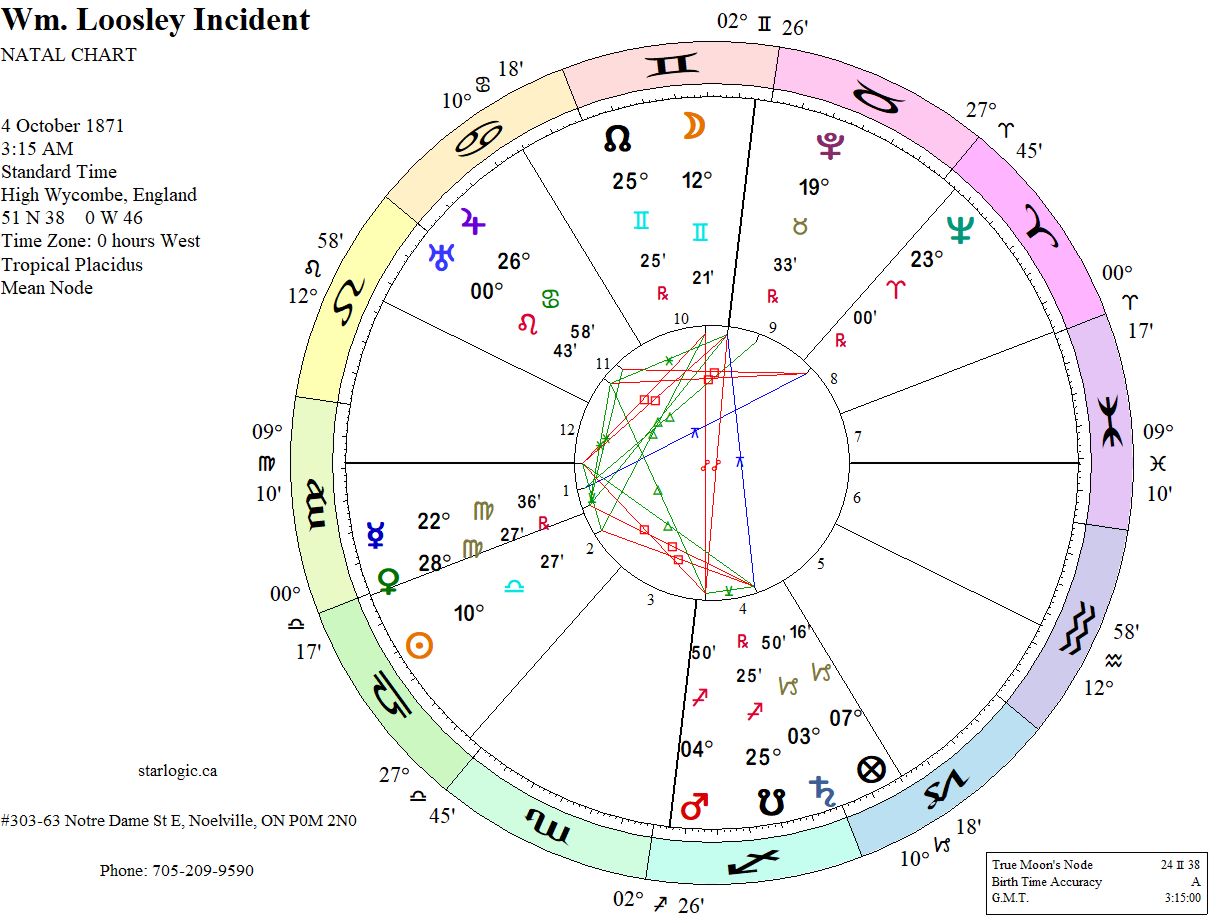
There are two inconjuncts: Mercury and Neptune; and Saturn and the Midheaven. They may become important later when we look at the second event.
The first seemingly related case of disappearance in U.S. history took place on 23 September 1880 near the town of Gallatin, Tennessee. At approximately three-thirty on that sunny afternoon, Mr. David Lang, a farmer, dematerialized in front of five witnesses, including his wife, his two children, his brother-in-law and a local judge.
Strieber, Whitley. Majestic (pp. 46-47). Tor Books. Kindle Edition.
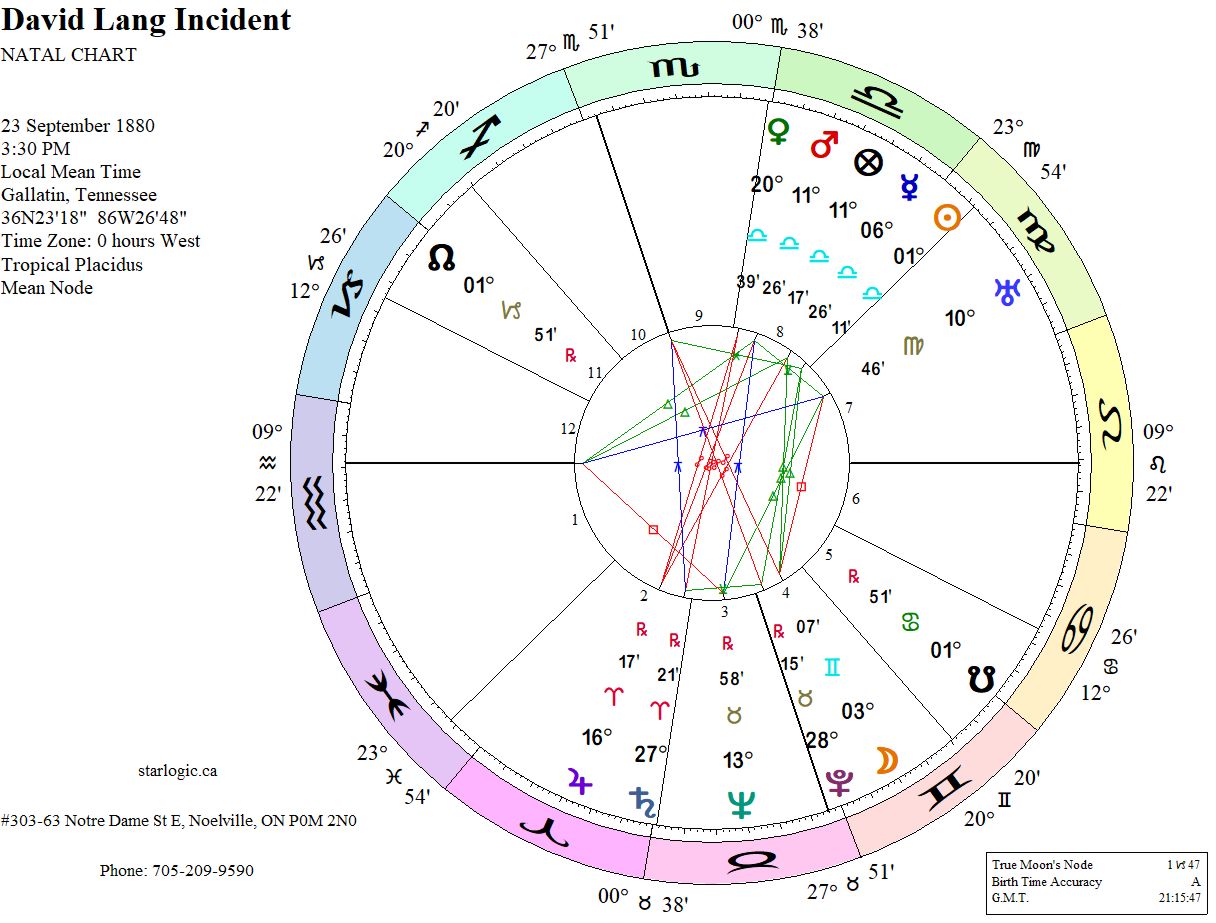
This time there are three inconjunct: Mars and Neptune; Saturn and the Midheaven (again); and Uranus and the Ascendant. So the commonality is that Saturn, Neptune and the Midheaven are involved in both events. Hmm.
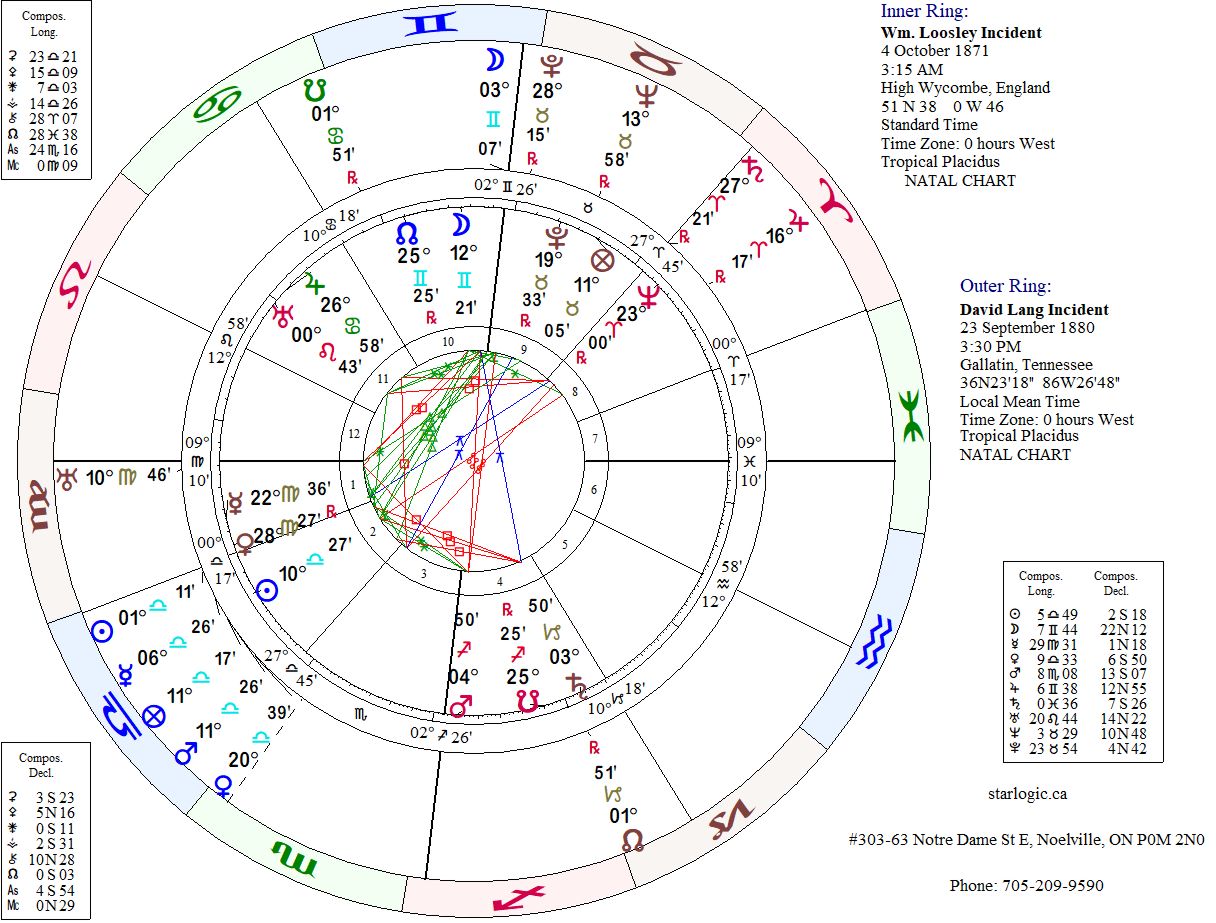
Combining the charts yields some interesting links. The initial chart’s Ascendant is conjunct the second’s Uranus. There are three interactive inconjuncts. The second’s Moon is inconjunct the initial chart’s Saturn, for example. At the same time, the initial chart’s Saturn is conjunct the second’s North Node.
What does it all mean? I honestly don’t know. What do you think?


