My Favourite Poet: Gordon Lightfoot

Image

A native of Simcoe County, Gordon Lightfoot began his singing career by performing in and around Orillia. After remaining obscure for many years, he began to gain the recognition he deserved when the folk group, Peter, Paul and Mary, recorded one of his many (and popular) songs, (That’s what you get) For Lovin’ Me. His ‘rise to fame’ came quickly, following that recording, because, when he realized how popular his songs could be, he began recording them himself. Finally, after two best-selling records, The Way I Feel and Black Day in July, the recording industry and audiences everywhere in Canada proclaimed him to be our best and most original folksinger in recent years [1969].

When I first heard Gordon in person two years ago [1967] at North’s presentation of him, I was immensely impressed by his warm and touching imagery, his vivid histories, and his strongly sincere statements concerning life, love and loneliness.

These aspects of his poetry are always very prevalent as can be shown with reference to the song The Way I Feel. In this song, he compares a young bird to a woman and a tree to a young man’s heart, pointing out that a woman remains in a man’s heart, in warmth and comfort, for a short time, and then, she flies off, assumedly to another man’s heart. The words and music of this song are so charged with emotion that one cannot help feeling the sorrow and longing of the final five lines when he wishes that he had wings, too, so that he could follow her.

Another song similar to The Way I Feel is Home from the Forest, in which a lonely old man finally finds happiness in memories during his last hours on this cold planet. All the way through the song, Gordon gives the impression that he feels there are too many neglected people in this world just because no one takes the time to be friendly with them; it is as if he was giving an indirect social comment. This is a very realistic song, and again, the images are very warmly (and coldly) human.

His histories, like his love and loneliness songs, bring Gordon’s ideas and feelings very close to the heart. One of these songs, The Canadian Railroad Trilogy, makes history live again in one’s heart and mind; this is especially true when thought of in terms of the navvies’ part of the song, where they sing about their loved-ones, their work and their living conditions. Throughout the song, a sense of excitement can be felt as the railway men had felt it, and it is this fact that makes this song so popular and it remains the most significant song Gordon has ever written.

In conclusion, I should like to add that Gordon typifies the kind of poet I should like to become, for his songs are realistically clear, emotionally warm, and full of idealistic imagery. This is how I want my poems to be. Therefore, for this reason and all the reasons I have set down above, Gordon Lightfoot is my favourite poet for all time. (This was an essay I wrote in Grade 13 – I got an A+.)


Solo     (to Gordon Lightfoot)


Alone,

On his platform of existence,

In the harsh spotlight of cold-hearted criticism,

He shelters his soul the only way he can,

By building a melodic fence

Of barbed words and witticism.


Though prone,

He seems only a little tense,

As his soft tones circumvent the alienism

To show that he’s just like any other man,

Trying to make some logic, sense

Of his blunt marital schism.


His own,

He’s gone through personal penance,

Still wondering why all that he now has left is him,

Not knowing that, perhaps, the chorus he ran

Has warmed his captive audience

To the thought that they would miss him.

Posted in manuscripts, poetry | Tagged , , | 2 Comments

Haiku

Haiku poetry is a style that originated in Japan. According to Wikipedia, it is typically characterized by three qualities:

  • The essence of haiku is “cutting” (kiru). This is often represented by the juxtaposition of two images or ideas and a kireji (“cutting word”) between them, a kind of verbal punctuation mark which signals the moment of separation and colors the manner in which the juxtaposed elements are related.
  • Traditional haiku consist of 17 on (also known as morae), in three phrases of 5, 7 and 5 on respectively.
  • A kigo (seasonal reference), usually drawn from a saijiki, an extensive but defined list of such words.

In my attempts to write Haiku, I chose (in the main) to highlight personal elements…


Really


Your fantasy world

Clashes with reality

Like night with the sun.


Blind Lovers


Let’s cling together

In the night when blind lovers’

Hands become our sight.


Potty Cat


Legally, a cat

Can get high on nip; so why,

Smoking pot, can’t I?


Touch Me


I ache for your touch

As the dry, barren ground longs

For cool autumn rain.


I think my best Haiku is one that tried to incorporate all five senses:


Insincere Silence


The summer’s cities

Now stink of sweltering smog

That smothers small sounds.

Image

Posted in manuscripts, poetry | Tagged | 2 Comments

Spiritus Sanctus

In my series of sonnets called Spiritus Sanctus, I wrote several poems that would act as reminders of some spiritual truths I had absorbed over the years. For example, the following poem highlights Jesus` sayings on the cross. 

Seven Last Words


The day that Jesus died, he spoke his mind:

Hearing the crowd taunt and jeer, prayed, `Forgive`;

Even the thieves argued about their bind:

Consoling, gave one `Paradise` to live;

Remembering responsibilities,

Unto his mother, a son to `behold`.

Concerned with his body, now ill-at-ease

In the blinding heat, he `thirst` for the cold.

Forsaken, feeling utterly alone,

Inclined his head upward and cried out, `Why?`

Xylem for Zion, he paid, he atoned

In our stead, so he let his `spirit` fly.

Outwardly broken, his strength diminished,

Now that it’s over, it has been `finished!`

Sonnet V


When I first realized that the start of Genesis was echoed in the beginning of John’s gospel in the New Testament, I wrote the following poem.

In-beginning


A beginning, we are told, is the start:

Recognizing the initial fiat

Can be more confusing than the lead cart

Horses must follow; amen — so be it.

Either the word be said or all hidden:

Truths only halfway told lead to defeat,

Yet, in Genesis 1:1, who’s kidding`…?

Put wisdom into the principle seat.

In beginning was the Word, so says John:

Could this be our clue to dig deeper still

And make sense of the past, long gone?

Lend your spiritual ear and get your fill:

Listen to the sound current of our earth,

You will know God’s First Breath gave us our birth.

Sonnet VII


The Kabbalah is Jewish esoteric knowledge wrapped up in interesting concepts. Metempsychosis is essentially an explanation for reincarnation. See the following:

Gilgul


Moses and Jethro were Abel and Cain;

Eve and Adam, David and Bathsheba;

The Serpent became known as Uriah;

Even Job’s Abraham’s father again.

Metempsychosis was used to explain

Perplexing problems in the Kabbalah:

Some said that Adam, David, Messiah

Yielded ADaM’s name as from the same vein.

Commonly, reincarnation was used,

Heresy to some, sacred to others,

Only the Gnostics really knew for sure.

Since the 5th century it’s been abused

In Catholics, erased by the Fathers;

Saved by the Perfect: Humanity’s Cure!

Sonnet X


Finally, the similarity of the word phoenix with the name Sphinx got me wondering if there might be a connection. This is explored in the last poem.

Ancient Mysteries


According to ancient legends the

Phoenix was the picture of perfection.

He lived his life in the right direction,

Outlined by the hero, Zarathustra.

Eventually, Ahura Mazda

Nominated him for resurrection

In hopes he could be, by introspection,

Xebec, for us to sail through our karma.

Suppose that the Egyptians made the Sphinx,

Purposely hiding its meaning from us,

Hoping the mystery would make us stand,

In retrospect, before it, as it sinks

Necroscopic into our unconscious,

Xenolith upon the hot desert sand.

Sonnet XIV

Image

Posted in manuscripts, poetry | Tagged , , , , | 8 Comments

My Mother

Mom

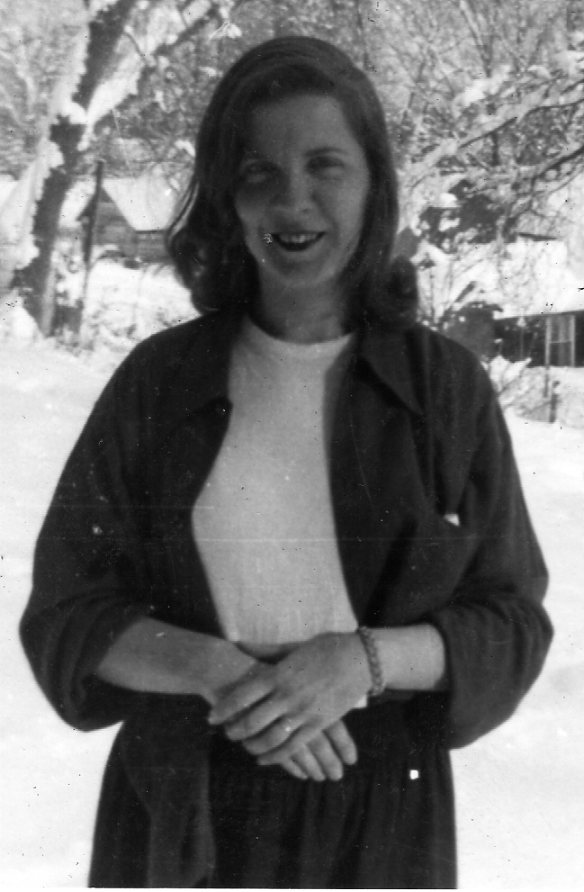
Now here is a woman that gave me the very foundation of my life. (Don’t they all?) I’ve spent the better part of seven years researching her family tree, and my father’s family tree, on ancestry.ca. She didn’t know her parents; I didn’t know my father’s family. We felt like lost souls together.

She was also the inspiration for a couple of poems.


Treading Shallow Water

I’ve often wished to be quite young again,

To view most things the way a child would see

His life, through eyes whose years were only three,

When all seemed simple, warm, not yet insane.


I’d sit inside my home and watch the rain

Come dripping through the leaves upon the tree,

And know that, on my Mother’s aproned knee,

The world was soft, secure, and free from pain.


But all too soon I ‘wakened from my dreams,

When harsh realities broke down the door,

As tears began to flow in heated streams,

Which quickly swept my feet from off the floor,

And flooded out my steadfast, thoughtful schemes,

By rusting through the iron suit I wore.


Lonely Times Past


Most times in my life I’ve looked to the past,

Although there’ll be better days ahead;

Right now all things seem better left unsaid,

Yet I’ve had my doubts whether I can last.

.

Just the other day, all the time slipped past

Ev’ry good intention I had meant instead,

As if my new words must be left unread

Now that events seem to happen so fast.

.

Today, the one day I live at a time,

Has had more meaning for me with my life

Of new experiences, so unknown.

Reminds me of the time I tried to climb

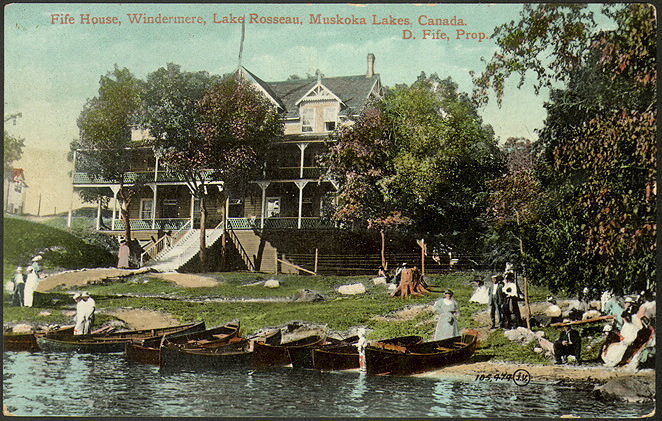
Poplar trees growing near the House of Fife:

Especially of feeling so alone.


Image

These two poems were part of a series I wrote in 1975, the year I separated from my first wife, Judi, and my son, Derek. I think I was trying to recapture my childhood sense of family, even though that was fragmented even then.

Treading Shallow Water is a memory from my childhood before the age of 5, which is when my mom remarried. She was my security in the world, my buffer from the slings and arrows of later life. I have one particular multi-sensual memory which still takes me back clearly to that time before everything changed: she had a (hand-me-down) mink coat which I used to love snuggling into whenever she wore it. The fur was soft, the smell was clear; the vision of it is so locked into my memory bank that I can even recall the buttons on it. If I want to revisit the past, all I need to do is conjure up that image.

Lonely Times Past is actually a poem about the present, with flashbacks to a very traumatic incident in my youth. There were poplar trees all through Windermere, including the ones running along-side the Windermere House Garage. For purposes of the rhyme in this poem, I reference Fife House which was across the road from Windermere House, but the trees were actually the ones at the side of the manse property. I think one of our many cats, Patrick McCindy, (or it could have been Leonard, I’m not entirely sure now) got himself caught up one of the trees and meowed piteously to be rescued. Well, I attempted the rescue on my own, and discovered why poplar trees aren’t popular for climbing. After my failed attempt, Mom said, “Just leave him there, he’ll come down when he’s ready or when he gets hungry.” There is nothing more soul-destroying than thinking you can do something, trying to, and then failing. And, adding insult to injury, being told that you needn’t have bothered in the first place.

The acrostic for this poem was Mom’s name at that time. It was later that she discovered that her birth name was actually Edith Bryson.

She left this world in May 2003, after turning 80 the previous January. She spent the last 30 years of her life on a spiritual quest, and she has been my inspiration to do the same. I still think about her (as one does), and I think she still thinks about me. Bless.

pcr-1568

Posted in family, poetry | Tagged , , , | 4 Comments

Echoes: Reincarnation or Channelling?

Image

Like most students in high school, I endured whatever was thrown at me, knowing that by doing so I was furthering my education. One of the poems we were exposed to was The Tyger by William Blake. What made it different from other poems was that the poem was annotated, showing the changes that Blake made to the poem before it reached its final version. I’d never seen that before, but it struck me that poems don’t normally come out in a complete format, that they need tweaking, and sometimes the poet makes several changes to an individual line, phrase or word. That was an education.

However, The Tyger was the only Blake poem that I ever read, until sometime in 1994 (or later) when I ‘discovered’ his work. When I started reading him, it occurred to me that his poetic style had echoes in my own poetry. One of my own poems, in particular, stood out from the rest.

The White Wind

The White Wind whispered, “Death, disdain and cold,”

And, smothering with icy waves of snow,

The World, which now lay frozen in its hold,

It said, “The grass, again, may never grow.”


While standing stiffly on the barren ground,

The Trees, amid a cemetery air,

Kept looking for their leaves, which can’t be found

Because they’d long been crushed and buried there.


Like an inverted palisade of glass,

Protecting frosted windows made of light,

The Icicles withstood the rattling blast,

As windswept Sleet obscured Life from their sight.


Inside the house, in silence, chilled with woe,

A body lay: the dead child did not know.


I distinctly recall the writing of this one, because it seemed to come of its own accord, without prompting from me, and I did not rewrite it after it was done, which is unusual. In fact, I probably wasn’t fully aware of what had been written until I re-read it. The last two lines, in particular, struck me as very peculiar because they broached a subject I would not have discussed: the death of a child. I cried when I finished reading that.

Ice

My memory says that I wrote this poem in 1972. The image in my mind was of a house diagonally across the street from my first wife, Judi’s parents’ home on Margaret Street in Angus, Ontario. But overlaid was the memory of huge icicles that used to hang beside my bedroom window in Windermere, Muskoka. Winter in Ontario when I was growing up was quite the spectacle, and seemingly only matched by recent snowstorms.

But how was it similar to Blake?

Mad Song

By William Blake 1757–1827

The wild winds weep,

And the night is a-cold;

Come hither, Sleep,

And my griefs infold:

But lo! the morning peeps

Over the eastern steeps,

And the rustling birds of dawn

The earth do scorn.

Lo! to the vault

Of paved heaven,

With sorrow fraught

My notes are driven:

They strike the ear of night,

Make weep the eyes of day;

They make mad the roaring winds,

And with tempests play.

Like a fiend in a cloud

With howling woe,

After night I do croud,

And with night will go;

I turn my back to the east,

From whence comforts have increas’d;

For light doth seize my brain

With frantic pain.

Except for the first part, not much. But it turns out that the last lines are echoed in a rondeau[1] poem I wrote in 1975, when I was separating from my first wife, Judi.


My Life’s a Lie


My life’s a lie; I’ve lived in vain,

As if I were a drop of rain

Amongst the waters of the sea,

As if I were the smallest flea,

That burrowed in a lion’s mane.


From joys of life I did refrain,

My only feelings were disdain

For those who came too close to me:

My life’s a lie.


So as the streetlights slowly wane,

I’m waiting for a lonely train,

To leave the love I feel for thee,

As I become forever free;

A thought-filled pain stabs at my brain,

My life’s a lie.


Do you see what I mean? Echoes.


For years, I’ve pondered what this all could mean, and have really not been able to answer my own wonderings. Was I Blake reincarnated? Or did I channel him, somehow?

My Watercolour Landscape

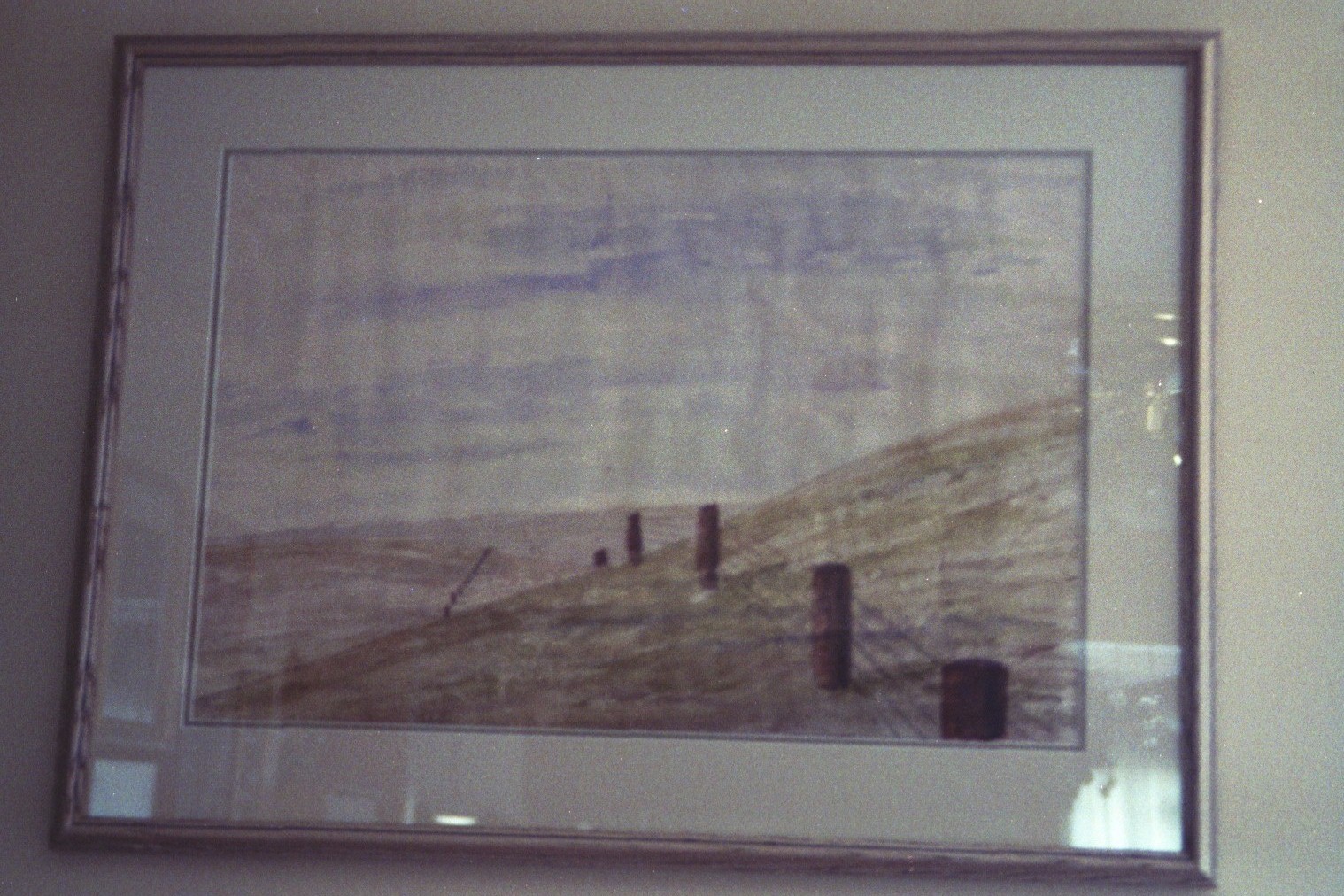
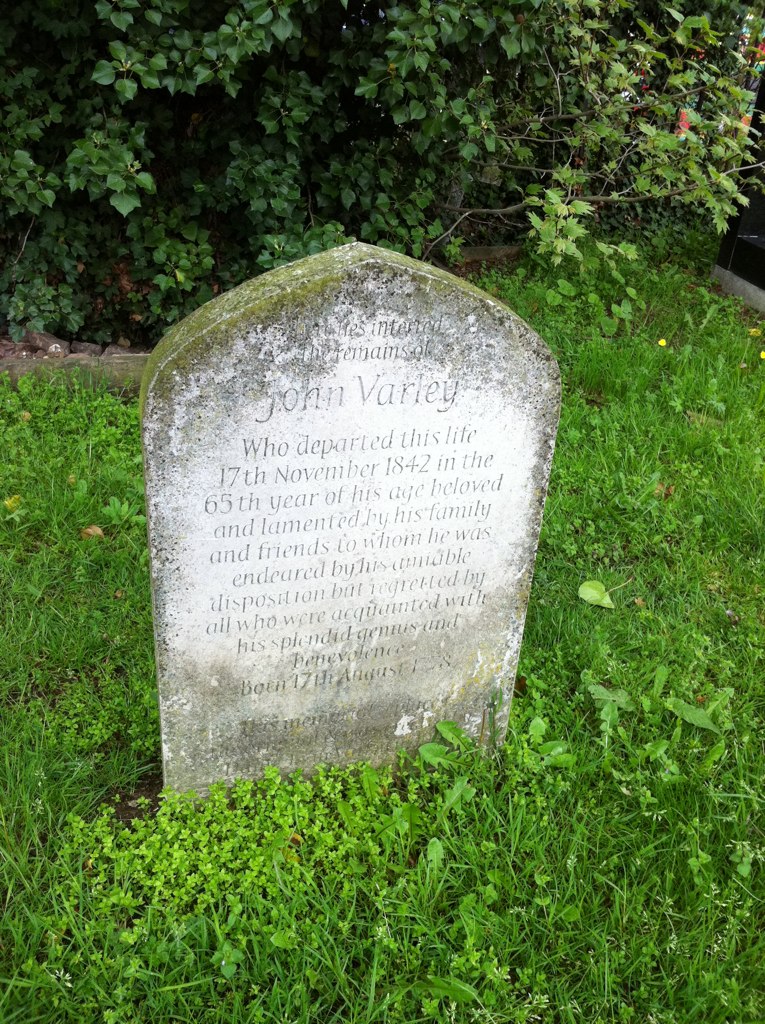
It was only in the past year or so that I began to see my connection to him was through one of his friends, John Varley. John Varley was an interesting character (aren’t they all?) who had a variety of occupations: he was a water colourist, an author, and, the most interesting role of all, an Astrologer. His claim to fame in astrological circles is that he may have been the one to link the (then) newly-discovered planet, Uranus, to Aquarius. Definitely, a man after my own heart.

John Varley

Again, I cannot confirm whether I am John Varley reincarnated, but at least it’s a better fit than William Blake.  At any rate, their friendship might be the means by which Blake’s poetry can subtly influence mine.

Over the years I’ve found many echoes between Blake’s work and my own, but I could never say that I am in the same league as one such as him. He was a seer, a maker of myths; I’m just an ordinary guy, trying to make sense of life as we know it.

The Fly

Little Fly,

Thy summer’s play

My thoughtless hand

Has brushed away.

Am not I

A fly like thee?

Or art not thou

A man like me?

For I dance

And drink, and sing,

Till some blind hand

Shall brush my wing.

If thought is life

And strength and breath

And the want

Of thought is death;

Then am I

A happy fly,

If I live,

Or if I die.

William Blake


An Afterthought

No thoughts had I of anything,

Or at least that’s what I thought.

I even thought I couldn’t think,

But now I think I never thought.


Another Afterthought

No ends of thoughts are thoughtless ends,

When to my mind for thoughts I send,

But all the thoughts that I can see

Are all the thoughts that endless be.


[1]  Perhaps the best-known English rondeau is the World War I poem, In Flanders Fields by John McCrae

Posted in manuscripts, poetry, spirituality | Tagged , , , | 8 Comments

Childhood

I’m sure we all have had one: that period of uncertainty that accompanies our earliest memories. Mine was filled with a lot of doubt, as the following sonnet attests.


Thunderclap

Listening in the dark for thunderclaps

Incites my mind to return to the past,

Grown dim by my memory: a time lapse

Hiding something startling — I am aghast!

Thoughts of childhood spring up like ghosts to haunt;

Nervous shudders flow up and shock my spine;

Involuntary flashes tease and taunt;

No, please, these fears can no longer be mine!

Gone were those days of panic and self-doubt,

Forever banished by the Adult “I”:

Listen, kid, you’ve got to cut this crud out

And realize the chance to risk, to try;

Silence, split by a glimpse of your spirit,

Heralds your soul’s clap of thunder — hear it!

Sonnet XX


Image

If seen from a very different point of view, one’s soul could be applauding how far one has come in life. But if we allow the child’s point of view to prevail, this can be a very scary thing. But not every memory is frightening.


Remember Christmas Days

Remember Christmas Days when we were young,

When Jack Pine’s boughs hung heavy, bright with lights,

While children braved the clear, yet frosty, nights

And meaning gave to each glad carol sung.


Inside the home, a warmth filled ev’ry lung,

As dreams of presents, cuddly, soft or bright,

Crept into youngsters’ minds, who’d, with delight,

Discover treasures once that day’s begun.


But now the time goes by, too fast for cheer,

While nearer to the season’s close we draw,

And soon the festive shopping will be done,

When, hopefully, the only sounds we’ll hear

Will be our children’s Christmas Day “hurrah’,

As all the World again becomes as one.


horse-drawn-sleigh-c-valais-tourism_x2g-600280


Posted in manuscripts, poetry | Tagged , , | 5 Comments

Dreaming

What is it that everyone does every night, week after week, year after year, but so few of us remember the next morning? What is it that creates a feeling of strangeness when we think about it? What is it that we would die without? Dreaming…

Dreaming appears to be a waste of valuable time, especially when one considers that almost a third of our lives is spent in the sleep state, but nothing could be further from the truth. After many years of experiments and behavioural studies, scientists have come to the conclusion that dreaming isn’t as capricious as it seems: its purpose is to keep us balanced and well-adjusted!

The idea that our brain is a computer can help explain what dreaming is about. When we sleep, the sensory input is shut down and the brain reviews the information received, storing that which is valuable and discarding what is superfluous to its needs. Dreaming is the reshuffling of the data by the brain into its memory banks. When we view the information in its disjointed form, we call it a dream, mainly because it is so different to our waking images.

This accounts for the reason why babies sleep so much when they are newborn: they are taking in so many new images that their brains need more time to sort the information out, and then store it for future use. This is also why older people need less dream time: daily, they see fewer new bits of information.

But what about visionary dreams? Where do they come from? It is entirely possible that those kinds of dreams are the equivalent of a program transmitted to a computer down a telephone line, just as if our brains were hooked up to a modem. Again, this may explain how babies seem to learn so much so quickly: they are being “instructed” from an outside agency. I can see it now: my “higher” Self wants to get a message to “little ol’ me” but because my computer is so busy all day long, he has to wait until it’s offline in order to send the instruction.

The clue to “decoding” the computer’s sorting and filing system is word association: we know the concept as “puns”. If you want to figure out what information is being worked on, find the common element in the visual images. For example, recently I took a rare break from normality, travelling by car through France on the way to stay with friends in Spain. On the second night I had the following dream:

A friend transported a man’s mother and myself to a concert and because he was a fan, he didn’t want payment of £28.50 which the meter had rung up — I wondered why he’s left the meter on.


Some of the elements are recognizable: transporting; costs of travel; concerted efforts. But the final two words provided the hint when I worked through them: meter on = Mitterrand (President of France [at the time, 1992]) = mit errant (wandering bug) = an urge to travel. My Sagittarian trait of keeping on the move was showing itself in a bit of a double-entendre.


Sometimes the images have to be examined over and over again to extract all that is contained within them, but one thing should be made as clear as possible: they need not be taken too seriously unless you are ignoring the information. That’s when nightmares occur…

You know the kind of dream I mean: you’re in a public place, without any clothes on, and you feel very vulnerable as the crowd stares and laughs at you. A dream like this, if not acknowledged, can grow progressively more embarrassing and upsetting, until it wakes you up out of a sound sleep, with your heart pounding and your bedclothes soaking wet. That’s when you have to acknowledge your problem: you may be unconsciously aware that you are feeling exposed in some area of your life, and only conscious thought will help you to see where this feeling of discomfort lies.

As a matter of fact, working through your dreams can prevent disease and dysfunction of the body, but above all, enjoy your dreaming — and have a good night’s sleep…

Image

Posted in spirituality | Tagged , , | 4 Comments