Holding You Close

Holding Hands


Holding you close, my soul’s at ease,

As if you’ve lifted Life’s disease

Of hunger, sorrow, and trying

To stop disaster and dying,

Especially when ‘vis-a-vis’.


Other ones I could never please,

Beating me down to humble knees;

But you feel so good, I’m flying,

Holding you close.


A sense of wonder oversees

My body, as my hand you squeeze;

My heart, with joy, feels like crying,

And ev’ry breath comes out sighing;

My land has overcome those seas,

Holding you close.


(written in 1978)

Posted in manuscripts, poetry | Tagged , | 1 Comment

Words

(The tune running through my head when I wrote this poem was “If” by Bread – see below)

Words


If words were all I had to use,

No one could comprehend,

How glad I am that I can choose

Some time, with you, to spend.

The time goes by, without a word,

As if it shouldn’t stay;

It’s just as if we’d never heard

What other people say.

And if I seem a little quiet,

I am smothering the riot

In my soul.

But words are not the only way

To show you that I care;

So if I love you one more day,

I hope you’ll find that fair:

Cause time has such a cruel streak,

When tearing souls apart;

But you will never feel as weak

With me, within your heart.

(written in 1975)

Posted in manuscripts, poetry | Tagged , | 1 Comment

The Tod of Mod

trumpFree_04


The superficial thinker

Is spreading his pseudodox;

The sneaky little stinker

Diseases hearts with his talks;

He believes in nothing

But making money, hand over fist;

He believes in nothing, but nothing,

He’s a well-known atheist:

He’s the Tod of Mod.


He thinks he leads a normal life,

Just like ev’ryone else;

But no one has his strife,

Nor do they have his Hells;

Any belief is a crime,

But crime is not a belief;

He needs relief from time,

But has no time for relief:

He’s the Tod of Mod.


He thinks he’s outsmarted them all

With ev’ry trick of the trade;

Unmindful of pride before the fall,

He’s sure he has it made;

He lives for himself,

But also alone;

He lives on a shelf

In someone else’s home:


He may be the Tod of Mod

But he’s forgotten about God.


(written in 1968)

Posted in manuscripts, poetry | Tagged , | 4 Comments

Water Works

amy

Amy


Ask me what it’s like to help raise

My mother: you have to show her

You care for her, and give her praise.


Easy you say? Have you ever

Listened to grown-ups who can talk

Incessantly about things from

Zebra to alphabet, yet balk

At a question like, “Where’s my thumb?”

But you can’t blame them for trying

Ev’ry trick in the book to stop

The flow of thoughts which I’m sighing:

How? When? Who? Why? And where’s the top?


Before I can sneak a query

Under Mum’s conversing with Chris,

Nicely must I climb her weary

Knee and offer her a wet kiss;

Else I won’t get something to drink,

Regardless of what you might think.


(written in 1978)

Posted in family, manuscripts, poetry | Tagged , , | Leave a comment

Despair

Despair


Where is the hope

That once had lived

In the heart

Of the shallow hill?

Has it sunk

Below the muddy mire

Of the lowest hole,

Or risen above

The stormy waters

Of the bleak sky?


How can I cope

With this withering sieve,

For my part

Is so hollow, still?

Must I flunk

My ordeal by fire

Of my screaming soul,

Or stop thinking of

The mental slaughters

In which I die?


(written in 1978)

Posted in manuscripts, poetry | Tagged | Leave a comment

Sleeper Cells: spiritual fifth columnists

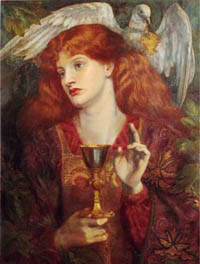
The Coming of the Holy Grail

There aren’t too many books in this world which can turn one’s world-view entirely upside-down. This book does, and in such a way that it makes one wonder if one’s thinking has always been so cockeyed.

What is especially relevant for today’s society is how screwed up we are about religion. The Lord God of the Old Testament is definitely the villain of the piece. Jehovah is revealed to be Enlil of ancient Sumer. His sworn enemy, his brother Enki (whom we have equated with Satan, since forever) is the hero of this story. Enki is an agent for the ‘real’ Mother-Father of creation, Tiamat, equated to Sophia (Wisdom) in the West. See what I mean about our being screwed up about the ‘facts’?

Since the creation of Adam and Eve, Enlil has been trying to pervert the power of the Divine Feminine by denigrating the female sex, and oppressing the world with male-only power and control, through hatred, racial inequality and war. Hence, we are in the most repressed civilization now.

Mary Magdalene

Mary Magdalene and Jesus

It should come as no surprise that the Divine Feminine is represented by Mary Magdalene. Together with Jesus, she brought forth the Holy Grail in the form of her daughter, Tamar.

The British have a long association with Druidism, which has worshipped the Mother-Father God/dess through nature. Because the British Isles are infused with that energy, Mary Magdalene and Tamar went to England after Jesus’ crucifixion.

Hamish Miller dowsed (see above) the Michael and Mary ley lines in the South West of England, effectively tracing ‘dragon’ energy, which refers to the Divine Masculine and Divine Feminine in the landscape. In the middle of these lines is Glastonbury Tor.

Glastonbury Tor is one of the most sacred sites of the Divine Feminine in the world.

Glastonbury Tor 2

Down with Enlil!

In chapter sixty-four, the authors Claire Nahmad and Michael Revill suggest ways to rid ourselves of the influence that keeps us under Enlil’s thumb:

“In preparing ourselves for the Grail, then, we need to overturn Enlil’s rule. How do we get rid of Enlil? We stop feeding him and his power-source! We do this by awakening from our heavy sleep in materialism (imposed by his design) and opening our consciousness to the spiritual reality of life. We do it by ridding our lives of cruelty in all its aspects – our own, perhaps unconscious, cruelty to others – our cruelty and violence of language, our cruelty and violence of thought; our cruelty to ourselves in imposing alienating value-systems on our lives which we flog ourselves mercilessly to maintain; and the cruelty inherent in our everyday lives through the exploitation of abused workers, of animals (whose terrible collective suffering, which we ourselves thoughtlessly inflict, is even greater than that of human beings) and of the planet.

“We do it by properly honouring and obeying the sacred feminine principle, which encourages us to be wise, to be nurturing and merciful, to see things by the light of the intuition and to be unafraid of the astonishing realities this light will reveal, and which will entail a final laying-down of the male supremacism that still exists and is still part of the societal framework and mores of our countries, in the West as much as in the East. Then the sacred masculine principle will arise in its true guise and glory, and men will come to see in wonderment who and what they truly are.

“We do it by sacrificing our need to be angry and resentful, contemptuous and demeaning, towards others, by recognising that we are children of the same all-embracing God and that this Divine Spirit loves each one of us equally, whatever and whoever we are. We do it by halting the urge within us to dominate or dictate, and by allowing an unshakeable respect for others, an empowering harmlessness, an inspired and loving tolerance, to flower within our attitudes to life.

“We do it by calling on and trusting our inner strength to resist the temptation to bow helplessly and succumb before those principles or those persons who would dominate or dictate to us. And we do it especially by refusing to bow to the tyrants of fear, shame, self-doubt, and the tyranny of the will of the little self – the self of earth which is not the ‘I Am’, called the self-will or the lower will – which always wants to dominate and dictate to us.

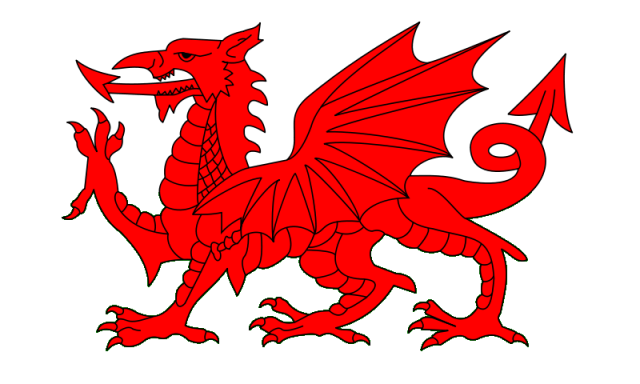
“Yet, most of all, we do it by reclaiming our most holy dragon heritage, granted to us from our very beginning in an ineffable act of love by Tiamat, which we have allowed Enlil to take from us.”

Welsh Dragon

Amen to that.

Dowsing: a journey beyond our five senses.

https://youtu.be/wF_b1zBem3I?si=Z9moVKwdYQpFbABp

Posted in reviews | Tagged , , , , , , | 9 Comments

An Aching Oak or Ailing Elm

Groping upward, toward the heavens,

The dying tree’s old limbs,

Bleached by the sun,

Seemed at odds, “sixes and sevens”,

With the sky’s dark blue hymns,

Knowing life’s done.

DSCN0140

Posted in manuscripts, poetry | Tagged | Leave a comment

Why I Write…

…SONNETS

Sonnets

It’s a question I’ve often asked myself. What is it about iambic pentameter that makes me want to write it? Is it the da-dum, da-dum of a mystery theme song? Or is it the sound of a horse at full gallop? (One reader reminded me that it represents one’s heartbeat.) Whatever it is, it hooked me while I was in my teens and is still my favourite poetic medium.

I think my interest peaked when I studied the differences between a classic Italian sonnet and the Shakespearean kind. Who knew you could have that much variety in one poetic style? Perhaps, that is why I decided to explore sonnets, by working with them from the inside out.

Another variation on the sonnet theme came from Milton. His use of the run-on line from the eighth to the ninth also proved to be a bit of a challenge. His poem “On His Blindness” was the inspiration of the following, at least as far as the title goes.

On His Blandness


Many poems will pass through these senses:

Infrequently, some may become classics;

Limiting words to eighty iambics

Tends to strain the meaning through some tenses

Ordinarily reserved for Menses.

Not only that but sometimes, when one picks

Incorrect terms, the resulting style sticks

Corns on top of bunions, like high fences

Stemming the flow: the thought grinds to a halt

On the unfortunate choice, as by chance

New insights spring to light. It’s not by fault,

Nor intention, that Sacred Spirit grants

Each humble human the right to assault

The Seat of Life and vault us from our trance.

Sonnet XIX

There was one thing that I learned along the way: don’t take yourself too seriously. My self-parody keeps my ego in check. The title of this poem is my tongue-in-cheek reference to the fact that most people don’t find my poetry to be anything special.

I can recall that my earliest attempts at poetry were intended to impress young women in high school. I even went out of my way to write some of them with specific girls in mind. However, the poems were greeted with a polite thank-you, followed by the sound of crickets chirping. I did not attain my shallow goals; that I can assure you. The popularity of written verse was replaced by music and lyrics when I was growing up.

I added the extra challenge of the 14 letter acrostic to spell out exactly what I was intending to say. Most of the time, that fell flat, too. I was just being too clever by half, as the English would say.

The most redeeming factor in all of this is that I learned to do some serious rhyming, while exploring themes of spirituality, love, and regret. In some ways, I think writing sonnets allowed me to discover myself, which is what one really wants to achieve in life.

SoF Bridge Reflection

By the time I was 25, I decided to create my own style of sonnet. I called it a:

Reflective Sonnet


Hi, Lord, it’s been a while since we last talked;

What’s new with me? Well, nothing very much;

You wouldn’t say I’ve opened up, as such,

But I have tried to answer when you’ve knocked.

Why do I find it strange, for me, you died?

What do you mean: live from day unto day?

Will you plenish my plate, fill up my cup?

————————————————–

Though words have a way of fumbling up

What I mean to say, there’s no better way

That I can convey what’s on the inside.

You find it hard to enter when it’s locked?

When closed, my heart is difficult to touch:

I used to think I’d never need a crutch,

But, Lord, “sans toi,” I never could have walked.

Now here was something completely different. The line in the middle was intended to act as a mirror, so that the rhyme scheme of the top half would be reflected in the rhyme scheme of the bottom.

What fascinated me about this poem is that it was my first attempt at a poetic prayer. I chose a nonchalant voice, talking to God as if I were talking to the guy next door. It was folksy, I thought, yet sincere. What was strange was that it is nothing like how I would speak to God, because I’d been raised as a preacher’s kid and that wasn’t how one should address the deity.

Florence-Cemetery-38-of-164

Then in 1986, I came across the following piece in a spiritual newsletter:

The Last Words of an Unknown Soldier

The following poem was sent to the wife of an American Soldier in Italy, who found it on the body of an unknown Yank who had been killed in action.

Look, God, I have never spoken to you,

But now I want to say, How do you do?

You, God, they told me, you didn’t exist,

And like a fool, I believed all this.

Last night from a shell hole I saw your sky,

I figured right then they had told me a lie,

Had I taken the time to see things you made,

I’d have known they weren’t calling a spade a spade.

I wonder, God, if you’d shake my hand,

Somehow, I feel that you will understand.

Funny I had to come to this hellish place

Before I had time to see your face.

Well, I guess there isn’t much more to say,

But I’m sure glad, God, I met you today.

I guess the “Zero Hour” will soon be here,

But I’m not afraid since I know you’re near.

The signal; Well, God, I’ll have to go;

I like you lots; this I want you to know,

Look now, this will be a horrible fight;

Who knows. I may come home to your house tonight.

Though I wasn’t friendly to you before,

I wonder, God, if you’d wait at your door.

Look, I’m crying! Me! Shedding tears!

I wish I had known you these many years.

Well, I have to go now, God, Goodbye,

Strange, since I met you, I’m not afraid to die.

The Pointer Newspaper Riverdale IL 15 Jun 1944 Page 3

Goose bumps, or what? I need to do a wee flashback for you, the reader, to be able to understand what was significant to me about this poem. During a series of hypnosis sessions I underwent in 1989, I found myself back in the body of a World War II American soldier who then got blown up by a land mine. That alone does not make it significant. The significance came when I tried the Inner Guide Meditation in 1990, and discovered that my Inner Guide was an American Sergeant of very few words. Anyone who knows me well would see the irony in that.

So, this got me to thinking about the soldier who wrote this poem. Was there a connection? Examining the tone and familiarity of the words, I then thought back to my Reflective Sonnet and wondered if the same person had written it (through me), or that I had once been that soldier. I have not yet come to a firm conclusion about that, but it is intriguing, isn’t it?
Spiritus_Sanctus

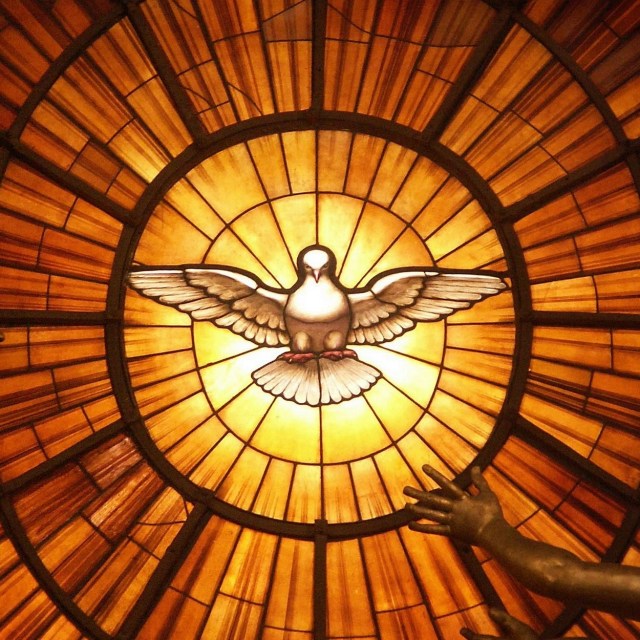
The following sonnet, the first in my series of the same name, is closer to the style of prayer that I would normally use.

Spiritus Sanctus


Can we, who now, while living in this time,

Hear things, of which we do not understand,

Relying on those whose worst single crime

Is ignorance dealt with a sleight of hand?

Such is our province of sad apathy

That worthwhile inspiration flies away

Out of our grasping reach, back in to thee,

Still silent, at rest, waiting for thy day.

Spirit, please fill me with thy one true light,

Open my heart and give me second sight,

Perform thy wonders on my fallow mind,

Heal all of my hurts; please help me to find,

Inside my shallow soul, thy purest love,

And help me to grow, within and above.

Sonnet I

Posted in manuscripts, poetry | Tagged , , , , | 2 Comments

Star: 15 – Epilogue

We’ve all been waiting with bated breath for the Second Coming of Jesus Christ+. What if it’s happening NOW? What if the LGBTI community is here to live out Jesus’ message to love your neighbour as yourself?

LGBTI

Twenty years ago, when I was originally writing this book, the lesbian, gay, bisexual, transgender and intersex community was definitely in its infancy. Now, a whole month (June) has been set aside to honour their Pride.

Even the television companies have capitulated: there are same-sex relationships on most programmes, something that would have been unheard of a generation ago. The most touching to me is the one between Root and Shaw on Person of Interest. Some things can still bring a ‘tear to the ear’.

Countries like Canada are now enacting laws to protect the rights of transgender individuals. India got ahead of most of rest of the world in legally recognizing a third gender.

Something is going on here, to say the least.*

Pontius Pilate

rP1vi

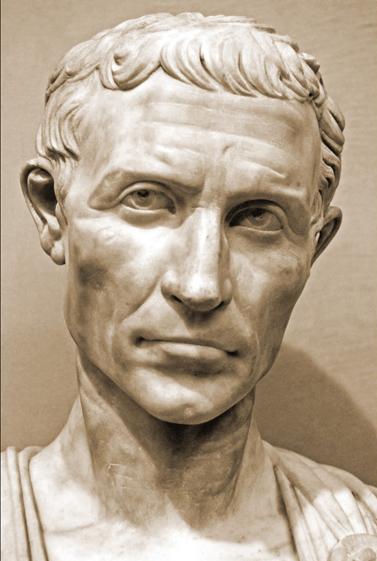
Statue purported to be of Pontius Pilate, but may actually be a styled portrait of Julius Caesar

During the retelling of my story here, I kept reminding myself that ‘somehow’ I know Jesus personally. But not in the sense of the ‘born-again’ Christian. I know him ‘for real’.

In one of my past-life regressions, I met my death as a Roman Governor in 1st Century Italy. It is recounted here. In my birth chart, using A.T. Mann’s Life*Time astrology, I can place my Saturn in Virgo position to about 10 AD. For years, I resisted the urge to do any research on this Roman Governor, always rejecting the idea that it might have been Pontius Pilate because this one died in Italy (seemingly). However, about halfway through putting these pages here, I decided, once and for all time, to do the research.

You can imagine the horror I felt initially when it finally dawned on me that this Roman Governor might well have been Pontius Pilate. It took about a month to wrap my head around that idea.

But what convinced me, in the end, was that I may have been personally involved in The Passover Plot, but I wasn’t Pontius Pilate: I was one of his subordinates. Later I found the truth: I was one of the subsequent governors of Judea, coming at least 10 years later.

Lentulus’ Letter Revisited

300px-Anon-Publius_Lentulus

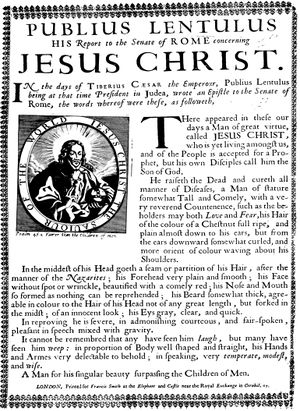
Letter of Lentulus

In The Sacred Virgin and the Holy Whore, Anthony Harris finally gets to grip with the ‘true’ text reproduced here (the bold print is the original material, the rest has been embroidered by later writers):

There has appeared in these times and still is at large a man, if it is right to call him a man of great virtue, called Christ whose name is Jesus, who is said by the gentiles to be a prophet of truth, whom his disciples call Son of God, raising the dead and healing all diseases: a man of stature tall, medium, i.e. fifteen palms and a half and slightly, having a venerable face, which beholders might love and dread, having hair of the colour of an unripe hazel and smooth almost to the ears, but from the ears down corkscrew curls somewhat darker-coloured and more glistening, waving downwards from the shoulders, having a parting on the middle of his head after the manner of the Nazareans, a brow smooth and serene, with a face without a wrinkle or spot, beautified by a moderately ruddy colour; with nose and mouth there is no fault whatever. Having a beard copious but immature of the same colour as the hair (and) not long but parted in the middle. Having a simple and mature aspect, with blue eyes of varying hue and bright. In rebuke terrible, in admonition bland and amiable. Cheerful, yet reserving gravity: he sometimes wept, but never laughed. In stature of body tall and erect, having hands and arms delectable to the sight. In converse grave sweet and modest, so that justly according to the prophet was he called beauteous above the sons of men.

The Cross

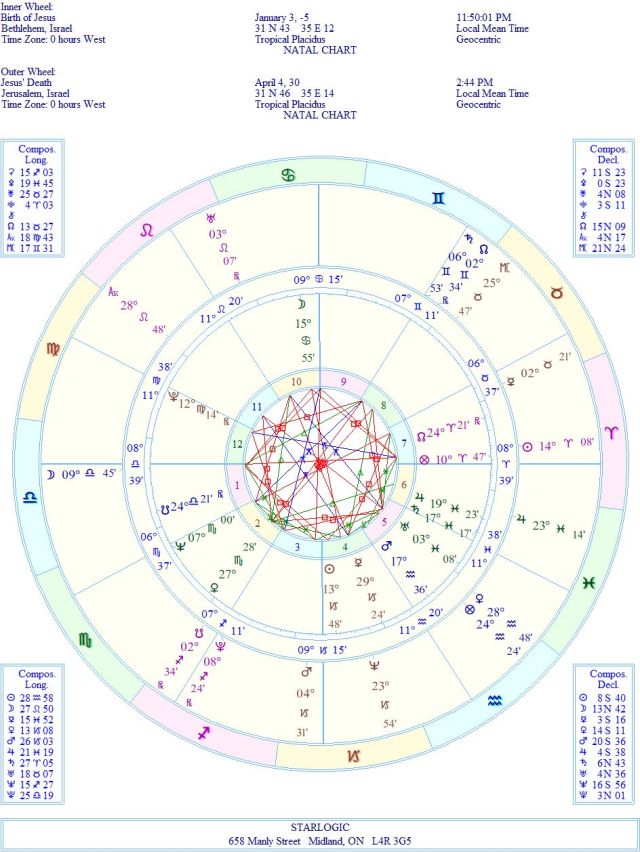
JesusBirthofWBAGE3
Comparison Charts

It never occurred to me before that Jesus’s birth and crucifixion charts were also demonstrating the Cathar symbol in a graphic form.

The birth chart has a horizon line formed by the Ascendant in Libra/Descendant in Aries, with a vertical axis formed by the opposition of the Sun in Capricorn to the Moon in Cancer.

The crucifixion chart has a horizon line formed by the Ascendant in Cancer/Descendant in Capricorn, with the vertical axis formed by the opposition of the Sun in Aries to the Moon in Libra.

Each chart is an echo of the other, with the Full Moon in evidence in both. The symbolism is profound. The circle of his life was completed by Jesus being crucified.

The symbol is the one which we now recognize as that of Earth.

List of Chapters

earth_astrology_symbol
Symbol of Earth

Introduction
Introduction (part 2)
1 – Prologue
2 – Mercury: The Winged Star
2 – Mercury: The Winged Star (part 2)
2 – Mercury: The Winged Star (part 3)
3 – Moon: The Death Star
3 – Moon: The Death Star (part 2)
4 – The Ascendant: The Star of the Magi
4 – The Ascendant: The Star of the Magi (part 2)
5 – Uranus: The Enigmatic Star
5 – Uranus: The Enigmatic Star (part 2)
6 – The Sun: The Local Star
6 – The Sun: The Local Star (part 2)
7 – Mars: The Warrior Star
7 – Mars: The Warrior Star (part 2)
8 – Pluto: The Transformative Star
8 – Pluto: The Transformative Star (part 2)
8 – Pluto: The Transformative Star (part 3)
9 – Jupiter/Saturn: The Star of David
9 – Jupiter/Saturn: The Star of David (part 2)
10 – Neptune: The Mystic Star
10 – Neptune: The Mystic Star (part 2)
10 – Neptune: The Mystic Star (part 3)
11 – North Node: The Star of Destiny
11 – North Node: The Star of Destiny (part 2)
12 – Venus: The Morning Star
12 – Venus: The Morning Star (part 2)
13 – Midheaven: The Star of Heaven
13 – Midheaven: The Star of Heaven (part 2)
13 – Midheaven: The Star of Heaven (part 3)
14 – Some Conclusions
14 – Some Conclusions (part 2)
14 – Some Conclusions (part 3)

Bibliography

Ambrosini, Maria Luisa (with Mary Willis)
1970: The Secret Archives of the Vatican (london: Eyre & Spottiswoode)

Blavatsky, H.P.
1892: Theosophical Glossary (London: The Theosophical Publishing Society)
1868: Isis Unveiled (Los Angeles: Th Theosophy Company)

Church, W.H.
1984: Many Happy Returns: the Lives of Edgar Cayce (San Francisco: Harper & Row)

Cleeve, Brian
1980: The House on the Rock (Dulverton: Watkins Publishing)

Cohn, Norman
1975: Europe’s Inner Demons (London: Sussex University Press)

de Coppens, Peter Roche
1992: Divine Light and Fire (Shaftesbury: Element Books Limited)

deVore, Nicholas
1947: Encyclopedia of Astrology (New York: Philosophical Library)

Doresse, Jean
1986: The Secret Books of the Egyptian Gnostics (Rochester, Vermont: Inner Traditions Int’l Ltd.)

Furst, Jeffrey
1976: Edgar Cayce’s Story of Jesus (New York: Coward, McCann & Geoghegan, Inc.)

Gettings, Fred
1987: Dictionary of Astrology (London: Routledge & Kegan Paul)

Good, Timothy
1991: Alien Liaison: The Ultimate Secret (London: Random Century Ltd)

Gooderham, Kent (editor)
1969: I am an Indian (Toronto: J.M. Dent & Sons (Canada) Ltd.)

Haitch, Elisabeth
1989: Initiation (London: Unwin Hyman Limited)

Hand, Robert
1977: Planets in Youth (West Chester Para research, Inc., a division of Schiffer Publishing Ltd.)

Harris, Anthony
1988: The Sacred Virgin and the Holy Whore (london: Sphere Books Limited)

Hick, John
1993: The Metaphor of God Incarnate (London: SCM Press Ltd.)

Hoeller, Stephan A.
1989: Jung and the Lost Gospels (Wheaton: The Theosophical Publishing House)

Hughes, David
1979: The Star of Bethlehem Mystery (London: J.M. Dent & Sons Ltd.)

Hurtak, J.J.
1988: An Introduction to the Keys of Enoch (Los Gatos: The Academy for Furute Science)

Iversen-Norman Associates, The
1975: The Zondervan Parallel New Testament in Greek and English (Grand Rapids: Zondervan Corp)

Kirby, Babs & Stubbs, Janey
1992: Love & Sexuality (Shaftesbury: Element Books Limited)

Mann, A.T.
1989: Astrology and the Art of Healing (London: Unwin Hyman Limited)
1995: The Elements of Reincarnaion (Shaftesbury: Element Books Limited)

Marciniak, Barbara with Marciniak, Karen and Thomas, Tera
1995: Earth: Pleiadian Keys to the Living Library (Sante Fe: Bear & Company Publishing)

May, Robert M.
1991: Physicians of the Soul (Shaftesbury: Element Books Limited)

Moore, Katharine
1978: She For God: Aspects of Women and Christianity (London: Allison & Busby Limited)

Ouseley, G.J.R.
1972: The Gospel of the Holy Twelve (Battle: The Christian Gospel Trust)

Parker, Derek & Julia
1983: A History of Astrology (London: Andre Deutsch Limited)

Pole, Wellesley Tudor
1965: A Man Seen Afar with Rosamond Lehmann (London: Neville Spearman Ltd)
1984: Writing on the Ground (Tasburgh: Pilgrim Book Services)

Schonfield, Hugh J.
1967: The Passover Plot (Toronto: Bantam Books of Canada Ltd.)

Schulman, Martin
1985: Karmic Astrology: The Moon’s Nodes and Reincarnation (York Beach: Samuel Weiser Inc.)

Spiller, Jan and McCoy, Karen
1988: Spiritual Astrology (New York: Simon & Schuster Inc.)

Stearn, Jess
1974: The Search for a Soul: Taylor Caldwell’s Psychic Lives (Greenwich: Fawcett Publications, Inc.)

Sumption, Jonathan
1978: The Albigensian Crusade (London: Faber and Faber Limited)

Thornton, Penny
1986: Synastry (Wellingborough: The Aquarian Press)

Walter, Barbara G.
1988: The Woman’s Dictionary of Symbols & Sacred Objects (London: HarperCollins Publishers Ltd)

Weiner, Errol
1991: Transpersonal Astrology – Finding the Soul’s Purpose (Shaftesbury: Element Books Limited)

White, Suzanne
1987: The New Astrology (London: Pan Books Ltd)

Wilson, Ian
1984: Jesus: The Evidence (London: Weidenfeld and Nicolson)

Wood, David
1985: Genisis: The First Book of Revelations (Tunbridge Wells: The Baton Press)

Zweig, Connie and Abrams, Jeremiah (editors)
1991: Meeting the Shadow: The Hidden Power of the Dark Side of Human Nature (New York: G.P. Putnam’s Sons)

Picture Credits

* Simon Peter said to them (the disciples): “Let Mary leave us, for women are not worthy of Life.” Jesus Said, “I myself shall lead her, in order to make her male, so that she too may become a living spirit, resembling you males. For every woman who will make herself male will enter the Kingdom of Heaven.” (Gospel of Thomas 114, quoted in The Gnostic Gospels by Elaine Pagels)

Picture credits:
Pontius Pilate courtesy of http://www.romeacrosseurope.com;
Letter of Lentulus courtesy of orthodoxwiki.org;
Symbol of Earth courtesy of SunSigns.org

+”Rise like a Phoenix”: Eurovision 2014: a new direction?

Posted in manuscripts, spirituality | Tagged , , , , | 13 Comments

Star: 14 – Some Conclusions (part 3)

Was Jesus really a woman? I don’t think so, but a lot of people have speculated that he might have been an hermaphrodite. This would help explain the balance in his birth chart.

Parthenogenesis?

Let us continue with Anthony Harris’ theory that Jesus was actually a woman. According to his investigations, he feels that Mary’s ‘Immaculate Conception’ may have been caused by radiation from the angel Gabriel:

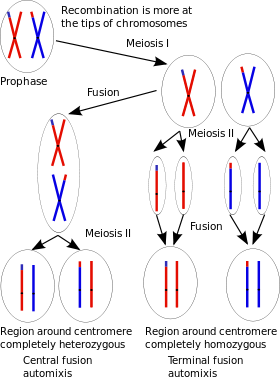
Parthenogenesis is a routine fact of biology and experimental embryology. It is common in the natural form in many invertebrates, simple animals and certain reptiles. However, the main point taught by current science is that the ovum contains within it the ‘potentiality to form a new being.’ The stimulus is usually the male sperm, but changes in the chemical environment of the ovum can initiate division, as indeed can sudden shocks, radiation, and mechanical stimulation…

There are over a billion women on this planet making ova, and they produce active ones every lunar month. The number produced in a year then is a staggering thirteen billion. Even if the chance was one in a million that an ovum would spontaneously begin to divide — and given the stresses, pollution, radiation and medication so many women are subject to, there are stimuli enough — this would result in 13,000 possible virgin births a year. Even taking into the equation the smaller number of people alive 2,000 years ago, and beyond — say another two thousand years — the chances of it happening at least once in human history must be, in horse-racing terms, very favourable indeed. But apart from the anecdotal material of the tabloids, is there any concrete evidence that it happens?

46XX Woman?

280px-Central_fusion_and_terminal_fusion_automixis.svg

Parthenogenesis

There is, but we must also resign ourselves to the fact that we only know the unsuccessful virgin conceptions called teratomas. This arises because the vast majority of women live with men, and so if they conceived virginally, in other words had a developing ovum which went to term, they, their husbands, boy-friends and everyone else would assume it was the result of ordinary ovum-sperm fusion. The point is that scientific virgin birth means no sperm is involved, not that the girl is a virgin intacta. Even if she turned up pregnant to her medical examiner with her hymen intact, without exception, I would hazard, most medical men would assume sperm had entered the tiny hole the hymen has. To prove that a girl has never been in contact with a man is extremely difficult, there being so many men and so many opportunities. Even nuns in convents could, arguably, be intimate with tradesmen, gardeners and, of course, visiting priests. It would take a woman of the moral courage of Mary to insist she did not, in fact, know a man…

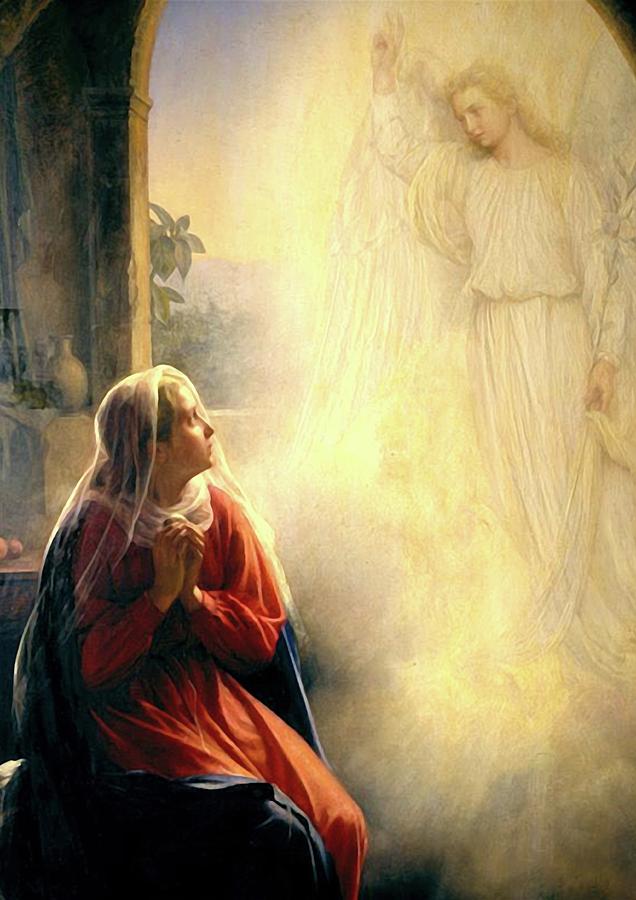
In summary, the scientific case for virgin birth is not proved, but the pointers are such that it remains a legitimate possibility. Certainly, it would betray ignorance to aver that it could not and does not happen — except in the case of male children, where it is a contradiction in terms since the Y chromosome is not present in normal 46XX women. In the case under consideration, however, it is intriguing to note that the stimulus most often depicted by artists is a ray of light shining on the Virgin Mary. That electromagnetic radiation can induce cleavage in mammalian ova is a matter of routine observation in today’s laboratories. The odd thing is that artists innocent of any science opted for this method in their symbols centuries ago. Coincidence is often very diverting.

Mary Immaculately Conceived?

the-annunication-virgin-mary-archangel-gabriel-carl-bloch

Mary of Nazareth

Q. Is the teaching of the Roman Catholic Church correct, in that Mary was without original sin from the moment of her conception in the womb of Anne?
A. It would be correct in any case. Correct more than this. For as for the material teaching of that just referred to, you see, in the beginning, Mary was the twin soul of the Master in the entrance into the earth!...

Q. Was Anne also prepared for her part as mother of Mary?
A. Only in general, not as specific, as Mary after Mary’s being pointed out. See, there was no belief in the fact that Anne proclaimed that the child was without father. It’s like many proclaiming today that the Master was immaculately conceived; they say, “Impossible!” They say it isn’t in compliance with the natural law. IT IS A NATURAL LAW, as has been indicated by the projection of mind into matter, and thus making of itself a separation to become encased in same — as did man (in the beginning.) Then, in that there had been an encasement was there a beginning. Then there must be an end when this must be — or may be — broken; and this began at that particular period. Not the only — this particular period with Anne, and then the Master AS the son — but the ONLY begotten of the Father in the flesh AS a son OF an immaculately conceived daughter!…

Q. Then neither Mary nor Jesus had a human father?
A. Neither Mary nor Jesus had a human father. They were one soul so far as the earth is concerned. (5749-8)

Q. It is difficult to grasp the concept of reality of the Immaculate Conception. Could you please clarify?
A. Neither is there much indicated in sacred or profane history as to the preparation of the mother for that channel through which immaculate conception might take place. And this — the immaculate conception — is a stumblingstone to many worldly-wise. (5749-15)

Yes, I can see us all now tripping over ourselves to prove this ‘immaculate conception’ to be false. But if it really is a case of ‘parthenogenesis’, then we are locked into a truth: namely, that Jesus of Nazareth was actually born a woman!

45XO Woman?

index4

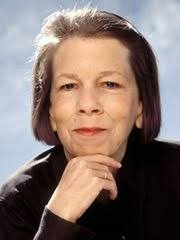
Linda Hunt

The question remains: If Jesus was a clone of his/her mother, Mary, why didn’t s/he look like a woman? Now, this is a situation where being a medical student has its advantages as Anthony Harris can attest:

In the Merck Manual, a standard medical text, I found a résumé of the Bonnevie-Ullrich Syndrome, also known as Turner’s Syndrome, a form of gonadal dysgenesis afflicting women only. The characteristics of these women are short stature, wide chest, absence of breast development, multi-pigmented naevi (or nevi in the US), strawberry or brown birth marks, juvenile external genitalia, absence of menstrual bleeding.

These common features are of course not always found together, but often they are. The condition is caused by partial or complete absence of one of the female X sex chromosomes, but these people are indubitably women, but women with special characteristics. As with 46XX women, these 45XO women are sometimes handicapped, sometimes not…

There is some tendency for the bones to be weak, and the face is sometimes narrow. One woman in two has narrow hips (fifty per cent incidence of android configuration of the pelvis, confirmed by X-ray study of the bones). There is an elevated chance of problems with the aorta, the main vessel of the heart, compared with the general population. Haemangiomas, that is, concentration of blood vessels (which can be extensive, or merely ‘blood spots’) are also indicated. The skin may have several, or may have none, of the common naevi, or red spiders; there may be keloids (scar-like puckering of the skin), dryness, or oiliness, and hairiness…

Frank S. Pidcock of Jefferson Medical College notes that workers in the field have reported normal distribution of intelligence in women with Turner’s Syndrome, with some evidence of decreased practical ability in tests, though I wonder if this has any significance in everyday life. However, several authors have noted spatial disability in some 45XO women, but again I would question what this means. People with highly developed imaginations, William Blake for example, have a kind of spatial oddness about them, such as seeing angels in trees. It is a kind of oddness which is akin to genius, especially when related to high verbal skills… My reading of the literature is that 45XO women are not markedly different intellectually from the 46XX women as a group, but that the curious mix of abilities could produce someone with extraordinary talents, where verbal skills and a new way of looking at the world might be exhibited…

The curious matter of left-hand/right-hand problems in 45XO women is confirmed, and I suspect that this is related to space-form blindness, the inability to match different shapes and contrast them. Sandberg suggests, ‘The personality of Turner Syndrome patients is generally pleasant, although they may appear somewhat undifferentiated and unconcerned.’ But he then apparently contradicts himself by asserting, ‘Emotionally they may be somewhat more unstable and dependent on their social environment than XX females.’ This instability suggests a passionate nature, while the ability to be unconcerned, if it is concomitant, describes a personality which, although deeply committed to some issues, can at the same time distance itself from its personal implication. Selflessness combined with passion is a remarkable association, and one thinks, perhaps, of Mother Teresa working in the slums of India, with passionate love for the needy, yet unconcerned for her own welfare.

“Be careful not to do your ‘acts of righteousness’ before men, to be seen by them. If you do, you will have no reward from your Father in heaven.

“So when you give to the needy, do not announce it with trumpets, as the hypocrites do in the synagogues and on the streets, to be honored by men. I tell you the truth, they have received their reward in full. But when you give to the needy, do not let your left hand know what your right hand is doing, so that your giving may be in secret. Then your Father, who sees what is done in secret, will reward you.” (Matthew 6:1-4)

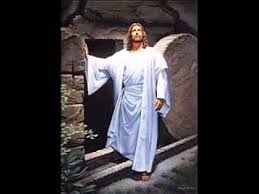
Yeshu

index6

Yeshu

All of this makes me more and more convinced of the rightness of this theory. Especially the concept of the Beginning and the End: if Jesus started the process as Adam, giving ‘birth’ to Eve “out of his side”, then it is poetic justice and perfect balance that the favour should be returned by Mary ‘immaculately’ conceiving Jesus. This lack of a Y chromosome, and perhaps even one X chromosome makes the matter of Jesus’ sex intriguing, but we shall return to this later. Meanwhile, let us give Anthony Harris’ theory a bit more time to grow on us, as it were:

It is likely that Yeshu’s awareness that she was different would have begun at her mother’s knee. Can we picture the dynamics between Mary, convinced that she had been singled out as the mother of the Messiah, and Yeshu, a girl, small and disfavoured, being brought up as a boy? It would probably take the literary ability of a Macaulay and the insight of a Freud to truly bring it off, but we must be content with piecing the story together as best we can, by observing the plausible forces at work within and upon this relationship, the most formative, and in a sense the most fruitful, mother-and-daughter interplay the world has ever known.

Yeshu has to contend with the difficulties of smallness of stature and a sexual identity outwardly male but biologically female. The foundations for the growth of a unique personality are present, but nothing could have grown without the love, the conviction and the courage of Mary. The sheer brutality of the misogyny that Yeshu would quickly have witnessed as an onlooker, would have been echoed in the slings and arrows visited upon her as a small and disfavoured boy, and would have helped her in her own development. For she could see that they were visited upon women too simply because they were women.

What made all this bearable? Her mother’s love? Love was the greatest force of all, for it was strong enough to wipe away the tears shed on the way home from school after being bullied by larger and more aggressive boys; it was strong enough to sustain an inner truth for a greater good, even though it meant that she had to act like a boy or else give up her mother’s dream of saving so many weak and defenceless people…

And yet Yeshu’s time was limited; soon she would be a woman and according to the Temple priests, women were unclean, for blood was unclean, but all women bled.

Except Yeshu. When Yeshu became a woman she did not bleed. It was a miracle; she could still pass as a male. She did not grow breasts. As she did not bleed, she was never unclean, not even according to the religion of Abraham. She was ritually pure and yet a woman. Now she saw what Mary had meant. She was truly the Anointed One.

The Hermaphrodite

index7

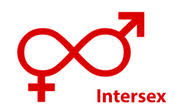
Intersex symbol

This is where I beg to differ with Mr. Harris: for one thing, he has taken an assumption that only a female can be formed by parthenogenesis, but he has left out the other option that life presents to us from time-to-time, the hermaphrodite (Hermes+Aphrodite). In modern terms this is now called Intersex. Even The Gospel of the Holy Twelve refers to Jesus in his childhood as Jesu-Maria. Too many times during the long process of writing this book did I come to an interesting conclusion: Jesus’ birth chart shows all the signs of “balance” that you would expect from a person with a Libra Ascendant. But it is far more profound than that: there are indicators everywhere that this “balance” involved masculine and feminine energies in perfect harmony — Jupiter and Saturn conjunct in Pisces, Venus and Neptune in Scorpio, Pluto in Virgo — culminating in the strongest balance point of them all, Moon in opposition to the Sun. Just because we have no common everyday occurrence of a 45XO female actually demonstrating underdeveloped male genitalia, doesn’t mean that Jesus didn’t have any. (The fact that he was naked on the cross would have put that misapprehension to bed.) I know that previous sentence contains a double negative, but that is precisely what I’m trying to get across: a negative ‘negative’ makes a ‘positive’. If Mary was immaculately conceived by Anne, and then she (Mary) immaculately conceived Jesus, the two dropped X chromosomes may have been replaced by a weak Y chromosome, somehow. After all, we are speaking of the Holy Spirit in action here.

The Cathar Secret

index5

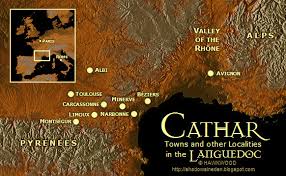
Cathar Towns map

This all brings me back to Isis resurrecting Osiris: she found fourteen of his fifteen body parts, the only one missing was the phallus. The myth may have some truth hidden within it, which may explain why Jesus felt he was the embodiment of a great god, and that he must die to redeem his people. But to give Anthony Harris his due, he does present a very convincing argument:

That Jesus meant to die appears inescapable as a conclusion: here then was someone not overtaken by events but in control of them, using history, times and places as material for her own drama. The script hypothesis appears to fit these facts well. Yeshu sets out to fulfil the Great Goddess religion and succeeded, purloining even a scarlet cloak from the Roman soldiers as both a symbol of the ever healing blood of the Goddess, and the scarlet thread which linked Yeshu with her ancestresses of the great religion. If this analysis is correct, then Rahab, Tamar, Ruth, Bathsheba and the grossly maligned Jezebel are the fertile founts of Christianity. Christ’s blood is no longer the inexplicable theme in a male religion, running on from the blood of the lamb and other animalistic ritual slaughtering, but a vibrant life affirmation, as the Great Goddess tradition always was. In this belief there is no difficulty in seeing that the blood of a Goddess is charged with life. No special arguments or theological conundrums are required.

Yeshu’s passion was love. She meant to stamp that message indelibly on human consciousness in a way no one could forget or ignore. Even her detractors cannot gainsay the power of what she did, and although the theology is legitimately difficult, the outcome of my investigation is a unique woman who spoke and acted in such a way that a challenge was thrown down which has yet to be taken up, although a few have taken on the crimson mantle. But contention is not the issue here; we are interested in the flesh and blood actuality of a small woman, graceful, energetic. Eloquent beyond anyone before or since, who went to her death when with her ability she could have had anything material or political she had set her mind to. She made claims of her uniqueness which, in some ways still not understood, meant she was divine.

So the mystery of what the Cathars and Templars knew seems to be that they alone held the truth about Jesus: he was a wo/man who was immaculately conceived by his/her twin-soul mother, Mary, lived as a great teacher, died as a God, and then resurrected as the Great Goddess. To get the proper effect, read this book again substituting ‘she’ for ‘he’ and ‘her’ for ‘his’.

The Final Word

images2

As Above So Below

What more needs to be said? Just this, from The Gospel of the Holy Twelve:

As it is above, so it is below, As it is within, so it is without. As on the right hand, so on the left. As it is before, so it is behind. As with the great, so with the small. As with the male, so with the female. When these things shall be seen, then ye shall see the kingdom of God. For in me there is neither Male nor Female, but both are One in the All perfect. The woman is not without the man, nor is the man without the woman. Wisdom is not without love, nor is love without wisdom. The head is not without the heart, nor is the heart without the head, in the Christ who atoneth all things. For God hath made all things by number, by weight, and by measure, corresponding the one with another. (Chapter 52:9-11)

Picture Credits

Linked Pages: Star: 14 – Some Conclusions
Star: 14 – Some Conclusions (part 2)
The Star of Bethlehem: Chapter 2 – Mercury: The Winged Star (part 1)
The Star of Bethlehem: Chapter 2 – Mercury: The Winged Star (part 2)
The Star of Bethlehem: Chapter 2 – Mercury: The Winged Star (part 3)

Picture credits:
Parthenogenesis courtesy of commons.wikimedia.org;
Mary of Nazareth courtesy of fineartamerica.com;
Linda Hunt courtesy of http://www.newhealthadvisor.com;
Yeshu courtesy of http://www.youtube.com;
Intersex symbol courtesy of http://www.coe.int;
Cathar Towns map courtesy of shadowsineden.blogspot.com;
As Above So Below courtesy of http://www.mythirdeye.info

Posted in manuscripts, spirituality | Tagged , , , , | 5 Comments