Too close to call? Who says? The main stream media? (It looks like the perfect way to keep people glued to their televisions and internet devices: more advertising revenue.)
If I’d been a betting man (which I’m not, anymore), I would have put money on Trump to win it outright. And Trump, thinking positive thoughts, would agree with me.
But that’s not what ‘the powers that be’ want as the result, so we’ll be kept in limbo until every avenue of legal and political moves are navigated by each side of the Red/Blue divide.
And that’s where my question comes in: because there are 538 Electoral College votes (ECV) up for grabs, it could conceivably come down to a tie of 269 votes each.
Who then casts the deciding vote?
And please don’t say the United States Supreme Court, because that has been stacked in Trump’s favour, and wouldn’t be fair to Biden.
A more fair way would be to give the presidency to the individual who garnered the most popular votes.
As of now, that would be Biden, by almost 3 million votes, wouldn’t it?
Due to the snowfall last evening, our cable TV feed was intermittent, so we decided to watch a DVD from our extensive video library. It was Susan’s suggestion to watch this one. I’d seen it once before, but never thought to write about it, until now.
There are so many levels, to this movie/show/story, that it is almost too much to contemplate in one short blog, but I shall attempt to do it justice.
The use of candlelight (since that era did not yet use electricity) was spectacular. As everyone knows, candlelight has a softening effect on what we’re watching, so I can just imagine what this does to the female viewer. Just putting a few candles in the bathroom can give some idea to the overall warmth that a bath would have. As the Phantom’s lair is so far underground, it gives an aura of comfort, despite the fact of it being a literal hell on earth. Even the passage to it is a River Styx: crossing underground water canals.
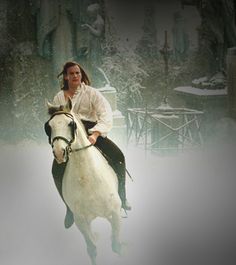
When the Phantom first took Christine through the mirror, the passageway was lit by swinging candelabras of light.
Later, when Meg enters the same way and tries to follow Christine, this is what she saw:
So Christine was right that everything about the Phantom was all “inside her mind”.
The Use of Mirrors as a Metaphor
Everything around us is a mirror of our thinking. Think about that! Starting from the very first physical contact with the Phantom, mirrors play a very important part of Christine’s story. The subtlety of that metaphor is not lost on me.
What is ‘real’ and what is just the ‘reflection’? It’s an eternal question, and one that is markedly significant in the Phantom’s story. Evidently, he was ‘marked’ from childhood, used as an living exhibit in a sideshow, in other words, abused as a child.
This has made him crave affection, but he is only confident when he’s wearing his mask, to cover the ‘blemish’. When Christine removes the mask, he is furious. He thinks she will despise him. All the mirrors are covered in his lair, until the end, when mask-less, he breaks all the glass. It’s a breakthrough of sorts.
Choosing Between Two Suitors
This is the point when I started to see the echo of The Bachelorette TV show, down to the use of a single rose. Art imitating art?
Christine’s choice was definitely ‘black’ or ‘white’. Bad boys are mesmerizing, for sure, but what woman can resist a knight on a charger? Raoul is a Viscount, and he’s always loved Christine. But until she headlined the opera, he hadn’t known where she was.
During the sword fight between Raoul and the Phantom, Christine stops Raoul from killing him. She doesn’t want to cause any harm to this thing inside her mind.
The choice between Nobility, on one hand, and Debasement, on the other, then comes down to a win-win for the Phantom, and a lose-lose for Christine.
He gives her an ultimatum: either she sleeps with him, or he kills Raoul. Some choice…
Christine, recognizing what is really going on, does the one thing that no one expects: she tenderly kisses the Phantom and tells him that he’ll never be alone. In response, the Phantom tells her to take Raoul and leave, immediately. That’s the last we see of the lovers as Raoul paddles the boat taking the two of them back out of the underground lair. The Phantom then disappears, too.
Conclusion
This is a story as old as time, told again and again and again. Think “Beauty and the Beast”, for example. Fairy tales have a purpose in life. They allow truth to be told, under the disguise of ‘just a story’. The ultimate purpose is to hold up a mirror to the heroine of the tale, the viewer. She gets to see both sides of her own personality play out in front of her eyes. As Eve, she chooses between Adam and the Serpent. One choice will prolong the human species, the other will bring her enlightenment. Most women want the safer option: it’s only nature, after all.
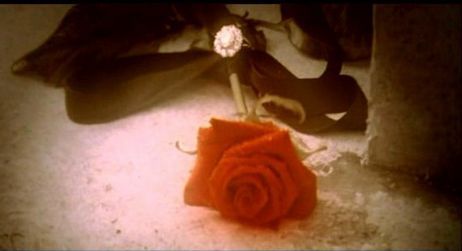
The final image of the movie brings an interesting ‘flashback’ for Raoul, who is now at the graveside of his wife, Christine, a Contessa, no less. There’s the rose…and a ring.
It really was just a Bachelorette movie, after all.
Helen Reddy (October 25, 1941 – September 29, 2020)
Courtesy of BBC.com
This might seem a strange post to anyone who follows me here on WordPress, but it’ll make some sense when you read on. I watched I Am Womanon Netflix last night, and I was surprised by how many of her songs I recognized, sometimes just by the opening notes. The 1970’s were a long time ago, but I guess some things never really leave you.
Helen Reddy personifies the second-wave women’s movement. Her greatest hit became the anthem for those that wanted to get the American Constitution ERA passed. It never did happen, but not for the want of trying. The amazing thing was that she just wanted to be a housewife when she grew up. That was her teenage rebellion. Marriage didn’t last, and she married three times. This brings me to her birth chart:
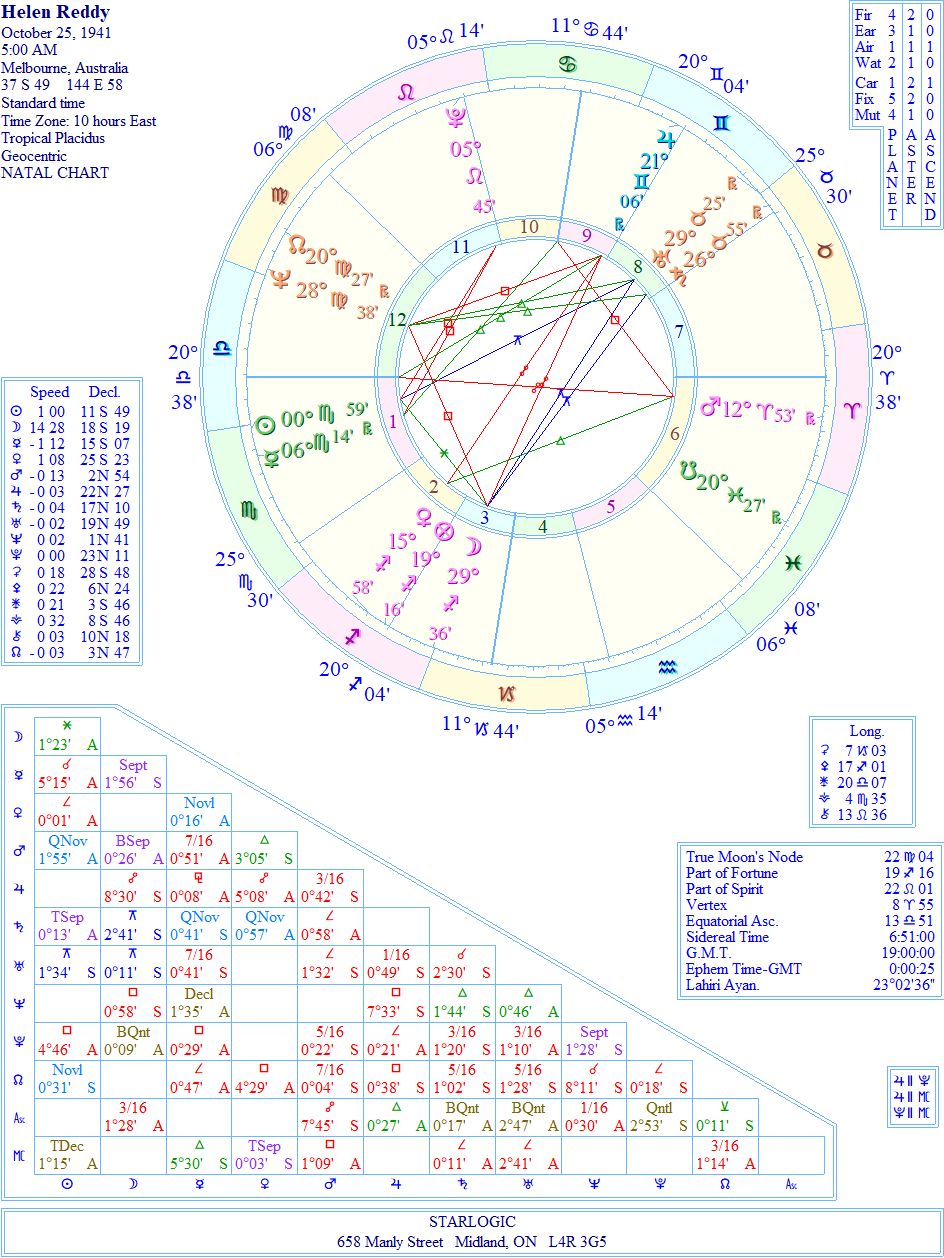
Most birth charts list 5:50 pm as her birth time. Really? That seems upside-down and backwards (Australia, notwithstanding). I flipped it to 5:50 am, and then further refined it to just 5:00 am because it seems to fit her better. The chart is rectified to her getting married at age 20. Her success is shown by the Saturn/Uranus conjunction which is timed to her mid-30’s. Her Sun is in Scorpio, Moon in Sagittarius, the Ascendant in Libra. That explains her privacy in her home life, the restlessness of her chosen career, and her need to have a (mostly) peaceful marriage. They don’t rest easily on anyone…
One Yod, pointing at Uranus, from inconjuncts to her Sun and her Moon. Uranus is the planet of lightning strikes (in a good way). This is the energy that having a #1 can bring.
Her Jupiter in Gemini on the 9th House cusp seems to direct our attention to her death, less than three weeks after the bio-flick was released to the greater world.
Her obituary says that she died during the afternoon. The timing of this chart is randomized. Throughout 2020, we have been looking at the Jupiter/Saturn/Pluto combination in a global sense. This one brings it back to the personal sense. If the time of her death is any later, these three planets would have been activated by the transiting Ascendant. So, I cannot say in all honesty which time is the correct one.
Looking at the combined charts gave me the satisfaction that maybe 1:15 pm was the right time. The ‘fatal’ Ascendant was transiting her ‘natal’ Moon. It was time to ‘let go’ of everything and fly away.
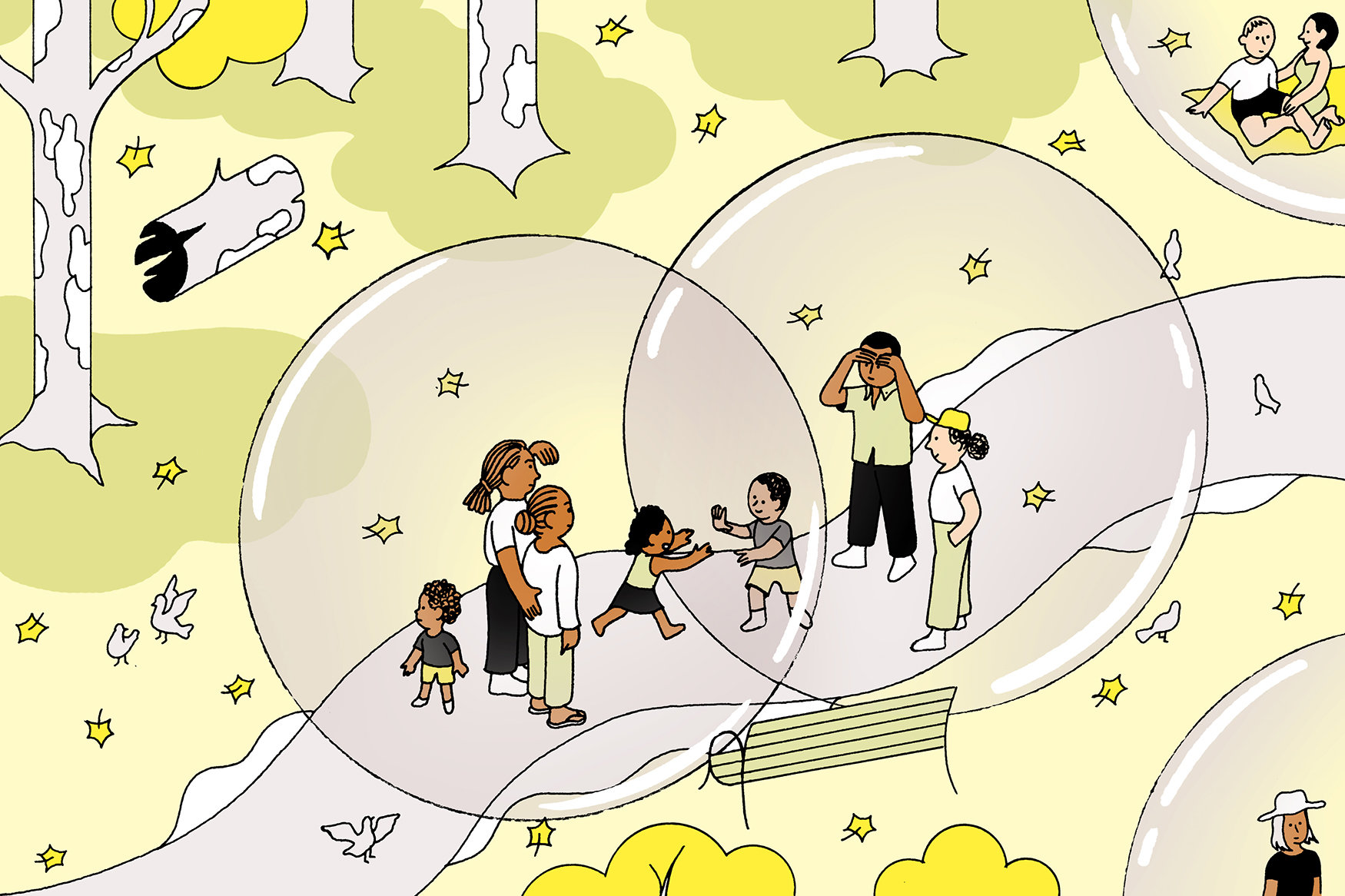
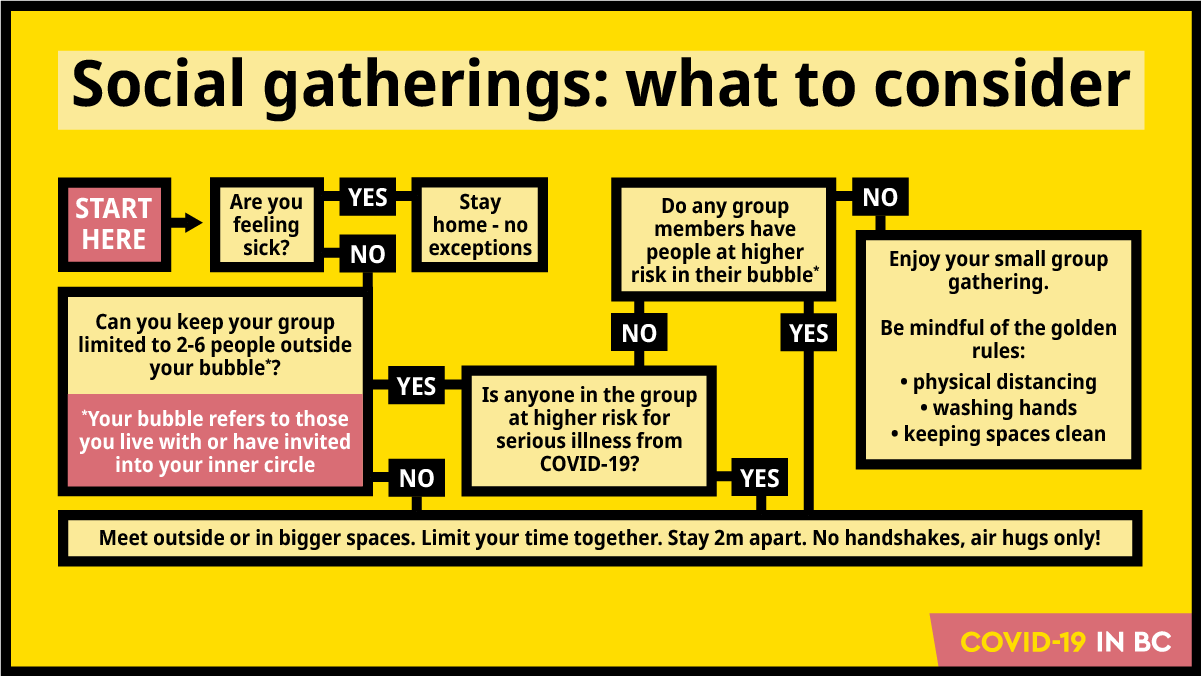
It’s been on my mind, lately. It’s all well and fine to suggest that gatherings of ANY kind should be limited to 10 people, but that’s not really what causes this virus to spread. It’s the ‘bubbles’ that intermingle: family, work, school and meetings. One ‘infected’ person could touch as many as fifty people in the course of their everyday lives.
The idea of ‘herd immunity’ is also being ruled out, now. It’s looking more and more like vaccinations are the ONLY way to defeat this pandemic.
In the meantime, everybody should be following this social gathering flow chart:
And Then There’s Political Rallies…
This may be a photo from 2019
By anyone’s standard, there are two narratives playing out in front of everybody during this election year: one side is being socially ‘responsible’; the other is thumbing its nose at the disease. No wonder the ‘second’ wave is turning out to be much worse than the first. People at Trump rallies have masks, but not everyone is wearing them.
Who’s right?
If you want to protect yourself and your loved ones, you have to be smarter than COVID-19. If you aren’t, you will cause someone in your bubble(s) harm, without meaning to. Trump says it will all go away right after the election: we shall see.
Friedrich Nietzsche (October 15, 1844 – August 25, 1900)
I bought, and tried reading, Thus Spoke Zarathustra several years ago. My God, it was hard work. The opening words, translated into English, were startling, at least to me:
I TEACH YOU THE SUPERMAN
Page 3
And, of course, I had no idea what he was writing about, at the time. Now I do.
This is a rectified chart, based on two life ‘events’: his success in work at age 24 (Jupiter) and his losing his mind at 44 years old (Pluto). What made him go “mad”? There are two inconjuncts, maybe they can give us a clue, or two.
Venus Inconjunct Uranus
You feel mixed up about whether you want to be close to others or be free. When you are really close to a loved one, you feel smothered and want to get away by yourself to do what you want. But when you are alone and free to do what you want, you miss your loved ones and want to be with them. It will take you several years to understand yourself enough so that you can strike a balance between these two needs, so be patient.
Your uncertainty about love and freedom will be even greater if one of your parents doesn’t seem to really love you steadily, if you feel you cannot count on that parent, when you need help. This would make you feel that love is somehow unreliable, that you cannot depend on anyone who loves you. As a result, you won’t permit anyone to depend on you either.
This belief may make you irresponsible in relationships, so that you won’t fulfill people’s expectations even when you have agreed to do so. Don’t promise love that you cannot deliver. While you are young this is not a great problem, but when you are older, you will hurt your partner in a relationship by not being dependable or by not being honest about your dependability. You may tell yourself that you want a steady love relationship, but then go after someone whom you know intuitively will not be reliable. But if you are honest about your need for freedom, this will not happen.
‘In 1882, Nietzsche published the first part of The Gay Science. That year he also met Lou Andreas-Salomé, through Malwida von Meysenbug and Paul Rée.
‘Salomé’s mother took her to Rome when Salomé was 21. At a literary salon in the city, Salomé became acquainted with Paul Rée. Rée proposed marriage to her, but she, instead, proposed that they should live and study together as “brother and sister”, along with another man for company, where they would establish an academic commune. Rée accepted the idea and suggested that they be joined by his friend Nietzsche. The two met Nietzsche in Rome in April 1882, and Nietzsche is believed to have instantly fallen in love with Salomé, as Rée had done. Nietzsche asked Rée to propose marriage to Salomé, which she rejected. She had been interested in Nietzsche as a friend, but not as a husband. Nietzsche nonetheless was content to join together with Rée and Salomé touring through Switzerland and Italy together, planning their commune. The three traveled with Salomé’s mother through Italy and considered where they would set up their “Winterplan” commune. They intended to set up their commune in an abandoned monastery, but no suitable location was found. On 13 May, in Lucerne, when Nietzsche was alone with Salomé, he earnestly proposed marriage to her again, which she rejected. He nonetheless was happy to continue with the plans for an academic commune. After discovering the situation, Nietzsche’s sister Elisabeth became determined to get Nietzsche away from the “immoral woman”. Nietzsche and Salomé spent the summer together in Tautenburg in Thuringia, often with Nietzsche’s sister Elisabeth as a chaperone. Salomé reports that he asked her to marry him on three separate occasions and that she refused, though the reliability of her reports of events is questionable. Arriving in Leipzig, (Germany) in October, Salomé and Rée separated from Nietzsche after a falling-out between Nietzsche and Salomé, in which Salomé believed that Nietzsche was desperately in love with her.
‘While the three spent a number of weeks together in Leipzig in October 1882, the following month Rée and Salomé ditched Nietzsche, leaving for Stibbe (today Zdbowo in Poland) without any plans to meet again. Nietzsche soon fell into a period of mental anguish, although he continued to write to Rée, stating “We shall see one another from time to time, won’t we?” In later recriminations, Nietzsche would blame on separate occasions the failure in his attempts to woo Salomé on Salomé, Rée, and on the intrigues of his sister (who had written letters to the families of Salomé and Rée to disrupt the plans for the commune). Nietzsche wrote of the affair in 1883, that he now felt “genuine hatred for my sister”.’
Wikipedia
Pluto Inconjunct Ascendant
This can be an indication that through experiences with others, you will be forced to undergo many significant changes in life. At times the crises may be quite unpleasant, but for the most part the results will be very positive, although for some people, they may be less constructive. But you must be very careful about the kind of people you get involved with. Choose your friends with great care and try to find people who have a healthy outlook in life and who seem reasonably well balanced. People who are driven to extreme behavior or who act compulsively, as if they could not plan anything in advance, are not very good for you. They will get you into difficult situations that you do not need.
Also watch for compulsiveness or extreme behavior yourself. These qualities could be quite hard for others to handle, and people will probably avoid you if you express them freely.
However, you should not avoid people who force you to observe yourself and the world very clearly. Such people will come into your life at times when changes must occur. While you are young, these people might be your parents or a special teacher. You probably will resist their influence, because what they show you will be hard to take, but you must accept it, for they have the highest concern for your well-being.
With your friends, you must learn to give in at least as often as you get your way. Don’t let either you or your friend become dominant. Winning, losing and compromising in equal measure are all part of getting along, which you may find hard.
“All superior men who were irresistibly drawn to throw off the yoke of any kind of morality and to frame new laws had, if they were not actually mad, no alternative but to make themselves or pretend to be mad.”
Daybreak. 14
‘On 3 January 1889, Nietzsche suffered a mental breakdown. Two policemen approached him after he caused a public disturbance in the streets of Turin. What happened remains unknown, but an often-repeated tale from shortly after his death states that Nietzsche witnessed the flogging of a horse at the other end of the Piazza Carlo Alberto, ran to the horse, threw his arms around its neck to protect it, then collapsed to the ground.
‘In the following few days, Nietzsche sent short writings—known as the Wahnzettel (“Madness Letters”)—to a number of friends including Cosima Wagner and Jacob Burckhardt. Most of them were signed “Dionysus”, though some were also signed “der Gekreuzigte” meaning “the crucified one”. To his former colleague Burckhardt, Nietzsche wrote:
Drawing by Hans Olde from the photographic series, The Ill Nietzsche, late 1899
I have had Caiaphas put in fetters. Also, last year I was crucified by the German doctors in a very drawn-out manner. Wilhelm, Bismarck, and all anti-Semites abolished.
‘Additionally, he commanded the German emperor to go to Rome to be shot and summoned the European powers to take military action against Germany, that the pope should be put in jail and that he, Nietzsche, created the world and was in the process of having all anti-Semites shot dead.’ (Wikipedia)
After He Died
Nietzsche’s later (previously unpublished) works were ‘hijacked’ by his sister, whose focus was more on ‘Nationalism’. Therefore, his works became associated with Hitler and Nazis. This would have been too much: he had always concerned himself with antisemitism. WWII and, in particular, Germany’s “Final Solution” (the Holocaust) would have driven him insane, if he hadn’t already gone that way, before he died.
So now it’s time to revisit that quote I highlighted at the beginning of this post:
I teach you the overman. Man is something that shall be overcome. What have you done to overcome him? … All beings so far have created something beyond themselves; and do you want to be the ebb of this great flood, and even go back to the beasts rather than overcome man? What is ape to man? A laughing stock or painful embarrassment. And man shall be that to overman: a laughing stock or painful embarrassment. You have made your way from worm to man, and much in you is still worm. Once you were apes, and even now, too, man is more ape than any ape … The overman is the meaning of the earth. Let you will say: the overman shall be the meaning of the earth … Man is a rope, tied between beast and overman—a rope over an abyss … what is great in man is that he is a bridge and not an end.
Wikipedia
“Overman”? Superior Man. The Ascended Man. The way we will be when our world is changed into a higher dimension. This shows how far ahead of his time Nietzsche was.