I Love It When Several Streams of Thought Converge

Whitley Strieber (June 13, 1945)
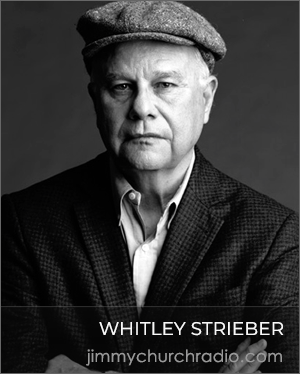
As I intimated in my post yesterday, I’m reading Whitley Strieber’s latest book, “A New World”. It’s good for me since this book goes back to the original narrative of the events covered by “Communion”, “Transformation” and “Breakthrough” (which I still have in my paperback library). What’s better is the hindsight that Whitley now has, since his wife, Anne, died in 2015.

But what about the man, himself?

There are several clues about his personality that are scattered throughout his birth chart: Sun/Mercury/Uranus conjunct in Gemini, spanning his 1st and 2nd Houses; Moon/Pluto conjunct in Leo opposed to the Midheaven in Aquarius and square to Venus/Mars in Taurus. This man has conflicts galore. And there is one inconjunct:

Mars Inconjunct Neptune

With this aspect you must learn to stand up for yourself and demand your rights forthrightly and directly. Often you feel that you don’t have enough energy to assert yourself or that any such effort would be futile. unfortunately, some people with this aspect learn to work behind the scenes or dishonestly. Others simply give up or take a defeatist attitude toward life.

Sometimes this aspect operates on the physical plane as well. You may have a generally low energy level and feel tired all the time but not able to sleep because of nervousness. You may actually need more sleep than others, and if so, you should try to get it. This aspect may also indicate that you tend to have allergies and infections.

Obviously you will have to work to develop your energy, both physical and mental. Your parents should give you a great deal of encouragement and always deal with you honestly. They should encourage you to discuss all your problems openly and let you know that you can always expect fair treatment from them. You should also learn to tell the difference between being really discouraged and being just physically tired. You are not likely to feel very positive and optimistic when your health is not at its best. If you feel defeated and want to give up on some matter, simply rest for a while or wait until another day before making a final decision.

You should get regular exercise to build up your body. Watch your diet carefully and get enough sleep. Stay away from any foods that your body does not handle well.
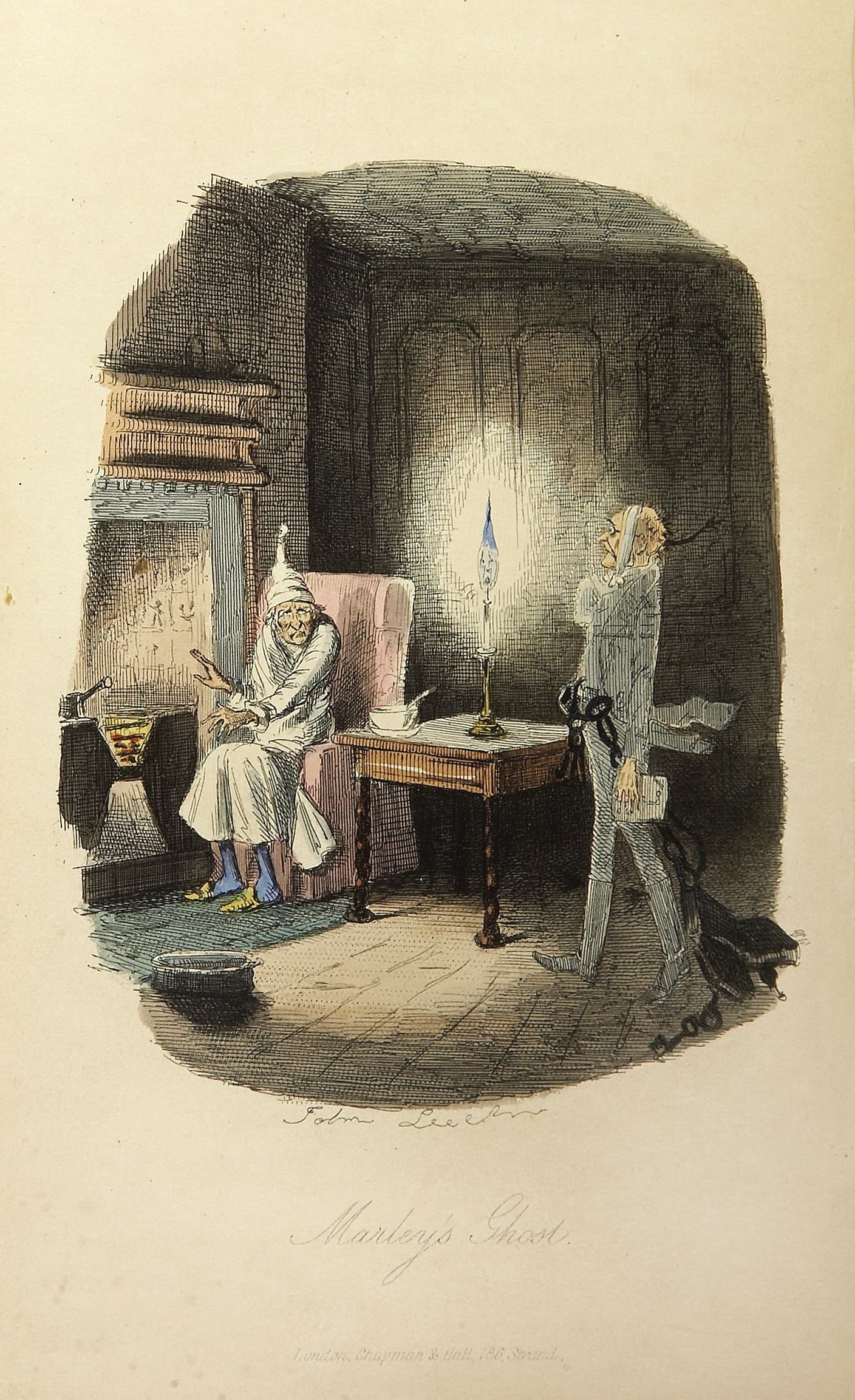
Scrooge shouts in disbelief, refusing to admit that he sees Marley’s ghost–a strange case of food poisoning, he claims. The ghost begins to murmur: He has spent seven years wandering the Earth in his heavy chains as punishment for his sins. Scrooge looks closely at the chains and realizes that the links are forged of cashboxes, padlocks, ledgers, and steel purses. The wraith tells Scrooge that he has come from beyond the grave to save him from this very fate. He says that Scrooge will be visited by three spirits over the next three nights–the first two appearing at one o’clock in the morning and the final spirit arriving at the last stoke of midnight. He rises and backs toward the window, which opens almost magically, leaving a trembling Scrooge white with fear. The ghost gestures to Scrooge to look out the window, and Scrooge complies. He sees a throng of spirits, each bound in chains. They wail about their failure to lead honorable, caring lives and their inability to reach out to others in need as they and Marley disappear into the mist. Scrooge stumbles to his bed and falls instantly asleep.

Sparknotes.com

(I’m interjecting this scene from “A Christmas Carol” to bring to mind how Charles Dickens described this otherworldly apparition.)

A New World?

In this book, Strieber relates how several witnesses had encounters with an individual who visited Whitley and Anne’s cabin in the middle of the night. He shape-shifted…

Before seeking to uncover the meaning here, let me offer a thought about why hieroglyphs would be used at all. In this situation, the hoary old adage “a picture is worth a thousand words” could not be more appropriate. Looked at as imagistic communication, these few brief appearances, each one lasting only a few seconds, left behind a treasure trove of information. This quality of compression is a consistent characteristic of visitor communications. Even when words are used, multiple meanings are conveyed. For example, when the words “A new world, if you can take it,” were said to Col. Philip Corso, both meanings were important—if we can wrest it out of their hands and if we can bear what we find.

First, we’re shown a bird of paradise, then the falcon god Horus. The connective tissue is that both visitors had the same general appearance and both transformations involved birds. The first sentence, the transformation into a bird of paradise, is straightforward: “I can fly like a bird, and I belong to paradise.” The next one, Horus, is more complex. First, the term in Egyptian mythology represents a number of avian deities, primarily Horus the Elder and Horus the Younger, two different gods with different attributes. But there were also many more granular manifestations of the deity. This suggests that we should think of the entity as being part of a larger group*, perhaps an entire civilization, a whole species, a world. The pharaoh, during his lifetime, was identified with Horus, meaning that the entity belongs to life and to what we might think of as kingship or leadership, and a noble tradition. The falcon hieroglyph refers to the star Sirius. As well, the falcon is the fastest animal on Earth. It also ascends the sky in circles, just as energy does when it rises up the spine. The falcon is also the ascending soul.

So we have in these two brief images what amounts to a self-portrait. A remarkable being is telling us about himself in a language of transformations and images from our own ancient memory and from nature. His first sentence, spoken to the carpenter, told us where he was from and how he could navigate. His second is “I am a king and also very fast.” Then, “I am from Sirius, and I am returning.” Then, “I am a living soul.” All of that said without a word spoken or written down, but eloquently clear if one accepts that there could be a language based on signs and imagery that work like hieroglyphics and that somebody could make the words not by writing but by changing their own appearance.

Strieber, Whitley. A New World (pp. 128-130). Walker & Collier, Inc.. Kindle Edition.

We are now back in Ra territory. This is the same Ra who contacted David Wilcock after he started studying The Law of One in the early 1990’s. Are we really just coming to this now?

Conclusion

I know it’s a lot to take in. But I am glad that the ‘story’ of Whitley Strieber’s encounters with ‘visitors’ has taken on historical proportions. It anchors this trajectory in ‘real’ fashion for me.


* Ra?
Posted in history, reviews, spirituality | Tagged , , , , , , , , | 1 Comment

Returning to the Scene in the Library

A New World (2019)

Courtesy of amazon.ca

It’s hard to believe that more than 35 years have passed since Whitley Strieber had his close encounter of the third kind. Since Anne, his wife of 45 years, died in 2015, Whitley has come to the conclusion that the ‘visitors’ (as he likes to call them) are connected to the dead. Their job, as he sees it, is to open us up to a level of communication where we can commune with all of life. I think he may be on to something.

In the meantime, most Space Brother channelers are saying that this month, June, is going to be when we will be given ‘full disclosure’ about UFOs, aliens, and their purpose here on Earth. It seems the ‘visitors’ are trying to save us from ourselves.

The book cover, shown above, has the Vitruvian Man superimposed on a combined astrological chart. That image got me to thinking: “Maybe I should finally chart that December 26, 1985 event.” So here we go:

Guess what? There was a full moon that night. I should have been expecting that. All the aspects in this chart point either at the Moon or the Midheaven, which seems to be the implied meaning here. And there is one inconjunct:

Moon Inconjunct Saturn

This aspect usually means that your need for emotional security conflicts with your need to live with the world’s demands. Each of us needs to be accepted and loved for what we are, in order to have enough self-confidence to deal with the world. But we also have to learn to live with our own life situations in order to survive. In other words, we have to realize that we can’t have everything we want. With this aspect these two needs are working against each other. Probably you will satisfy one of them at the expense of the other.

If the Moon, because of environmental conditions, becomes the stronger energy, you may be afraid that you will never get enough love and support from other people, especially your mother. Because of this fear toy may become too dependent on your mother. It is important that she or someone else give you plenty of emotional support and at the same time encourage you to go out on your own.

If the Saturn energy becomes stronger, you may learn to distrust your emotions and become rather cold and unfeeling. You may also be suspicious of anyone who tries to touch you emotionally, especially your mother. But when you are emotionally upset, you may get out of control and act in ways that you usually would consider wrong. This problem would be at its worst when you are older. Later in life you might feel that you have no roots, that no one cares for you and that you don’t belong anywhere. This is called alienation (!), and you are likely to feel that way if you do not learn to balance the needs of both planets.

If you are able to balance the two, this aspect can have a positive effect. You will be able to keep a lid on your feelings and control yourself in difficult situations, but at the same time feel and express your emotions when you should.

Here’s One I Prepared Earlier

I wrote previously of my second wife’s own brush with the denizens of the Library. I have raised a chart for the time that she started to tell me about her ‘vision’. That cluster of planets, starting with Pluto in Libra and ending with Jupiter in Capricorn, is significant, in my humble opinion. But it isn’t obvious until you combine Suzann’s vision with Whitley’s Communion:

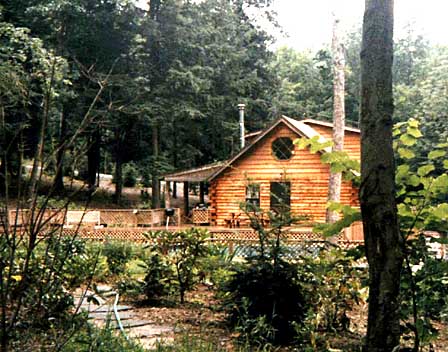
There, is that any clearer? These two ‘events’ ARE connected, and I’m wondering why I never thought to do this comparison before now. Still, that’s the point of the ‘Universe unfolding as it should’, isn’t it? With that thought, I’m going to leave you with an image of Whitley’s cabin in the woods, where it all took place, that night.

Near Accord, New York
Posted in history, spirituality | Tagged , , , , , , , , , | 1 Comment

How John le Carré Describes George Smiley to His Readers

A Murder of Quality (1962)

If you’re like me, you would have probably thoroughly enjoyed the Smiley Trilogy (“Tinker, Tailor, Soldier, Spy”, “The Honourable Schoolboy” and “Smiley’s People”). But I had never read one of the early books that introduced him to John le Carré’s readers, until now.

When he had read it, he held it briefly towards the lamp, his round face caught by the light in a moment of almost comic earnestness. Watching him, Miss Brimley wondered what impression he made on those who did not know him well. She used to think of him as the most forgettable man she had ever met; short and plump, with heavy spectacles and thinning hair, he was at first sight the very prototype of an unsuccessful middle-aged bachelor in a sedentary occupation. His natural diffidence in most practical matters was reflected in his clothes, which were costly and unsuitable, for he was clay in the hands of his tailor, who robbed him.

He had put down the letter on the small marquetry table beside him, and was looking at her owlishly.

le Carré, John. A Murder of Quality (p. 28). Penguin Canada. Kindle Edition.

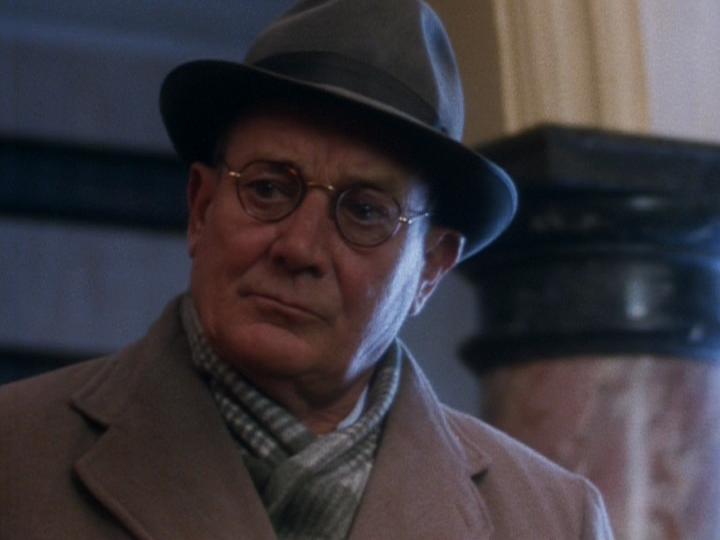
(For those that have seen Alec Guinness in the role, these words are a good description of him.)

In the story, Smiley goes to Carne, his ex-wife’s home town, to help solve a murder (or two). I sensed that the author was hoping to write a series of murder mysteries, à la Agatha Christie. This was his second book to involve Smiley.

Smiley’s relationship with his wife was always a mystery to me.

“There was a fellow called Smiley married Ann Sercomb, Lord Sawley’s cousin. Damned pretty girl, Ann was, and went and married this fellow. Some funny little beggar in the Civil Service with an OBE and a gold watch. Sawley was damned annoyed.” Smiley said nothing. “Sawley’s got a son at Carne. Know that?”

le Carré, John. A Murder of Quality (p. 131). Penguin Canada. Kindle Edition.

True to form, Smiley doesn’t say anything, even though this statement was made to his face by one of the characters. It’s an interesting way for an author to give the reader the main character’s background in one paragraph. And it also shows Smiley’s reticence to respond.

In the 1991 TV movie of the same name, Smiley is played by Denholm Elliot. It was one of his last roles.

(And, yes, that’s Christian Bale in one of his earlier roles as Tim Perkins, head of house.)

So, did the visit to Smiley’s wife’s home village affect him?

As the train pulled slowly out of Carne and one by one the familiar landmarks disappeared into the cold February mist, George Smiley was filled with a feeling of relief. He hadn’t wanted to come, he knew that. He’d been afraid of the place where his wife had spent her childhood, afraid to see the fields where she had lived. But he had found nothing, not the faintest memory, neither in the lifeless outlines of Sawley Castle, nor in the surrounding countryside, to remind him of her. Only the gossip remained, as it would while the Hechts and the Havelocks survived to parade their acquaintance with the first family in Carne.

le Carré, John. A Murder of Quality (p. 133). Penguin Canada. Kindle Edition.

There you go: that’s how Smiley’s background was resolved. Aren’t you glad?

Posted in reviews | Tagged , , , , , | Leave a comment

Was There Something in the Air That Year?

No Man’s Brother (1984)

Courtesy of amazon.ca

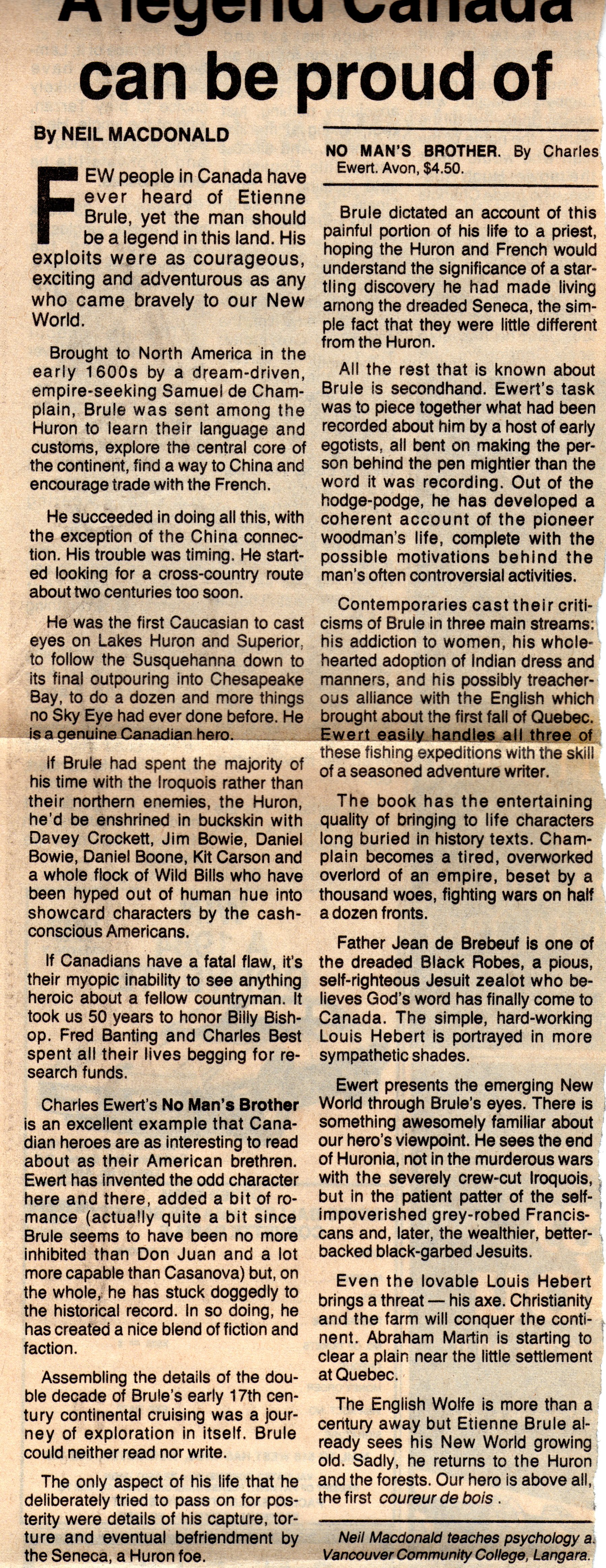
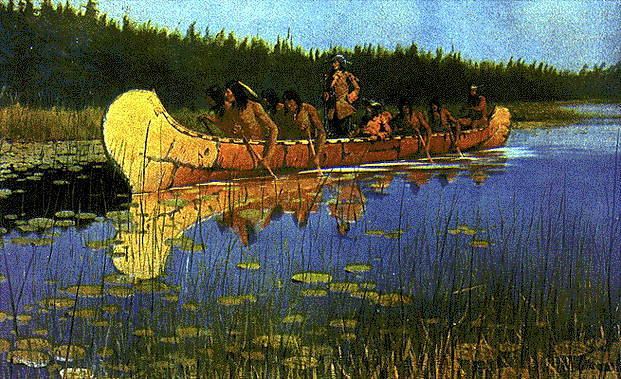
There I was, writing a book about furtrading in the Canadian North, and suddenly I realized I’d been pipped at the post. Obviously, these things happen, but it knocked the wind out of my literary sails. Not only was the story similar, it had the same elements of Pierre Radisson’s life.

The Vancouver Sun – Sat., March 24, 1984

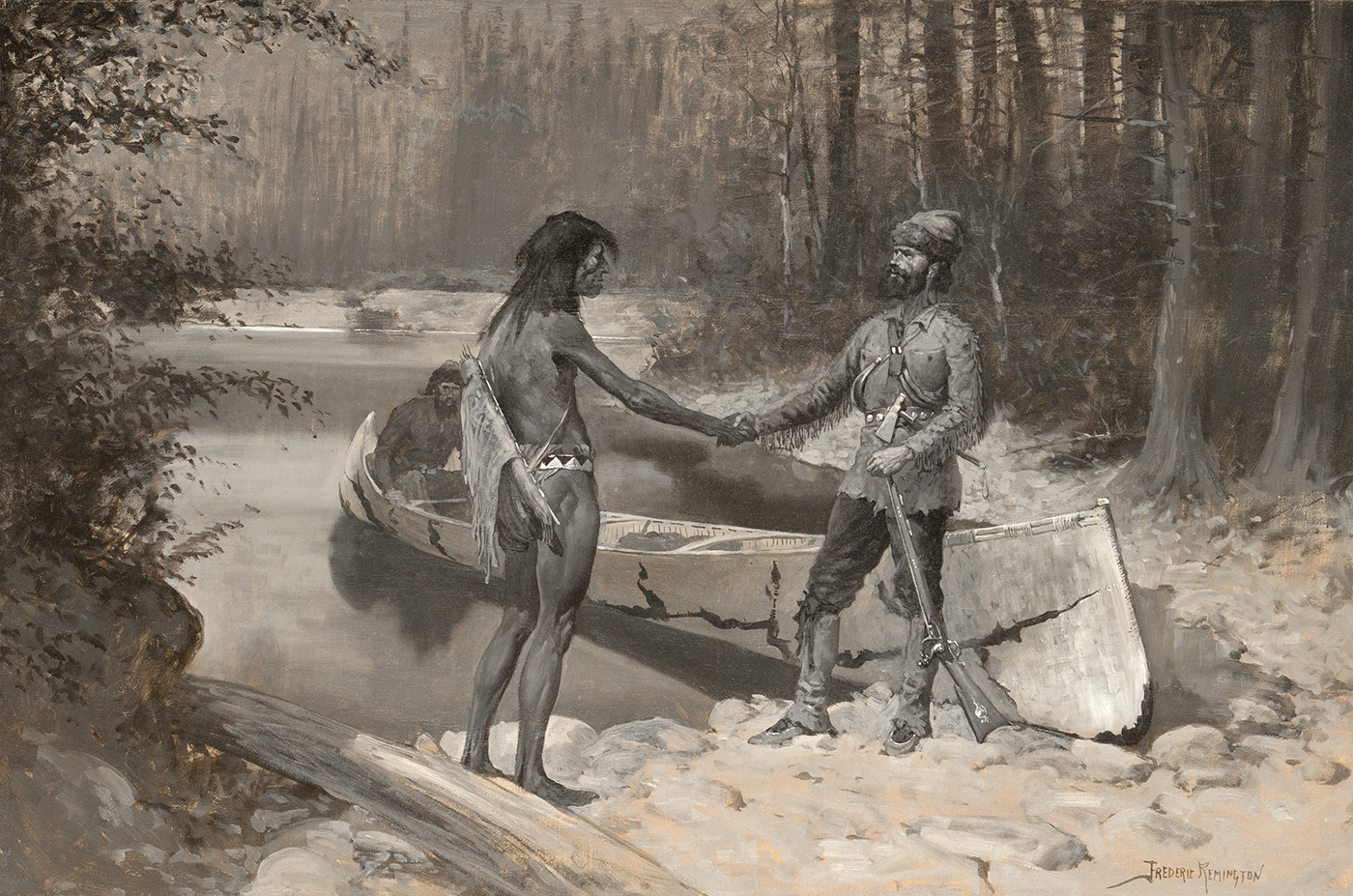
To say I was disappointed would be an understatement. I grew up on this stuff: I’d visited the Martyrs’ Shrine in Midland as a child; I’d seen the spot where the Jesuits were martyred, I saw the beginnings of the Indian village which would later become a visitors’ museum of Huron life. But my identification with Pierre Radisson as a prior life for me made this a betrayal of sorts. (And this was six years before “Dances With Wolves”, the film of the 1988 book of the same name.) The idea that a white man would (or could) adopt the Native Canadian way of life seemed profoundly important at the time, but is almost passé now.

The Beaver House

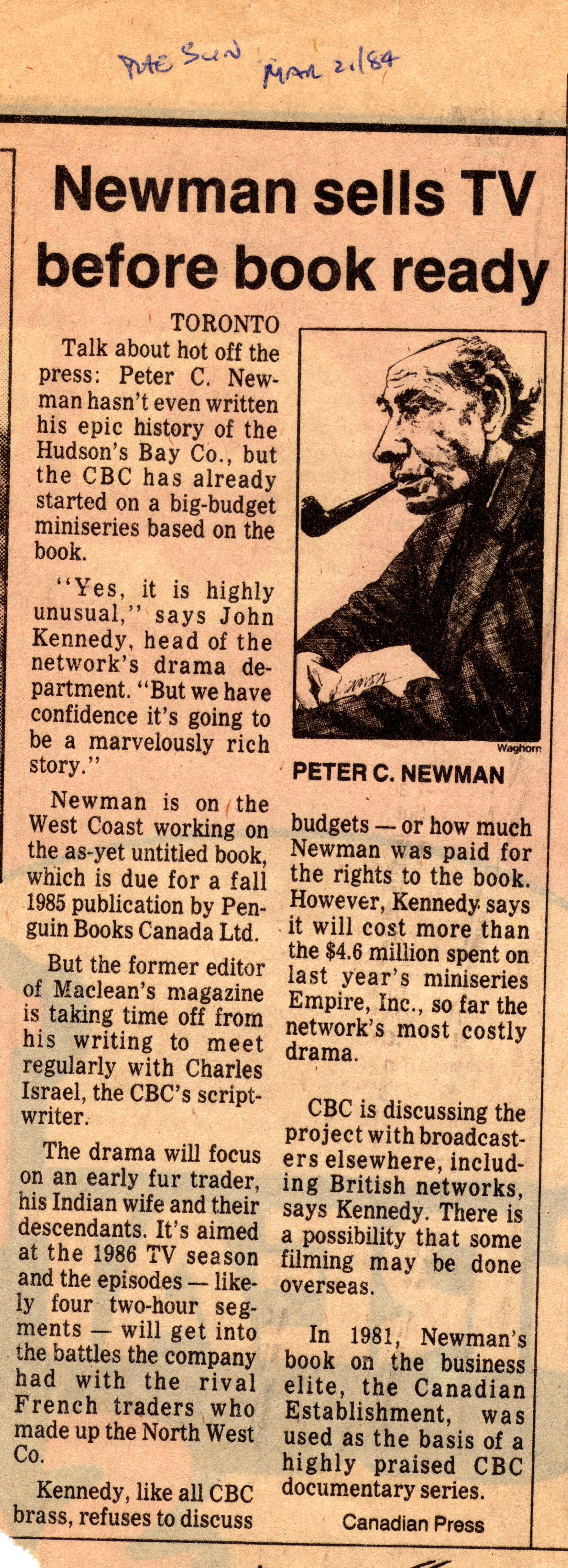
To be honest, I’d written more of this manuscript, but I abandoned copying it onto typewritten sheets as soon as I realized that I wasn’t the first to envision a furtrader’s life among the natives. What made it worse was this report, also from the Vancouver Sun, but dated three days earlier:

Peter C. Newman, for God’s sake! How was I to compete with him? There was no way I could, and since he was writing about the Hudson’s Bay Company, it would be a no-brainer to include Radishes and Gooseberries (as we called them as children).

So I stopped.

But now I want to share a couple of insights with you about my manuscript. First of all, I researched the Indian names that I used. But I never explained what Ahmik’s name meant. The usual interpretation would be ‘Solitary One’ but I soon saw that it could also be interpreted as ‘Beaver’, which gave an extra meaning to the story title. Ahmik’s lodge was the beaver house.

The love triangle between Pierre, Kijik and Ahmik would have implications later in the story, although it no longer matters now: the White Man appears to be a friend of the Native Canadians, but what he’s really doing is stealing the land from them. He’s taking their ‘House’.

That’s why I tagged the story as a ‘metaphor’.

Conclusion

This is not the first manuscript I have abandoned over the years. My literary skills are ‘so-so’ when it comes to prose, story-telling, plays and essays. Only my poetry really shines.

Courtesy of Achetron

So, farewell dear friend, we have had a good run, you and I. God bless.

Posted in history, manuscripts | Tagged , , , , , , , , | Leave a comment

The Beaver House (VIII)

Chapter Eight

Meanwhile, Pierre was dreaming, too. But his dream was not pleasant. In fact, he was having a nightmare about his close brush with death at the hands of his Mohawk capturers. Scenes of scalding, joint amputations, beatings and molesting flashed across his dream-scape like demons in the night. He relived his pain and suffering; he re-witnessed the cutting out of a fetus from a French woman’s womb – when the Mohawk tried to make the woman eat the body, she promptly died; he re-felt his terror of death, for he had been positive that he would die by their hands, having seen them dispatch others around him, with lightning speed sometimes, and other times with agonizing torture.

His heart was pounding furiously when a hand touched his arm and broke his sleep.

“What?!!” he shouted as he jumped to his feet.

“Calm down, Ovinha,” Ahmik said soothingly, “you were thrashing about in your sleep, moaning deeply about something that was bothering you. I felt it best to bring you back from the shadow of night into the sunlight of day.”

Taking a deep breath, Pierre stilled the beating of his heart and sat down with a small sigh escaping his lips.

“I’ve had that dream many times before, but each time does not make it any easier to bear. I wish I could lay the terror to rest forever.”

“It is disturbing to me to see such a strong man as you, shaken by the fears of the past. Would it not be better to look forward to the bright future and banish the tortured past to faded memory?”

“Yes, Ahmik, you are right. It is time for me to grow up. Mistakes have been made, but I must learn something positive from them and get on with my life. It’s just that my having killed three Mohawk, and then almost being executed by their people, has left a distaste for death and murder. For the rest of my days, I vow, before you and my God, that, if it is at all possible, I shall avoid hurting others physically and shall never, nor cause others to, murder anyone around me.”

“Ovidha, are you sure that you want to go that far in your oath? There are many hated, and hating, people who would not hesitate to slay you, if it served to better their position.”

“I am aware of that, but I do not want any more death on my conscience. From now onward, to the end of time, I shall use my abilities of speech and understanding to solve conflicts and desperate situations. There will be no problem too difficult to resolve if I set my mind to it.”

“I admire your stand, but I cannot help thinking that you are being blind to the potential misuse of your vow, by others who will not hesitate to take advantage of your intentions.”

“Ahmik, someone must stop this senseless killing and it might as well stop with me as anyone else. I’m not a strict believer in the Church, but I’ve learned that we are to love our neighbour as ourselves, no matter what colour his skin is or what nation he comes from. I love you as a brother, even though we’ve only just met, and if I take the same attitude into dealings with all men, I cannot, in good conscience, cause anyone’s death.”

“But what would happen if, in your trading, you run into an obstacle, such as a rival? What if this rival were a ruthless cut-throat? What would you do?”

“I’d have to outsmart the fox to trap it in its own trick, wouldn’t I?”

“Yes, but how?”

“I would use my understanding of how people think, and work on their insecurities, fears, greed, whatever weakness I found, to motivate them to do as I want.”

“May Kitche Manito smile on your endeavour, Ovinha, for you have set a hard task before yourself.”

“I’m sure He will. Now, what must a fellow do to get fed around here, I’m starving.”

Posted in history, manuscripts | Tagged , , , , , , , , , | Leave a comment

The Beaver House (VII)

Chapter Seven

Kijik lay on her mat, a satisfied smile playing at the corners of her lips. She’d been dreaming of her god-spirit and he had been showing her intimacies that had so far eluded her experience.

With each dream-vision, she felt more sure, secure in the knowledge of his intentions. He had told her it would only be a short while before they would meet in the body and become one, as they had already, in the spirit.

She knew they would, too, as she had discussed the whole situation with Nabad, whose name means ‘Sleeper’, the medicine man who doubles as a shaman when required. Nabad had gone into a trance to see the future – a future which forecast that a white stranger would reach their shores. The clincher was that this stranger had red hair.

On hearing Nabad’s pronouncements, Kijik’s heart leapt with joy. Her visions had not deceived her, and the one in which she was now immersed was the culmination of her wildest hopes. The red-haired god-spirit, whom she decided to name Eeang, because he was the ‘Rock’ on which her future was based, was coming to get her and take her away from these despised people.

Posted in history, manuscripts | Tagged , , , , , , | Leave a comment

The Beaver House (VI)

Chapter Six

“To begin with, I was adopted in my early teens by a Mohawk family. They saved me from a torturous death and to them I shall be eternally grateful. Then I escaped from the tribe by killing three of my companions. Now I know that I did a treacherous thing, but the need to return to my proper kinsmen was too strong to be denied. I almost made it the whole way back when I was recaptured. Only this time, I knew I had no chance to escape Death’s door.”

“But you are here, so you must have eluded the Eternal Sleep once more.”

“Quite so, but I will get to that a little bit later. For now, let me just say that I was so sure that I would be executed that I stopped worrying about what minor injuries they could do to me. So after undergoing horrible tortures, I was shocked when my adoptive family came to my rescue as second time. It took great eloquence on the part of my father, and beautiful porcelain necklaces from my mother, before the elders of the tribe gave in and released me.”

“Did you suffer?”

“Not as much as I could have if I had not feared death: the fear of death takes away the fear of blows. Anyway, the tortures I witnessed going on around me were worse than I had to endure.”

“Any permanent damage?”

“Just my middle finger which they had squeezed between two stones. They called me Ovinha, which means the same as my name does in French, ‘stone’. With that kind of introduction to the ways of the ‘First Men’, I went on, after escaping with the help of the Dutch, to assist the Jesuit ‘Blackrobes’ with their trade missions and dealings with the Huron and Iroquois.”

“So what has this to do with knowing our language?”

“Actually, it was in my dealings with the Ottawas that I became acquainted with your tongue, and after a few months I mastered it. Do you realize that most of your neighbours rely on the names your people use to identify the same things they have? That tells me that your people are very influential.”

“You are correct, Ovinha, the surrounding people know we are the First People and they look to us to lead the way.”

“Then I have, indeed, come to the right people. Will you help me?”

“How?”

“We want to negotiate a trade – beaver pelts for supplies. If your people agree, you will receive a portion of the wealth, no matter who deals with us.”

“Why would you do that for us?”

“Since your neighbours look to your people for direction, you should be well paid for the influence you can exert on them.”

“Please speak clearly, Ovinha. What must we do to earn these riches?”

“Just let it be known that your tribe has begun to trade with us: then, when your neighbours hear what you are doing, they’ll want to join in. Do you understand?”

“Yes, now I understand.”

“Will you speak to your elders for me?”

“Yes, they will decide.” With that, Ahmik arose and went out of the lodge.

Pierre looked around and saw where his possessions were. Going over to them, he lay down on his mat and promptly fell asleep.

Posted in history, manuscripts | Tagged , , , , , , , | Leave a comment

The Beaver House (V)

Chapter Five

“Welcome, friend from the People of the Place of Fire, how was your voyage?”

Pierre looked up to see the huge Indian in front of him. Holding out his hand in friendship, he said, “Greetings from the Potawatomi, my name is Pierre. Where can I put my things?”

Ahmik indicated a birch lodge to the right of where he was standing and said, “You are my guest: my home is your home.”

Before Pierre could pick up his belongings, several of the village women had moved closer and were carrying the canoe and its contents to Ahmik’s lodge.

“Where did you learn to speak our language so well?” Ahmik asked Pierre.

“It’s a long story – do you have the time for me to tell it to you or would you like me to wait until some other time?”

“Let’s go into my lodge and there you may tell me the whole story.”

With that, they went and settled down on two mats, sitting cross-legged face-to-face.

Posted in history, manuscripts | Tagged , , , , , , , | Leave a comment

The Beaver House (IV)

Chapter Four

Ahmik stood apart from the rest of his tribe, in many ways. He was tall, handsome and well-muscled. He was also chaste, a most unusual trait. For days at a time, he would think about Kijik, because he wanted only her for his wife. Since she did not encourage his interest, he was content to wait.

Someday, he thought, she will come to her senses and see that I’m the only man good enough for her.

In the meantime, there were wars to be fought against the Sioux, and alliances to be maintained with the Potawatomi and the Ottawas. His part was to meet the new emissary, when he arrives. Not having seen a man with pale skin before, he was not sure how to greet the stranger.

Maybe I should salute him as a great warrior, or even a god, he pondered to himself, or, maybe he’s just a man as I am a man – no more, no less. Then I shall greet him as a brother, he concluded.

At this point in his deliberations, a few of the children came running up to him and tried to tell him in their breathless way that a single man in a canoe was approaching the shore of the lake.

“Later, Kijik, I’ll think about you later,” he muttered aloud. “Military matters before mating.”

And he went forward to greet his guest.

Posted in history, manuscripts | Tagged , , , , , , , | Leave a comment

The Beaver House (III)

Chapter Three

She was called Kijik, meaning ‘Sunshine’, by her abductors. Although her disposition was basically sunny, she didn’t always feel that way, especially these days. Sometimes her feelings were so passionate, and her moods so petulant, that she would have been better named Nimiki, meaning “Thunder’.

Today was one of those days: today she was burning with unfulfilled desire, an almost aching despair. Her fifteen years hung heavy on her. She had spurned the men in the village because they were such deadheads.

Having been taken from the Sioux, she had been kept by the Ojibwa as a potential mate for one of their braves. However, that wasn’t likely to happen because, one night as she lay sleeping on her mat, she had had a vision. The man who would win her love someday was not like any man she had ever seen before; he was about a head taller than she, red-haired and pale-skinned; he was like a god-spirit.

No, she thought, he is a god-spirit. And the mere thought made a shudder rush up her spine.

“When is he coming to get me?” she asked aloud, for no one was in her lodge at the time, to overhear. “With this fire raging within me, I don’t think I can wait: I need him now, not later.”

With that, she flopped down on her mat and, turning on her back, looked up through the smoke-hole at the clear blue sky.

“Hurry, my God-Spirit, hurry – I cannot wait forever.”

Posted in history, manuscripts | Tagged , , , , , , | Leave a comment