Pierre felt relaxed. The water was lapping the sides of his canoe gently and the sound of his paddle dipping into the surface of the lake served to keep a steady beat for the sounds from the wilderness around him.
How do grasshoppers keep up that constant hum? he wondered to himself. If I’m not careful I’ll fall asleep, right into the water.
It was early spring and Pierre was on his way to a Chippewa settlement, northwest of the Superior Lake. His brother-in-law, Medard, had sent Pierre on his own because of his knowledge of, and experience in, Indian ways. The discussion had not been a long one.
As they parted, Medard had said to Pierre that he should be able to quickly win the Indians over to their side. It was the Potawatomi who had told them of their allies, the ‘Ojibwa’ as they were known by their neighbours. The Chippewa covered most of the northern Great Lakes regions and were the largest tribe on the North American continent. Their help was needed by the French furtraders, in order to keep out the English and keep the other Indian tribes friendly.
Now, thought Pierre, I must keep my wits about me, if I’m to be persuasive.
His abilities to be persuasive were already legendary: only one winter ago he had single-handedly prevented a massacre of the Jesuits and the French garrison at Sainte-Marie-of-Gahentra by the Iroquois, by pretending to have had a dream where he was going to die unless there was a Great Feast. To avoid his death, the Great Feast was held, and after the Indians fell asleep, the French and Jesuits escaped unharmed.
That time of his life seemed distant to Pierre, now, as he paddled quietly on the still water.
In about an hour, I will be there, he thought. Then I can go to work on the Saulters. I’ll prove to Medard that his trust in me is not misplaced. Now, if I can only keep alert instead of falling into reveie.
With that, he increased the tempo of his stroke and broke the spell.
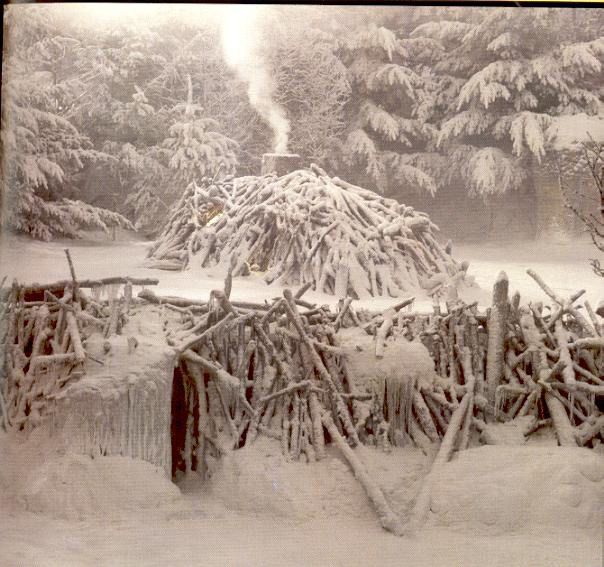
The beaver house stood in the middle of the pond. No one was around. The snow lay in drifts on the bank of the pond as ice totally covered the water, except for a large slit which wasn’t there yesterday.
Inside his house, the beaver was restless. By all accounts he should have been resting, but the pangs of hunger, which were causing his stomach to contract sharply, made him think of something to gnaw on.
Waddling to the entrance to his house, he splashed into the cold water and gracefully pushed his body forward, propelling himself out into the pond.
To his hungry senses, the wood which lay suspended in the water near the strange opening in the ice was a complete surprise. This time there would be no need for foraging: food was waiting for him like a heaven-sent gift, ready to eat.
As he approached the object of his desire, he noticed the double cords of the net which were keeping the wood suspended. He felt the presence of humans, but ignored the sensation, as hunger washed over him again.
The beaver climbed into the net to retrieve his catch and found himself caught in its hold. Struggle as he may, he could not break free, and seeing the hole in the ice, he climbed the net’s cords up to the air.
Poking his head through the slit, he breathed the sharp, cold air with relief. At last he was free of the trap. Climbing out onto the crisp ice, he heard the light step of a human. Before he could turn and dive into the hole, something heavy smashed onto his head and he lost consciousness.
[Before I begin, I want to explain a couple of things. Before undergoing this regression, I had read Pierre Radisson’s journals covering his Voyages a few years previously. And the SAM referred to here was my second wife (they are her initials). Finally, SAM had undergone a similar regression and had seen us together in this past life, so I definitely wanted it to be true.]
“…Now, tell me what you see.”
Could it be true? Or am I just imagining it?
“In front of me is open water; a lake. I’m paddling a canoe, by myself.”
No, it can’t be real. I just want it to be real because SAM saw something similar in hers.
“Go on,” the voice insisted.
“I’m bringing the canoe up onto a sandy beach. I’m getting out and walking toward an Indian settlement.”
Sure you are: you just want to find SAM in the past; you just want to be her French furtrader.
“Do you know where you’re going?” asked the voice.
“Sure, I’ve been to this camp many times before. I trade with these Indians.”
“Where are you now?”
“I’m approaching the last tent. It belongs to the chief of the tribe.”
But is she here? Or do I meet her later?
“Now, try to concentrate on something which happens later on… in a week or a month.”
“Alright, I’ll try.”
Where am I now? Is that a fish passing by me?
“Ha! A fish just swam by my face!”
“Where are you?”
“I’m under water, swimming. No one’s around and I’m just taking a refreshing dip in the cool water. I think it’s a stream; just a minute while I come up from under the water so I can look around.”
She’s here somewhere, I can sense her presence.
“Yes, it’s a stream and there are birds and trees surrounding the whole area. It seems quite private.”
Where is she? Ah, I just saw something move.
“There’s someone else here.”
“Who?”
“A young Indian maiden, fifteen, eighteen, I’m not sure.”
“What is she like?”
“Bashful. I don’t think she’s seen a white man naked before.”
I’d love to know what she’s thinking.
“Is she beautiful?”
“Oh, yes, quite beautiful — so young and vital; I hope to get to know her better.”
In about 300 years.
“Okay, let’s go forward in time: What do you see?”
“I’ve gone too far, I’m dead and I seem to be getting larger, larger than life.”
Logo courtesy of the Facebook group of the same name
How do you fight a battle that has been going on since slavery days? You tackle it head-on.
The following play excerpt is all that I have of an idea that I was thinking of ‘fleshing out’ in the late 1970’s. In total that were seven pages of yellow lined paper. This is what I wrote:
Black and White (a play)
Setting: A schoolyard – Back wall shows name of school (W.R. Best Memorial) across top with chalk marks and graffiti on it (“We are Best” “Who says?” etc.) One tree shown in foreground (could be a single pole with lighting to give the impression of leaved branches).
Lighting: Rose-coloured to indicate sunset changing to dusk.
Time: Early evening (6:30).
(LARRY, a ten-year-old white roughneck is climbing the tree as the curtain opens, or rises. About halfway up the trunk, he loses his grip, falling heavily on one leg.)
LARRY: Owww!
(LARRY attempts to get up but, finding he cannot do so without pain, sits down, his hurt left extended.)
LARRY: Now, what do I do? Sit here ’till morning? I can’t. What’ll the guys say? I’ve gotta find a way to get home before someone finds me.
(LARRY tries to getup again, only to sink down to the ground in obvious agony.)
LARRY: (feeling his ankle) I hope it’s not busted. (musing) Here I am, the toughest kid in school, sitting on my butt, in the middle of the school yard, with a wrecked leg, and no way to hide. All this ’cause I wanted to put a caterpillar down Ronnie’s blouse. (Glancing around) Oh, oh! Here she comes!
(RONNIE, a willowy ten-year-old black girl enters the scene and approaches LARRY from the rear. LARRY, trying to appear nonchalant, picks up a branch from the ground, pulls out a pocketknife and begins to whittle.)
RONNIE: Hello, Lawrence. What are you doing?
LARRY: Don’t call me that!
RONNIE: That’s your name, isn’t it?
LARRY: Yea, but I like Larry better.
RONNIE: Why?
LARRY: ‘Cause it don’t sound sissy.
RONNIE: You mean, “Because it doesn’t sound like a sissy’s name.”
LARRY: Yea, right.
RONNIE: You didn’t answer my question.
LARRY: What question, Ronnie?
RONNIE: My name is Veronica.
LARRY: What’s the matter with Ronnie?
RONNIE: It sounds so coarse, vulgar; you know, common.
LARRY: Little Miss Uppity, eh? What’s the matter: ‘fraid someone will think you’re poor or something?
RONNIE: I’ll have you know that my father is very well-off financially.
LARRY: I know, I know: he’s got more bread…
RONNIE: (Interrupting) Money!
LARRY: …than my old man.
RONNIE: Father. I don’t know how anyone can speak such poor English.
LARRY: It’s easy.
RONNIE: Well, what are you doing, Lawrence?
LARRY: Larry! Larry!! Larry!!! How many times do I hafta tell you? My name is Larry, not, ugh, Lawrence.
RONNIE: Lawrence is a fine name. It means ‘laureled, poetic.”
LARRY: Blah!
RONNIE: Now, answer my question!
LARRY: What? Why I’m sitting here? What does it look like?
RONNIE: It looks as if you’re whittling something.
LARRY: If you knew the answer, why’d you ask the question?
RONNIE: Never mind! Didn’t anyone ever teach you manners?
LARRY: What? Like “ple-e-e-ease” and “thank you so ve-e-ry much”?
RONNIE: No, like getting up when a lady is in your presence.
LARRY: (shamefaced) I… I can’t.
RONNIE: (indignant) Why?
LARRY: Well… I was walking through the schoolyard when a UFO suddenly appeared out of nowhere. It was shaped like a silver bell with flashing lights all around its middle. I stood my ground as it came closer and closer. When it saw I wasn’t scared, it started to pull away. I tried chasing it, but I slipped on a stone and fell on my leg. The UFO got away.
RONNIE: Are you hurt?
LARRY: Oh, it’s nothing, really.
RONNIE: But you can’t get up.
LARRY: No, I can’t.
RONNIE: Let me give you a hand.
LARRY: Are you kidding? No way! No girl’s gonna help me.
RONNIE: Why not?
LARRY: What would the gang say? I’d be laughed at.
RONNIE: No, you wouldn’t.
LARRY: Yea, I would. You’d squeal, Ronnie.
RONNIE: I would not. I’ve done some dumb things in my life, too.
A bit ahead of the curve, I chose this title for my play about banking and being bankrupt. Now, the word is fair game for everyone, 43 years later. In the play, I discuss what working in a bank is like (from an insider’s point-of-view) but to keep from boring my (future) audience, I have included a running gag about an elderly customer, Mrs. Tuttle, and her multiple transactions.
To simplify your reading of this material, I have removed the other simultaneous conversations that are taking place while Mrs. Tuttle does her banking. (It is intended as comic relief only.)
[TUTTLE is the very first customer of the day…]
MARGARET: Hi, Mrs. Tuttle. What can I do for you today?
TUTTLE: Quite a few things: you don’t mind, do you?
MARGARET: Why should I mind? It’s my job to serve customers.
TUTTLE: Good. To start with, please bring my passbook up-to-date.
(…)
MARGARET: Mrs. Tuttle, your passbook is now up-to-date. I had to mark down thirty-seven back items.
TUTTLE: I know: I’ve been forgetting to bring it with me.
(TUTTLE begins looking through her handbag.)
TUTTLE: Now, if I could only find my other passbook, I’d make a transfer to the one you just finished with.
(…)
TUTTLE: Here it is.
MARGARET: How much would you like to transfer?
TUTTLE: I don’t know: how much is in this account?
MARGARET: I’ll bring it up-to-date, too.
(…)
MARGARET: Here’s your other passbook, up-to-date.
TUTTLE: Good. I’d like to transfer one hundred and twenty dollars from this account into that one.
MARGARET: One, twenty?
TUTTLE: Yes, one hundred, twenty dollars and no cents.
MARGARET: No sense.
(…)
MARGARET: There, Mrs. Tuttle, your one hundred and twenty dollars has been transferred.
TUTTLE: Now I’d like to withdraw one hundred and fifty dollars in cash.
(…)
(MARGARET begins to give TUTTLE her money.)
MARGARET: Twenty, forty, sixty, eighty, one hundred, ten, twenty, thirty, thirty-five, forty, two, four, six, seven, eight, nine, one hundred and fifty dollars.
TUTTLE: Good, now I’d like to pay some bills.
(…)
TUTTLE: ,,,And this hydro bill for sixty-five dollars and twenty-three cents.
MARGARET: That makes a total of one hundred and thirty-eight dollars and fifty-four cents in utility bills.
TUTTLE: How much did I have in service charges with my retirement club card?
MARGARET: Nine utility bills at twenty-five cents is two dollars and twenty-five cents.
(…)
TUTTLE: Since I’ve taken out more than I need, I’d like to deposit ten dollars back into the account where the original one hundred and twenty came from.
MARGARET: Ten dollars and…
TUTTLE: …no cents.
MARGARET: No sense.
[This all happens in Act 1, scene i]
Oh, How the Times Have Changed
And yet, with all the advances (and advantages) of online banking, Mrs Tuttle would still probably go into her branch and get the teller to do all her transactions for her. It’s easier.
The only people who truly benefit from online banking are the bankers.
It’s Memorial Day weekend in the United States, and everyone is breaking out of the government control of their lives. (Last weekend in Canada we celebrated Victoria Day in much the same way, even though those of us in Ontario were still being told to stay at home.)
Everyone wants this shadow to pass from their existence: they want it to be banished into the dumpster of history. So, almost world-wide, people are rebelling against authority and taking their chances on surviving the pandemic without masks, now that 50% of their populations are now vaccinated. Please note that figure is fully-vaccinated in the US, one dose only in Canada.
There are going to be holdouts against being vaccinated at all. Some think it’s a hoax. Others are concerned that their DNA will be altered. And yet others couldn’t give a damn one way or the other: to them this is a money grab by BIG PHARMA (W.H.O.) and they want no part in it.
What Happened to the ‘Flu?
One of the ‘obvious’ signposts for some people is the fact that incidence of the ‘flu dropped off the radar. Has it (the ‘flu) been rolled up into the coronavirus numbers? Or might something else have happened, like, when we began masking up, washing our hands and social distancing, we prevented its spread, accidentally? That’s the silver lining, surely…
And just like the ‘flu vaccine, we will probably need an annual booster shot for COVID, in order to minimize the effects of the world-wide variants that are becoming dominant in the West.
So: we have not defeated COVID-19, but we have yanked on its tail and run away from it.
What we have seen is a light at the end of the tunnel, and now have hope back in our lives.
While writing about Richard Burton the other day, I realized that the Moon’s Nodes are generational when traveling through the zodiacal signs. Only when they are located in the individual houses do they particularize a person’s life path.
Here is a description of my Quest and Resource…
Third House North Node — Ninth House South Node (by Martin Schulman)
These Nodes represent a karma in relationships. The individual is here to learn how to fit the intertwinings of people and ideas into the scope of his understanding.
The ninth house South Node shows an accent on growth in former lives. Literally millions of hours of thought were spent on developing an abundance of wisdom. Much was sacrificed to do this, particularly the enjoyment of meaningful relationships with others. So that a large amount of soul growth could be accomplished, a freedom to explore without restriction or limitation had to be developed first.
Now in the current life the individual is habitually linked to his past incarnation sense of freedom, which although he feels he must retain, he can no longer consciously remember why.
From time to time he feels a wanderlust to visit different horizons for somewhere off in the distance is the rainbow he is used to seeking. He is a mental nomad, constantly travelling through the great expanse of his consciousness, stopping only for rest at each oasis which offers temporary shelter from his restless urge.
Although he is seeking yet it is difficult for him to define exactly what he is looking for. He finds others puzzling as he curiously tries to understand what makes them tick. Herein are some of his major karmic lessons. He must learn how to interact with people. Though he may be happily married or involved in close relationships, he still retains a sense of bachelorhood in his thoughts. He must learn how to make his life fit into the exact puzzle slot allowed by all the other lives around him.
The ways in which he relates and communicates will constantly be put through one test after another. Ultimately he will find himself enmeshed in a network of people, so that all the knowledge he has acquired in previous lifetimes can be put to practical use.
In his current life relationships, he feels frustrated with not enough room to move. This enclosure of people around him eventually comes to extinguish his past-life tendencies to be vague and evasive and in its place teaches him the art of pinpoint communication.
He is very much concerned with the values of sexuality, feeling obliged to conquer any grip this force has on him. Now he sees clearly the presence of a higher and a lower self, and it is the pull from both which he must karmically wrestle out.
The individual is less concerned with gain than with protection against loss. He is terribly fearful of losing the freedom he was accustomed to in past incarnations; yet he must risk such loss if he is to interact with humanity. As soon as he is willing to take this risk, he is ready to receive his greatest rewards.
Ultimately he elevates himself through reading and purposeful study, and although he is more used to informal ways of learning, it will be a formal education that now puts it all together for him.
This Nodal position often causes a friction marriage, since the individual is prone to seeking out-of-wedlock relationships in which to work out the understanding of personality interactions that he must develop.
One of his biggest lessons is to learn how to consolidate his energies for each time he feels the urgency to move on with things, he tends to leave loose ends scattered behind him.
His life is wide in scope, not only in areas of knowledge, but also in the myriad of people he meets, and the multitude of places he travels.
He will ultimately be known as a Messenger, bringing to all those who need it the specific bits of information that like manna from heaven are placed in their lap at the moment of hunger.
In essence, he is a teacher’s teacher for although he has little patience with a classroom situation, he is well capable of feeding information wherever and whenever it’s needed. He likes doing this because it fulfills his past-life need for movement. As such he never gets a chance to see how important the information he is disseminating actually is. Nevertheless he has an enormous effect on the awareness of all those whose lives he touches.
His own life is as interesting and full as an encyclopedia, for he tries to live much of what he reads about.
For all of his movement one would think him desirous of having a rest, but underneath he is highly nervous and needs this amount of movement in his life. The nervousness is not to be considered a negative trait, but rather as part of his mission. Every moment a piece of information comes into his mind the nervousness gets triggered, reminding him that he must deliver it somewhere.
In past incarnations he avoided conclusions. Now he refuses to make a final judgment on anything. This is part of his understanding that if he were to make a final decision it would be premature for he knows that new information will constantly be coming.
He is superficially conversant in almost all areas. Still, on the personal plane he is highly misunderstood, for the messages he delivers are so uniquely disguised that they have a tendency to go over the heads of others who only see him as eternally gossiping about nothing.
The truth is that all of his words are important, but they must be seen to have deeper than surface value before they can be interpreted properly. He is truly the fast-winged messenger of the gods.
[Can you imagine the effect these words had on me when Kate shared them with me at the end of 1985? I had always presumed, up to that point, that the fault was in me, somehow, because I felt so misunderstood. My poetry, in particular, had extra (deeper) levels but no one ever seemed to get what was really being said. It was a great frustration to me.]
Conclusion
The effect of the 3rd/9th House axis was not lost on me. I am Sagittarius Rising. This description of my Quest in the present and the Resource from past-life experiences fits me, in the same way that Pierre-Ésprit Radisson fits me. Such is the message I got from the Universe:
Call it a hunch, or whatever you want, but something happened to me starting on the night of May 25th and ending on the morning of May 27th. I had a blood sugar overload.
It may have been my own fault for eating two helpings of spaghetti bolognese, followed by peach/rhubarb crumble with ice cream. Ordinarily, I take a blood sugar reading in the morning before breaking my overnight fast, but recently I decided to take a second reading just before going to bed. (Maybe that’s where the fault lies: I am usually blissfully unaware if my blood sugar is too high, since I only know what it is the next day.) Anyway, the reading was 20.0! I never go that high. (The time was 11:11 pm…)
On the 26th I took regular readings throughout the day, to track what was going on:
8:21 am – 9.5;
12:35 pm – 9.2;
1:45 pm – 8.0;
3:12 pm – 10.3;
5:33 pm – 12.1;
10:23 pm – 12.1
The next morning my blood sugar level returned to a more normal fasting reading of 5.4.
What makes this ‘strange’ to say the least was that I continued to fast from the night of the 25th to 3:30 pm on the 26th. When the reading at 3:12 pm went up (due to my trying to assist Susan with some small effort in the garden), I thought, ‘To hell with this, I’m eating…’
The before supper reading of 12.1 was matched by my pre-bedtime reading of the same value. I can only wonder what it was during those five hours.
Solar Flares and Northern Lights?
The NASA observatory noted some stormy activity from the Sun hitting the earth on May 26th.
SOLAR SECTOR BOUNDARY CROSSING: Earth’s magnetic field is quieting as effects from the May 26th CME impact subside. The calm should continue until May 30th when our planet is expected to cross through a fold in the heliospheric current sheet.The crossing, called a “solar sector boundary crossing,” could trigger minor geomagnetic activity.
The CME impact is, believe it or not, a Coronal Mass Ejection. All the while, we are going through a Coronavirus Mass Injection! (You can’t make this stuff up!)
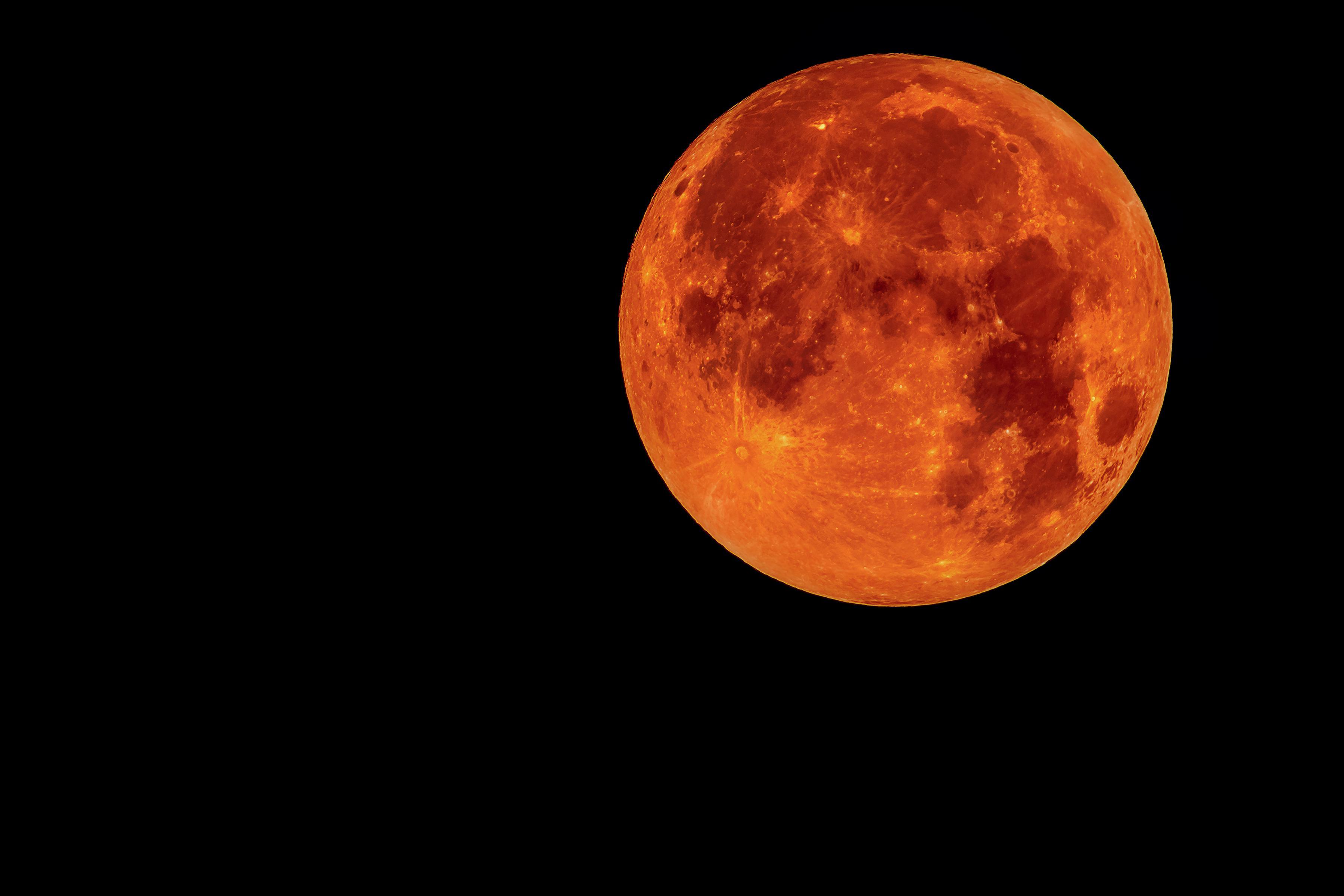
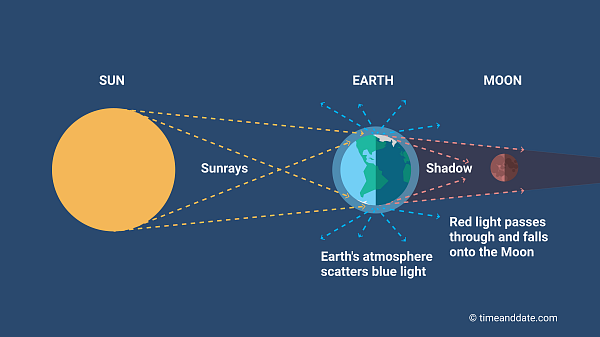
The combination of a full moon eclipse and a bombardment of solar energy on the same day is too coincidental. And it affected my blood sugar, for sure.
And, just to be sure the effects weren’t just astrological, I raised a chart for the precise moment that the Sun and Moon were in exact opposition, and then compared that chart to my birth chart, and there were no significant links. So, for once, I can say that this was purely physical.
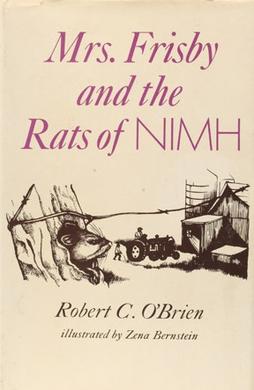
This post has been prompted by an article about the real life experiment that inspired this story. The parallels between rats and human society is uncanny. But it also hints at what could be happening to the world that we know: our own little ‘Utopia’ may be coming to an end.
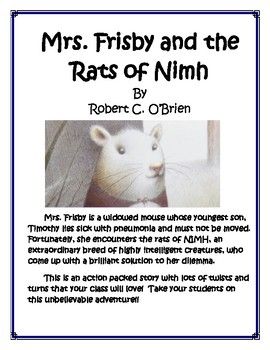
Mrs. Frisby is the head of a family of field mice. Her son Timothy is ill with pneumonia just as the farmer Mr. Fitzgibbon begins preparation for spring plowing in the garden where the Frisby family lives. Normally she would move her family, but Timothy would not survive the cold trip to their summer home. Mrs. Frisby obtains medicine from her friend Mr. Ages, an older white mouse. On the return journey, she saves the life of Jeremy, a young crow, from Dragon, the farmer’s cat– the same cat who killed her husband, Jonathan. Jeremy suggests she seek help in moving Timothy from an owl who dwells in the forest. Jeremy flies Mrs. Frisby to the owl’s tree, but the owl says he cannot help, until he finds out that she is the widow of Jonathan Frisby. He suggests that Mrs. Frisby seek help from the rats who live in a rosebush near her.
Mrs. Frisby discovers the rats have a literate and mechanized society. They have technology such as elevators, have tapped the electricity grid to provide lighting and heating and have acquired other human skills, such as storing food for the winter. Their leader, Nicodemus, tells Mrs. Frisby of the rats’ capture by scientists working for a laboratory located at the National Institute of Mental Health (NIMH) and the subsequent experiments that the humans performed on the rats, which increased the rats’ intelligence to the point of being able to read, write and operate complicated machines, as well as enhancing their longevity and strength. This increased intelligence and strength allowed them to escape from the NIMH laboratories and migrate to their present location. Jonathan Frisby and Mr. Ages were the only two survivors of a group of eight mice who had been part of the experiments at NIMH and made the rats’ escape possible. Out of their respect and unending gratitude for Jonathan, the rats agree to move Mrs. Frisby’s house to a location safe from the plow.
Nicodemus also tells Mrs. Frisby about “The Plan”, which is to abandon their lifestyle of dependence on humans, which some rats regard as theft, for a new, independent farming colony. One rat, Jenner, disagreed vehemently with The Plan and left the colony with a group of followers at some point prior to Mrs. Frisby’s arrival.
To move the Frisby home, the rats have to drug Dragon, as it is too dangerous to work in the open with the cat wandering nearby. However, Mr. Ages has a broken leg and cannot dash to Dragon’s bowl to put in the drug. Since the rats are too big to fit into the hole in the wall to enter the house, Mrs. Frisby volunteers to go. Unfortunately, she is caught by the family’s son, Billy, who puts her in a cage. While captured, Mrs. Frisby overhears the Fitzgibbons discussing an incident at a nearby hardware store in which a group of rats were electrocuted after seemingly attempting to steal a small motor. This has attracted the attention of a group of men who have offered to exterminate the rat colony on Fitzgibbons’ land free of charge for him.
At night, the rat Justin comes to save Mrs. Frisby and manages to get her out of the cage. Mrs. Frisby warns Justin of what she learned while captured; they assume that the rats at the hardware store were all from Jenner’s group and that the group of men were from NIMH and are looking for them specifically.
The successful house move allows the mouse family to remain, so that Timothy has time to recover before moving to their summer home. Although the rats have not yet had time to move everything they needed for The Plan, they manage to destroy their underground rooms and create the illusion that they are just regular rats by placing rubbish in the remaining rooms. As the others move, ten rats stay behind so the exterminators would not think the rat hole has been abandoned. When the exterminators fill the rat hole with poisonous gas, eight of the ten rats manage to escape, while two rats die in the hole. It is not revealed exactly who these two are.
Once Timothy recovers, Mrs. Frisby and her family move to their summer home and Mrs. Frisby tells her children the full story of their father and the rats of NIMH.
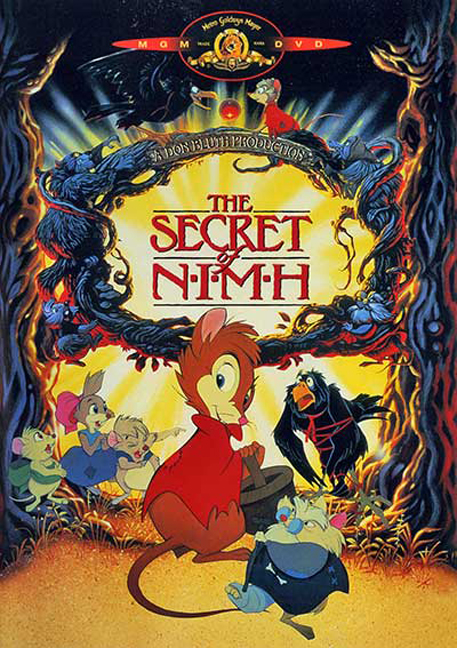
The Secret of NIMH (1982)
In 1982, the animated film The Secret of NIMH was released, directed by Don Bluth. The film adds a mystical element completely absent from the novel, with Nicodemus portrayed as a wise, bearded old wizard with magic powers and an enchanted amulet, rather than an equal of the other rats. The character of Jenner is made a villain who is still present with the rats, rather than having left them before the story begins. The crow Jeremy has much greater prominence as comic relief in the film than he has in the book. Additionally, the Frisby family name was changed to “Brisby” to avoid trademark infringement with the Frisbee.
Adaptations (from Wikipedia)
This is the version of the story that our family is familiar with. But the changes to the original story may have diverted the attention away from the ‘experiment’ and our connection to it.
Bluth himself would later make several changes to the story, most notably with the addition of mystical elements not present in the original novel. He explained “Regarding magic, we really believe that animation calls for some magic, to give it a special ‘fantastic’ quality.” This was most apparent in the magic amulet given to Mrs. Brisby, which was meant to be a visual representation of her character’s internal power; something harder to show on film. The object was also meant to introduce a spiritual aspect to the plot, with the director remarking, “The stone or amulet is just a method of letting the audience know that Mrs. Brisby has found ‘Courage of the Heart’. Magic? Maybe. Spiritual? Yes.” In the same vein, Nicodemus was made into a wizard to “create more mystery” about himself and the rats’ colony. The antagonist Jenner was given much more prominence in the movie, being only mentioned as a traitor who leaves in the book, to “add drama” to the narrative by giving it a more visible enemy. Justin also now succeeds Nicodemus as the leader of the rats to give his character more of an arc and allow him an opportunity to “grow and change.” Unlike the original work, Justin does not rescue Mrs. Brisby from the cage at the Fitzgibbons’ house and she now helps her children without the rats’ assistance by using the amulet; once again giving focus to her personal story. As Bluth put it, “The Secret of NIMH is really a story about Mrs. Brisby and her need to save her children. If the rats save her children, then she hasn’t grown in the film.”
There is a long-held belief that mankind was an experiment started by the creator gods (Elohim) who made us in their image. The Garden of Eden (Paradise) was the original lab. Then they let us loose into the world, and we began to multiply and be fruitful.
It is NOT too far-fetched to conclude that as an experiment, we are doing exactly what rats and mice did in Dr. John Bumpass Calhoun’s Universe 25.
Still, at a certain point, each of these paradises collapsed. “There could be no escape from the behavioral consequences of rising population density,” Calhoun wrote in an early paper. Even Universe 25—the biggest, best mousetopia of all, built after a quarter century of research—failed to break this pattern. In late October, the first litter of mouse pups was born. After that, the population doubled every two months—20 mice, then 40, then 80. The babies grew up and had babies of their own. Families became dynasties, carving out and holding down the best in-cage real estate. By August of 1969, the population numbered 620.
Then, as always, things took a turn. Such rapid growth put too much pressure on the mouse way of life. As new generations reached adulthood, many couldn’t find mates, or places in the social order—the mouse equivalent of a spouse and a job. Spinster females retreated to high-up nesting boxes, where they lived alone, far from the family neighborhoods. Washed-up males gathered in the center of the Universe, near the food, where they fretted, languished, and attacked each other. Meanwhile, overextended mouse moms and dads began moving nests constantly to avoid their unsavory neighbors. They also took their stress out on their babies, kicking them out of the nest too early, or even losing them during moves.
Population growth slowed way down again. Most of the adolescent mice retreated even further from societal expectations, spending all their time eating, drinking, sleeping and grooming, and refusing to fight or to even attempt to mate. (These individuals were forever changed—when Calhoun’s colleague attempted to transplant some of them to more normal situations, they didn’t remember how to do anything.) In May of 1970, just under 2 years into the study, the last baby was born, and the population entered a swan dive of perpetual senescence. It’s unclear exactly when the last resident of Universe 25 perished, but it was probably sometime in 1973.
Paradise couldn’t even last half a decade.
Doesn’t this sound like humanity right now? Well, doesn’t it?
I love a good spy novel, I must admit. And le Carré‘s brand of convoluted tale is the best, in my opinion. But, as always, I wonder about the naming of said stories.
Agent-Running in the Field or Agent, Running in the Field?
The ambiguity probably doesn’t matter in this case.
The novel is set in 2018 and depicts the relationship between Nat (né Anatoly), a 47-year-old member of the British Secret Intelligence Service (MI6), and a young man he plays badminton with weekly. In an extract from the novel published prior to publication, The Guardian describes how ‘Nat admits to serious reservations about the idea of England “as the mother of all democracies”, describing the country as in freefall, with “a minority Tory cabinet of 10th-raters… Labour no better. The sheer bloody lunacy of Brexit”. Boris Johnson is described in the book as a “pig-ignorant foreign secretary”.’
What is lovely to behold is the author’s technique of letting his characters say aloud what he is obviously thinking to himself. This allows for criticism of his country and others amidst a very perplexing time in the world. For example:
The date, never to be forgotten by either of us, is 16 July. We have played our usual strenuous match. I have lost again, but never mind, get used to it. Casually, towels round our necks, we head for our Stammtisch anticipating the usual sporadic Monday-evening clatter of voices and glasses in a largely empty room. Instead we are met by an unnatural, fidgety silence. At the bar, a half-dozen of our Chinese members are staring at a television screen that is routinely given over to sport of any kind from anywhere. But this evening we are not for once watching American football or Icelandic ice hockey but Donald Trump and Vladimir Putin.
The two leaders are in Helsinki giving a joint press conference. They are standing shoulder to shoulder before the flags of both their nations. Trump, speaking as if to order, is disowning the findings of his own intelligence services, which have come up with the inconvenient truth that Russia interfered in the 2016 American presidential election. Putin smiles his proud jailer’s smile.
Somehow Ed and I grope our way to our Stammtisch and sit. A commentator reminds us, lest we have forgotten, that only yesterday Trump declared Europe to be his enemy and for good measure trashed NATO.
Where am I in my mind, as Prue would say? Part of me is with my former agent Arkady. I am replaying his description of Trump as Putin’s shithouse cleaner. I am remembering that Trump ‘does everything for little Vladi that little Vladi can’t do for himself’. Another part of me is with Bryn Jordan in Washington, cloistered with our American colleagues as they stare incredulously at the same act of presidential treachery.
le Carré, John. Agent Running in the Field (pp. 168-169). Penguin Canada. Kindle Edition.
It’s that level of honest reflection of some historical event(s) that gives this novel its power.
The story is something that I suggest you read for yourself, because I am often accused (by my own daughter) of giving away the ending. This one telegraphed its denouement long before the end, but it was fun to go along for the ride, anyway.
Will we see the like of this author again? I doubt it, but there is another book that will be published posthumously. I eagerly await that one, too.











One Mustn’t Mock the Afflicted Even in (a) Play
Bankrupture (1978)
A bit ahead of the curve, I chose this title for my play about banking and being bankrupt. Now, the word is fair game for everyone, 43 years later. In the play, I discuss what working in a bank is like (from an insider’s point-of-view) but to keep from boring my (future) audience, I have included a running gag about an elderly customer, Mrs. Tuttle, and her multiple transactions.
To simplify your reading of this material, I have removed the other simultaneous conversations that are taking place while Mrs. Tuttle does her banking. (It is intended as comic relief only.)
[TUTTLE is the very first customer of the day…]
MARGARET: Hi, Mrs. Tuttle. What can I do for you today?
TUTTLE: Quite a few things: you don’t mind, do you?
MARGARET: Why should I mind? It’s my job to serve customers.
TUTTLE: Good. To start with, please bring my passbook up-to-date.
(…)
MARGARET: Mrs. Tuttle, your passbook is now up-to-date. I had to mark down thirty-seven back items.
TUTTLE: I know: I’ve been forgetting to bring it with me.
(TUTTLE begins looking through her handbag.)
TUTTLE: Now, if I could only find my other passbook, I’d make a transfer to the one you just finished with.
(…)
TUTTLE: Here it is.
MARGARET: How much would you like to transfer?
TUTTLE: I don’t know: how much is in this account?
MARGARET: I’ll bring it up-to-date, too.
(…)
MARGARET: Here’s your other passbook, up-to-date.
TUTTLE: Good. I’d like to transfer one hundred and twenty dollars from this account into that one.
MARGARET: One, twenty?
TUTTLE: Yes, one hundred, twenty dollars and no cents.
MARGARET: No sense.
(…)
MARGARET: There, Mrs. Tuttle, your one hundred and twenty dollars has been transferred.
TUTTLE: Now I’d like to withdraw one hundred and fifty dollars in cash.
(…)
(MARGARET begins to give TUTTLE her money.)
MARGARET: Twenty, forty, sixty, eighty, one hundred, ten, twenty, thirty, thirty-five, forty, two, four, six, seven, eight, nine, one hundred and fifty dollars.
TUTTLE: Good, now I’d like to pay some bills.
(…)
TUTTLE: ,,,And this hydro bill for sixty-five dollars and twenty-three cents.
MARGARET: That makes a total of one hundred and thirty-eight dollars and fifty-four cents in utility bills.
TUTTLE: How much did I have in service charges with my retirement club card?
MARGARET: Nine utility bills at twenty-five cents is two dollars and twenty-five cents.
(…)
TUTTLE: Since I’ve taken out more than I need, I’d like to deposit ten dollars back into the account where the original one hundred and twenty came from.
MARGARET: Ten dollars and…
TUTTLE: …no cents.
MARGARET: No sense.
[This all happens in Act 1, scene i]
Oh, How the Times Have Changed
And yet, with all the advances (and advantages) of online banking, Mrs Tuttle would still probably go into her branch and get the teller to do all her transactions for her. It’s easier.
The only people who truly benefit from online banking are the bankers.
There: I’ve said it aloud.