This has to be the most famous of all Conspiracy Theories. Did the ‘powers that be’ allow the Japanese to attack and utterly destroy the American fleet based in Hawaii?
Let’s review the History first (according to Wikipedia):
The attack on Pearl Harbor was a surprise military strike by the Imperial Japanese Navy Air Service against the United States naval base at Pearl Harbor, Hawaii Territory, on the morning of December 7, 1941. The attack, also known as the Battle of Pearl Harbor, led to the United States’ entry into World War II. The Japanese military leadership referred to the attack as the Hawaii Operation and Operation AI, and as Operation Z during its planning.
Japan intended the attack as a preventive action to keep the U.S. Pacific Fleet from interfering with military actions they planned in Southeast Asia against overseas territories of the United Kingdom, the Netherlands, and the United States. Over the next seven hours there were coordinated Japanese attacks on the U.S.-held Philippines, Guam and Wake Island and on the British Empire in Malaya, Singapore, and Hong Kong.
The attack commenced at 7:48 a.m. Hawaiian Time (18:18 UTC). The base was attacked by 353 Imperial Japanese aircraft (including fighters, level and dive bombers, and torpedo bombers) in two waves, launched from six aircraft carriers. All eight U.S. Navy battleships were damaged, with four sunk. All but the USS Arizona were later raised, and six were returned to service and went on to fight in the war. The Japanese also sank or damaged three cruisers, three destroyers, an anti-aircraft training ship, and one minelayer. One hundred eighty-eight U.S. aircraft were destroyed; 2,403 Americans were killed and 1,178 others were wounded. Important base installations such as the power station, dry dock, shipyard, maintenance, and fuel and torpedo storage facilities, as well as the submarine piers and headquarters building (also home of the intelligence section), were not attacked. Japanese losses were light: 29 aircraft and five midget submarines lost, and 64 servicemen killed. One Japanese sailor, Kazuo Sakamaki, was captured.
The surprise attack came as a profound shock to the American people and led directly to the American entry into World War II in both the Pacific and European theaters. The following day, December 8, the United States declared war on Japan, and several days later, on December 11, Germany and Italy declared war on the U.S. The U.S. responded with a declaration of war against Germany and Italy. Domestic support for non-interventionism, which had been fading since the Fall of France in 1940, disappeared.
There were numerous historical precedents for unannounced military action by Japan, but the lack of any formal warning, particularly while negotiations were still apparently ongoing, led President Franklin D. Roosevelt to proclaim December 7, 1941, “a date which will live in infamy“. Because the attack happened without a declaration of war and without explicit warning, the attack on Pearl Harbor was later judged in the Tokyo Trials to be a war crime.
The Planets
Sun — 15° Sagittarius 16′
Moon — 28° Cancer 15′
Mercury — 7° Sagittarius 24′
Venus — 1° Aquarius 37′
Mars — 15° Aries 33′
Jupiter — 16° Gemini 31′
Saturn — 23° Taurus 30′
Uranus — 27° Taurus 39′
Neptune — 29° Virgo 42′
Pluto — 5° Leo 35′
North Node — 18° Virgo 3′
Ascendant — 2° Capricorn 47′
Midheaven — 13° Libra 56′
2nd House — 5° Aquarius 18′
3rd House — 10° Pisces 17′
5th House — 13° Taurus 9′
6th House — 8° Gemini 33′
The Players
Courtesy of Wikipedia
Japan is ruled by Libra, so the significant planet is Venus. Venus is in Aquarius in the 1st House (personality). This shows that the action is definitely under that country’s control. Opposed to Venus is a deadly combination of Pluto (stealth) in the 8th House (death) and the Moon (emotions) in the 7h House (relationships/open enemies).
The USA is ruled by Gemini, so its planet is Mercury. Mercury is in Sagittarius (conjunct the Sun) and in the 11th House (groups and associations). Mercury is opposed by Jupiter (justice) in the 6th House (health) and Uranus (sudden action) in the 5th House (home). You couldn’t write a better script.
(For those that are interested: Russia is ruled by Aquarius, therefore Jupiter is its planet; both Germany and Britain are ruled by Aries, so their planet is Mars.)
The only thing that the Japanese didn’t realize was that the conjunction between the Sun and Mercury would help predict that the USA would win this war and that Japan would be defeated.
The Timing of the Attack
Courtesy of amazon.com
Can you imagine what it must have been like to see the symbol of the Rising Sun on aircraft coming in wave after wave to bomb the Pacific Fleet into oblivion?
Dawn raids are nothing new, but the rising sun coming from the West is novel. Did they consult an astrologer? I doubt it.
But the interesting thing for me is the fact that Mars is in the nadir of the chart, which implies that the war was not the reason for the attack: it was Japan’s self-preservation instinct (Libra Midheaven). It is a shame how it all turned out for them. Let us hope that they don’t have to suffer from such a defeat again.
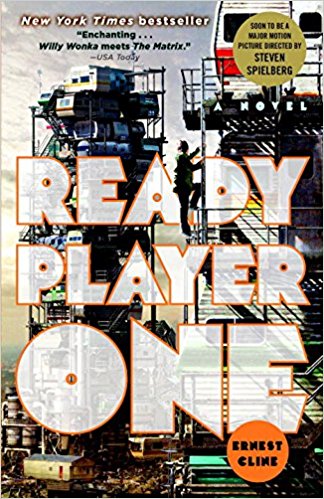
“In the year 2044, reality is an ugly place. The only time teenage Wade Watts really feels alive is when he’s jacked into the virtual utopia known as the OASIS. Wade’s devoted his life to studying the puzzles within this world’s digital confines — puzzles that are based on their creator’s obsession with the pop culture of decades past and that promise massive power and fortune to whoever can unlock them.
“But when Wade stumbles upon the first clue, he finds himself beset by players willing to kill to take the ultimate prize. The race is on, and if Wade’s going to survive, he’ll have to win — and confront the real world he’s always been so desperate to escape.” (Blurb on the back cover)
Willy Wonka meets The Matrix
Anyone who has ever played arcade and computer games knows how addictive they can be. These days, we can observe relatives at family gatherings slipping off into cyber space via their smart phones and tablets to continue their quest for game supremacy.
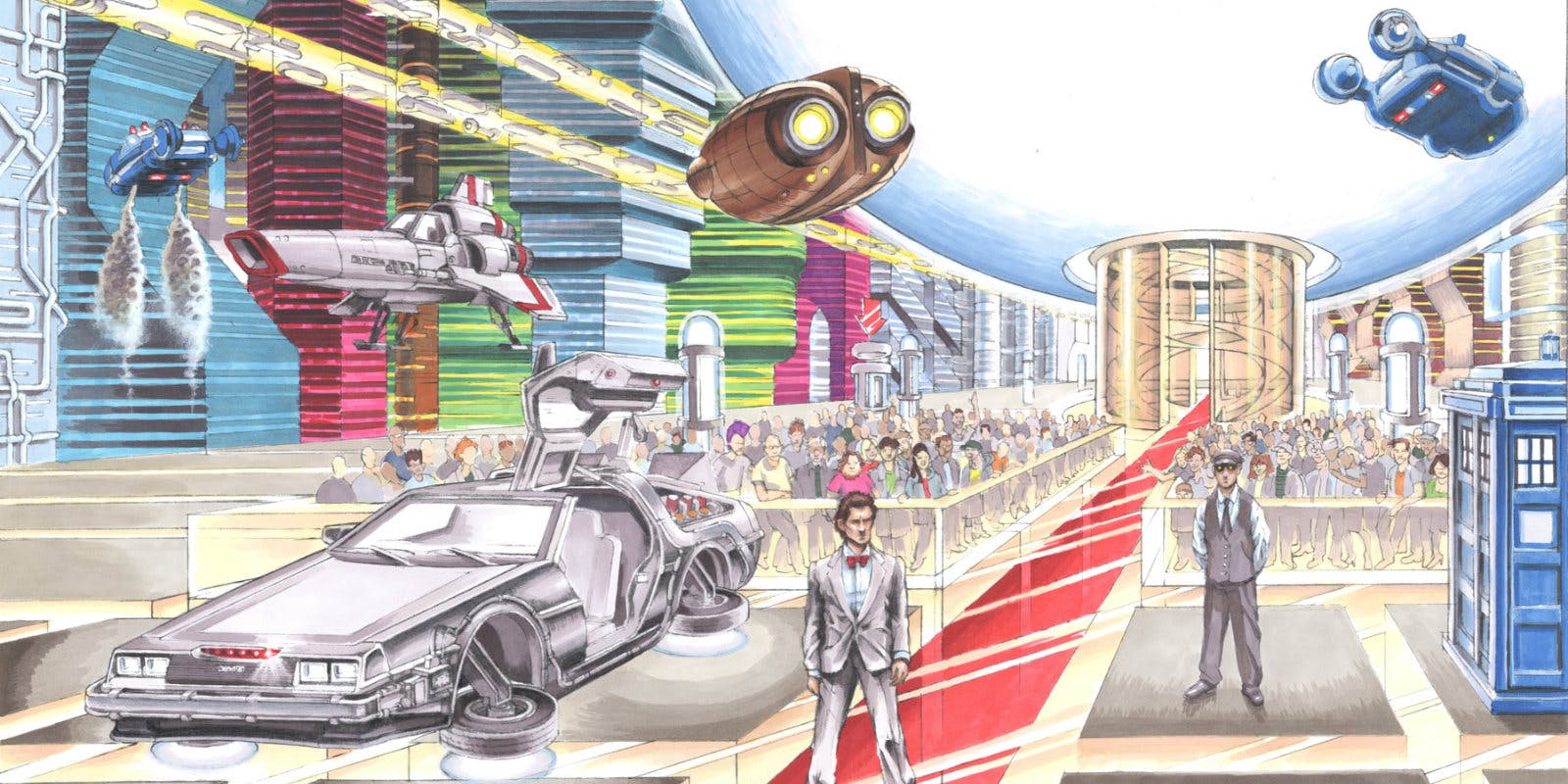
This story is the ultimate gamer scenario: not only do you have to locate the “Easter” egg hidden within the virtual world, but you have to play games within games in order to search for the clues to find the keys. A bit Super Mario, to me.
And because this book is an homage to the 80’s, the author has included a panoply of (mostly) American cultural references. Monty Python and the Holy Grail gives us a bit of a clue, doesn’t it? This is The Quest to End All Quests: the winner inherits the fortune and power of the Creator!
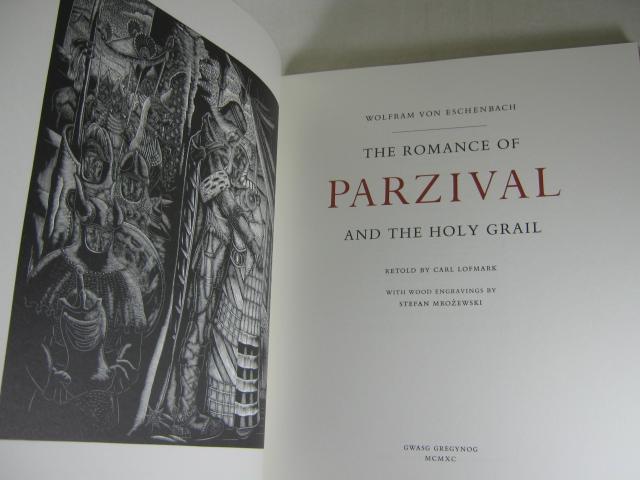
Wade’s Avatar is Parzival
Courtesy of Abebooks
In choosing this name for his hero’s Avatar, Ernest Cline signaled that this story is spiritual in nature. There can be no other reason.
The Holy Grail has been the ultimate reward for knights of valor since the beginning of the second millennium. Even now, modern research has tried to understand the obsession that we have with this Holy Relic.
And, just maybe, that is its purpose: to keep us looking for the ultimate Truth.
“Three is a Magic Number”
Numbers are the fabric of any computer program. So, Cline obviously had to make reference to several of them through the pages of his book. Some were obvious: the 1 in the title for example. Others are not so obvious, unless you are used to looking for hidden ‘coded’ messages.
Binary Numbers for Children courtesy of YouTube
(The binary numbers shown above are equivalent to the numbers 1 to 10 from the decimal system. This will be important to remember.)
The villain of the story is an evil corporation called Innovative Online Industries: IOI (pronounced eye-oh-eye). Their employees ID numbers start with the digit 6, so their enemies refer to them as Sixers. This echoes the Number of the Beast from the Bible, 666. But hidden in plain sight is the number of the Goddess: 5 (as 101). This means that even though everything looks hopeless for the loners and groups of gamers, all is not lost, because the solution to the undoing of the IOI is hidden within its structure.
Also, the top gamers listed on the scoreboard were referred to as the High Five.
Then, when the final gate seems impossible to solve, the number 3 becomes the key to unlocking it. Talk about sacred, eh?
Karma
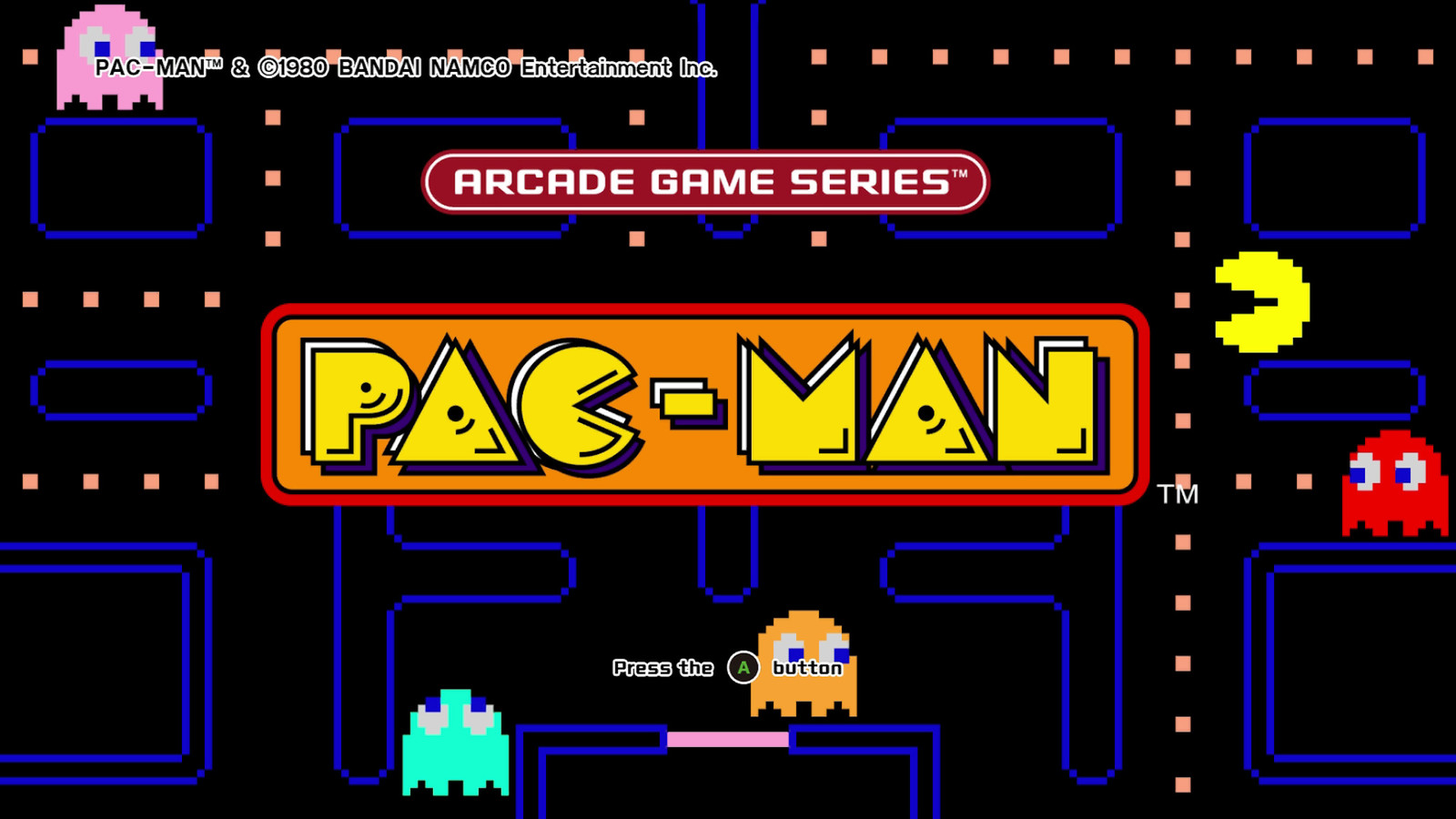
Along the way, Wade as Parzival plays Pac-Man just for the sake of beating Halliday’s (almost) perfect score. His reward is the quarter that has been sitting on the top of the game console. All along he has no way of knowing what value that quarter has for him because he can’t even handle it to inspect it.
At the final gate, the Sixers detonate a device called the Catalyst which wipes out every Avatar within that specific world. That quarter turns out to be the very thing that allows Wade an extra life.
The lesson for all of us is “Practice makes perfect”, because one day it may pay off for us, in the most unexpected way.
Conclusion
This story is a page turner. Make no mistake about that. Like any good game, it will keep you hooked until it’s Game Over. We can only hope that Life does the same for us in this “real” world in which we live.
Here’s a clip from Steven Spielberg’s upcoming movie, scheduled for release in March:
I’ll leave you with the last line from the book. It’s quite telling.
It occurred to me then that for the first time in as long as I could remember, I had absolutely no desire to log back into OASIS.
I believe the first book I read by Paul Twitchell was called “The Tiger’s Fang”. The title was based on a spiritual proverb about having enough courage to extract a fang from the tiger without being killed.
In the story, Twitchell meets his spiritual teacher, Rebazar Tarzs, the great Tibetan ECK Master, who takes him to different planes of existence, outside time and space, all the while instructing him on how to “BE”. It was an eye-opener for me, because up until that time (the early 70’s) my spiritual journey had been limited to orthodox Christianity. This book opened up vistas that I had not even imagined possible.
“Whether The Tiger’s Fang is a record of an actual spiritual journey or the vivid impression of a vision that has been granted to few mortal men, must remain a matter for the individual reader to judge. Whatever The Tiger’s Fang may be, it is certain that the book is a most remarkable work, a volume that has few peers in its array of challenging concepts, provocative thoughts, and inspirational wisdom.”— Brad Steiger, from the Foreword
‘Eckankar (meaning Co-worker with God), called “the Path of Spiritual Freedom”, is a new religious movement founded by Paul Twitchell in 1965. It is a non-profit religious group with members in over one hundred countries. The spiritual home is the Temple of Eck in Chanhassen, Minnesota.
‘Eckankar is not affiliated with any other religious group. Followers believe its purpose is to help individuals find their way back to God through direct personal spiritual experiences. The movement teaches simple spiritual exercises, such as singing “Hu“, called “a love song to God”, to experience the Light and Sound of God and recognize the presence of the Holy Spirit.’
A Rose by any Other Name…
Rose Window image courtesy of Wikimedia Commons
‘ECK is another word for the Holy Spirit, also known as the Audible Life Current, Life Force, or Light and Sound of God. The term is also thought to be an alternative spelling of the Sikh Ik Onkar.’ (Wikipedia)
So, here’s the thing: It doesn’t matter what you want to call it, the Holy Spirit is our true instructor, teacher, guide and comforter. My “What the Eck?!” subtitle was meant as a subtle (OK, not so subtle) joke, but not a slight to the spirit behind the name.
7th Heaven
Courtesy of Eckankar
Twitchell wrote about the seven levels of Heaven, and each passage brought with it a certain energy that I recognize now, but didn’t then. The description of a boat floating on a still lake with the empty shell of a human body in it was very powerful for me.
I saw, in an instant, that the spiritual path, as one gets closer to the ultimate destination, is a solitary one. That spoke volumes to me.
False Prophet?
The story of how Paul Twitchell ‘created’ Eckankar is explained in this video:
Conclusion
In the words of George Harrison:
“But oh Lord we pay the price with a
Spin of a wheel with the roll of a dice
Ah yeah you pay your fare
And if you don’t know where you’re going
Any road will take you there.”
I’ve written this down first thing this morning, in order to capture the images clearly for later analysis.
The story opens with a strange setup: an elderly lady wants to leave her assets to a younger member of her family. But, for some unknown reason, they don’t want anyone else to know. (There may in fact be a potentially contested will.) But here’s where the waters get muddied. The two of them hire a total stranger to be the beneficiary of the old lady’s whole estate.
[In dreams, things don’t have to make sense. In fact, most of the time, there is no rhyme nor reason to events that unfold before your dreaming eyes. Most of the time, you feel like Sam Beckett making yet another Quantum Leap.]
Now, back to our story: in order for the scheme (read, scam) to succeed, the younger girl will have to discredit or remove the surrogate for this to work. So she sets about to do just that. Not a pretty sight!
A Second Dream
Courtesy of Wikipedia
This one involved the valuation of some musical files that needed to be taxed. I wasn’t sure what the individual was trying to achieve because she seemed to be inflating the files’ value in order to claim an improved status.
At the same time, the team leading the valuation wouldn’t accept her numbers at face value. They kept sending her report back for clarification and revision.
My role in both these scenarios was to act as an observer, an Auditor of the processes.
This brings me to the final bit.
The Payoff
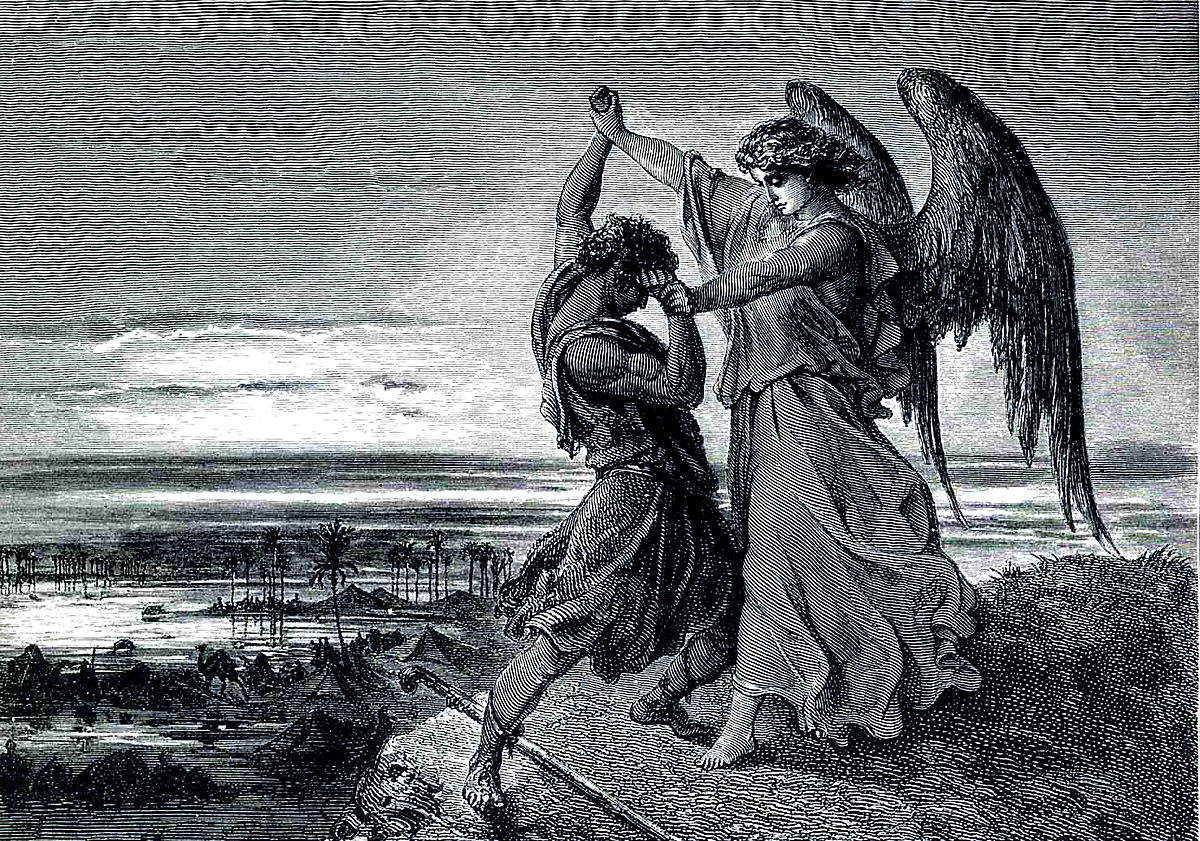
Jacob Wrestling with the Angel courtesy of Wikipedia
The final part of the second dream had me mopping up some spilled water at the top of a long staircase. One fellow, who lived in an apartment in the building came up the stairs and then proceeded to do a stunt fall down the whole length, as if my work had startled him. I watched this escapade with some mild irritation, and then went down the steps to remonstrate with him.
He started to wrestle with me. We were standing at the start of another down staircase, and I was concerned that he would cause me to topple over. At one point, his body was leaning at such a precarious angle that it took all of my strength to hold him in place. We held this position for what seemed an eternity.
Then the scene changed. I was being questioned by a different man. He wanted to know why he couldn’t be just like me.
I said, “Because you won’t allow yourself to be…”
With that, the drama ended.
Analysis
I got to witness these events because I was an angel. It’s the only thing that makes sense. How else could I have been privy to the goings-on behind the scenes?
Humans have a habit of over-complicating their lives. We work out schemes that never take into account what consequences will ensue. Angels can only stand and stare at our ridiculousness. But once in a while they get to save their wards from destroying themselves utterly.
We watched this movie again last night. It breaks one’s heart to see a dog put down. But the alternative is so much worse: watching your friend suffer.
The makers of this movie made it a little better by having Marley slowly close his eyes while the effects of the drugs kicked in. In reality this didn’t happen when we did the same to Cheeko. But that could have been because he was still in his prime: he wasn’t tired and old.
A Dog’s Purpose
I’ve written about this film before. Bailey’s final scene is heartbreaking, too. But the twist in this story is that he gets to reincarnate several times before he comes back to his original owner in a new body.
It shows just how evolved our understanding has come.
Ol’ Yeller
This is the film that broke my heart as a child. It’s now 60 years old. When I saw this scene as a 7 year old, I never truly got over it.
This is a depiction of how rabies (hydrophobia) was handled in frontier times. The dog, who defended and protected his young master from danger, literally put his life in harm’s way. The devastating bit is the young man having to kill his dog himself.
Golden Labrador
Image courtesy of 101 Dog Breeds
The common thread through these three films is the breed of dog. Golden Labradors are my favourite. When asked what breed of dog would I be, I always answer with this one.
We only had one in our house when I was a teenager: he was a stray, and we called him Sandy.
Angus, Ontario was our home then. I’m sure my sisters remember him fondly. I do.
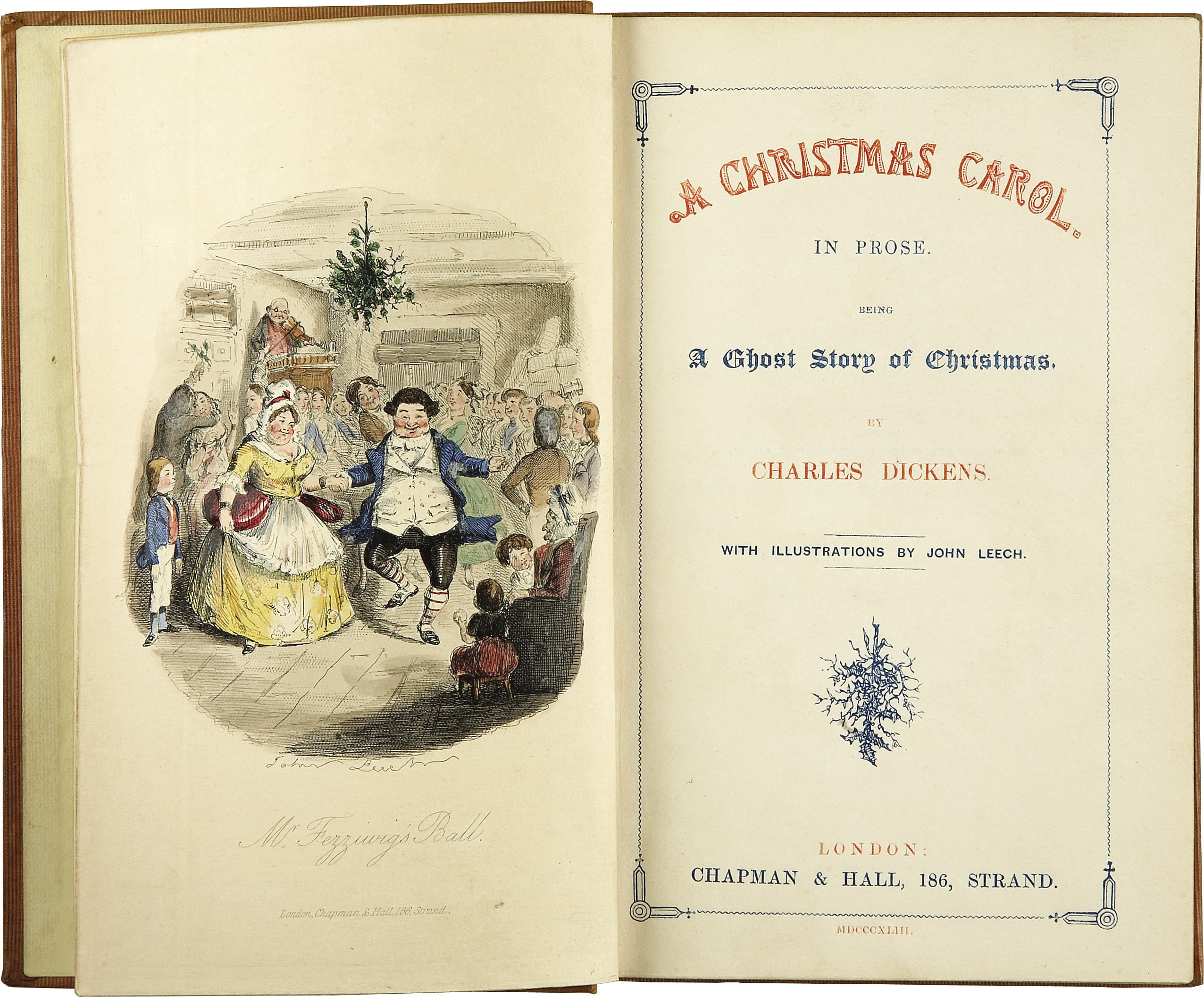
Three of us went to see this movie last night. It definitely helped to be familiar with the story “A Christmas Carol” as the seeds of it are literally scattered throughout the film.
The Plot
Two years after the success of Oliver Twist, Charles Dickens (Dan Stevens) is suffering financial hardship from the failure of his last three books. Rejected by his publishers, he sets out to write a new book to restore his finances. Seeing inspiration around London, most notably a rich man’s funeral that is largely unattended, he begins writing A Christmas Carol, due in six weeks in order to be published by Christmas. As Charles begins to develop his story, he interacts with the characters he is writing about, most notably Ebenezer Scrooge (Christopher Plummer). Helping Dickens is one of his servants, Tara, an Irish immigrant who is literate and able to provide advice.
While writing his book, Charles is greeted by the arrival of his farther, John Dickens (Jonathan Pryce), who he views as immature and fiscally irresponsible. Charles’s relationship with his family is increasingly strained as he struggles to finish the book in time, as he is unable to resolve Scrooge’s story. Hearing that Charles intends to let Tiny Tim die, Tara suggests a resolution for Scrooge by having him save Tiny Tim instead. Charles rejects her help, and soon sends her away from his house in a fit of rage. Additionally, Charles has a falling out with his father and sends him away upon learning that he has been selling Charles’s signature.
It is revealed that much of Charles’s animosity towards his father is from his childhood embarrassment of working in a blacking factory after his family was taken to debtor’s prison. Returning to the long-abandoned factory, Charles is forced to confront his own insecurities through Scrooge. Charles realizes that his story should be one of redemption, and races home to finish his manuscript. As he leaves to submit it to his illustrator, he encounters Tara, and invites her back. His wife suggests he do the same with his father, who is about to board a train to leave London. Reconnecting with his family, Charles submits the manuscript in time for publishing before Christmas. The film ends with the Dickens family celebrating the holidays, while a title text explains the overnight success of A Christmas Carol, and its lasting impact on the Christmas holiday. (Wikipedia)
The Time Around the Writing of A Christmas Carol
Courtesy of Wikipedia
In the UK, Christmas Day became a bank holiday in 1834, Boxing Day was added in 1871.
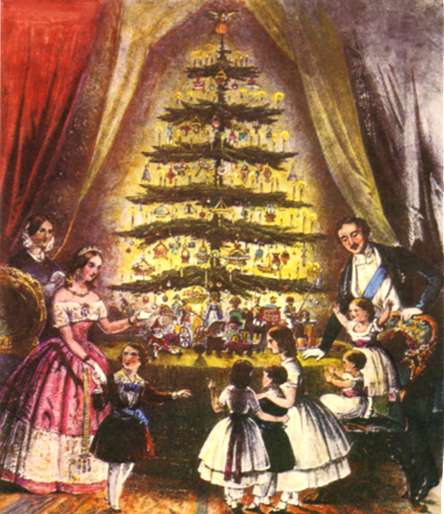
In the early-19th century, writers imagined Tudor Christmas as a time of heartfelt celebration. In 1843, Charles Dickens wrote the novel A Christmas Carol that helped revive the “spirit” of Christmas and seasonal merriment. Its instant popularity played a major role in portraying Christmas as a holiday emphasizing family, goodwill, and compassion.
Dickens sought to construct Christmas as a family-centered festival of generosity, linking “worship and feasting, within a context of social reconciliation.” Superimposing his humanitarian vision of the holiday, in what has been termed “Carol Philosophy”, Dickens influenced many aspects of Christmas that are celebrated today in Western culture, such as family gatherings, seasonal food and drink, dancing, games, and a festive generosity of spirit. A prominent phrase from the tale, “Merry Christmas”, was popularized following the appearance of the story. This coincided with the appearance of the Oxford Movement and the growth of Anglo-Catholicism, which led a revival in traditional rituals and religious observances. (Wikipedia)
A Personal Observation about the Writing Process
“The situation comes first. The characters – always flat and unfeatured, to begin with – come next. Once these things are fixed in my mind, I begin to narrate. I often have an idea of what the outcome may be, but I have never demanded of a set of characters that they do things my way. On the contrary, I want them to do things their way. In some instances, the outcome is what I visualized. In most, however, it’s something I never expected. For a suspense novelist, this is a great thing. I am, after all, not just the novel’s creator but its first reader. And if I’m not able to guess with any accuracy how the damned thing is going to turn out, even with my inside knowledge of coming events, I can be pretty sure of keeping the reader in a state of page-turning anxiety. And why worry about the ending anyway? Why be such a control freak? Sooner or later every story comes out somewhere.” (Stephen King – On Writing)
This happened to me when I was writing a play called “Bankrupture” in 1978. Instead of inventing each of the characters and their dialogue, I acted as a secretary, taking down verbatim what they said. They revealed themselves by speaking their own words. In my experience, this was unprecedented. I was able to do this because I based the main character, Elmer, on myself. This is known as being an author surrogate.
The Man Who Invented Christmas has shown this writing process in a very creative way.
Conclusion
Charles Dickens may not have invented Christmas, but he definitely put Love back into the holiday by reviving the spirits (past, present and future) of Christmas. His book is the reason why we are more charitable at this time of the year.
So in the words of Tiny Tim, “God bless us, every one.”
It should come as no surprise to anyone with ‘eyes to see’ and ‘ears to hear’ that the concept of Father Christmas is a secular attempt to deflect attention away from the Christian celebration of Jesus’ birth.
In fact, I would suggest that the image of Santa Claus is one of a wolf in sheep’s clothing.
One particular website has dedicated a whole analysis of just how counterfeit Santa is.
Mistletoe and Wine
But again, we shouldn’t be surprised: this is really just a way of bringing us back to the reality of the Roman celebrations of Sol Invictus which existed before the Catholic Church assumed December 25th as its Christ Mass.
And the Druids celebrated the Winter Solstice as a way to help their Celtic peoples get through the darkest period of the year. Our modern images of Christmas cheer are really just pale imitations of their potent symbols: decorated fir trees; Yule logs in the fire; mistletoe hung indoors; and of course, mulled wine to drink our good health.
Commercialism
Every time Santa takes a swig from his Coke bottle, cash registers the world over start to ring out, “It’s Christmas!”
The Christian churches have tried to bring us back to the true meaning by reminding us to put Christ back into Christmas, but it really is a circular argument. And now it’s even become more politically correct to say, “Season’s Greetings” and “Happy Holidays”, rather than “Merry Christmas” (or “Merry Xmas” as it’s more likely to be written).
So let me leave you with a clip from “Miracle on 34th Street” which may forever tie Kris Kringle in our minds with God, as the giver of all good things: