Did Dickens “Invent” Christmas?

The Man Who Invented Christmas

Three of us went to see this movie last night. It definitely helped to be familiar with the story “A Christmas Carol” as the seeds of it are literally scattered throughout the film.

The Plot

Two years after the success of Oliver Twist, Charles Dickens (Dan Stevens) is suffering financial hardship from the failure of his last three books. Rejected by his publishers, he sets out to write a new book to restore his finances. Seeing inspiration around London, most notably a rich man’s funeral that is largely unattended, he begins writing A Christmas Carol, due in six weeks in order to be published by Christmas. As Charles begins to develop his story, he interacts with the characters he is writing about, most notably Ebenezer Scrooge (Christopher Plummer). Helping Dickens is one of his servants, Tara, an Irish immigrant who is literate and able to provide advice.

While writing his book, Charles is greeted by the arrival of his farther, John Dickens (Jonathan Pryce), who he views as immature and fiscally irresponsible. Charles’s relationship with his family is increasingly strained as he struggles to finish the book in time, as he is unable to resolve Scrooge’s story. Hearing that Charles intends to let Tiny Tim die, Tara suggests a resolution for Scrooge by having him save Tiny Tim instead. Charles rejects her help, and soon sends her away from his house in a fit of rage. Additionally, Charles has a falling out with his father and sends him away upon learning that he has been selling Charles’s signature.

It is revealed that much of Charles’s animosity towards his father is from his childhood embarrassment of working in a blacking factory after his family was taken to debtor’s prison. Returning to the long-abandoned factory, Charles is forced to confront his own insecurities through Scrooge. Charles realizes that his story should be one of redemption, and races home to finish his manuscript. As he leaves to submit it to his illustrator, he encounters Tara, and invites her back. His wife suggests he do the same with his father, who is about to board a train to leave London. Reconnecting with his family, Charles submits the manuscript in time for publishing before Christmas. The film ends with the Dickens family celebrating the holidays, while a title text explains the overnight success of A Christmas Carol, and its lasting impact on the Christmas holiday. (Wikipedia)

The Time Around the Writing of A Christmas Carol
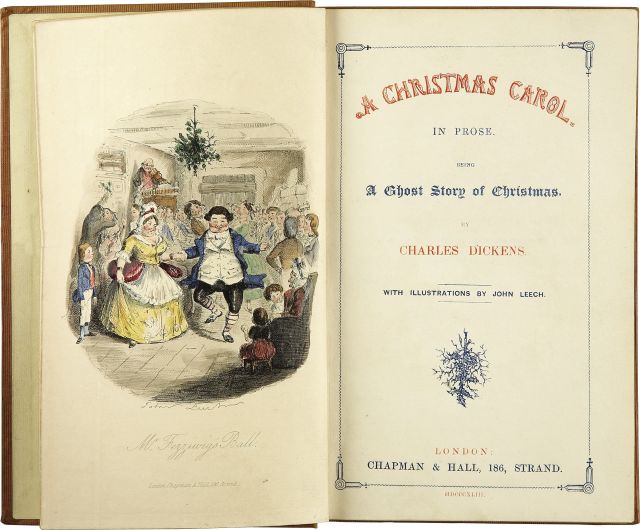
Charles_Dickens-A_Christmas_Carol-Title_page-First_edition_1843

Courtesy of Wikipedia

In the UK, Christmas Day became a bank holiday in 1834, Boxing Day was added in 1871.

In the early-19th century, writers imagined Tudor Christmas as a time of heartfelt celebration. In 1843, Charles Dickens wrote the novel A Christmas Carol that helped revive the “spirit” of Christmas and seasonal merriment. Its instant popularity played a major role in portraying Christmas as a holiday emphasizing family, goodwill, and compassion.

Dickens sought to construct Christmas as a family-centered festival of generosity, linking “worship and feasting, within a context of social reconciliation.” Superimposing his humanitarian vision of the holiday, in what has been termed “Carol Philosophy”, Dickens influenced many aspects of Christmas that are celebrated today in Western culture, such as family gatherings, seasonal food and drink, dancing, games, and a festive generosity of spirit. A prominent phrase from the tale, “Merry Christmas”, was popularized following the appearance of the story. This coincided with the appearance of the Oxford Movement and the growth of Anglo-Catholicism, which led a revival in traditional rituals and religious observances. (Wikipedia)

A Personal Observation about the Writing Process

“The situation comes first. The characters – always flat and unfeatured, to begin with – come next. Once these things are fixed in my mind, I begin to narrate. I often have an idea of what the outcome may be, but I have never demanded of a set of characters that they do things my way. On the contrary, I want them to do things their way. In some instances, the outcome is what I visualized. In most, however, it’s something I never expected. For a suspense novelist, this is a great thing. I am, after all, not just the novel’s creator but its first reader. And if I’m not able to guess with any accuracy how the damned thing is going to turn out, even with my inside knowledge of coming events, I can be pretty sure of keeping the reader in a state of page-turning anxiety. And why worry about the ending anyway? Why be such a control freak? Sooner or later every story comes out somewhere.” (Stephen King – On Writing)

This happened to me when I was writing a play called “Bankrupture” in 1978. Instead of inventing each of the characters and their dialogue, I acted as a secretary, taking down verbatim what they said. They revealed themselves by speaking their own words. In my experience, this was unprecedented. I was able to do this because I based the main character, Elmer, on myself. This is known as being an author surrogate.

The Man Who Invented Christmas has shown this writing process in a very creative way.

Conclusion

queen-victorias-christmas-3

Charles Dickens may not have invented Christmas, but he definitely put Love back into the holiday by reviving the spirits (past, present and future) of Christmas. His book is the reason why we are more charitable at this time of the year.

So in the words of Tiny Tim, “God bless us, every one.”

Posted in reviews | Tagged , , , , , | 8 Comments

Santa: a Myth … or More?

santa_claus_winking_

Image courtesy of Google+

Jolly Old Saint Nick

It should come as no surprise to anyone with ‘eyes to see’ and ‘ears to hear’ that the concept of Father Christmas is a secular attempt to deflect attention away from the Christian celebration of Jesus’ birth.

In fact, I would suggest that the image of Santa Claus is one of a wolf in sheep’s clothing.

One particular website has dedicated a whole analysis of just how counterfeit Santa is.

Mistletoe and Wine

But again, we shouldn’t be surprised: this is really just a way of bringing us back to the reality of the Roman celebrations of Sol Invictus which existed before the Catholic Church assumed December 25th as its Christ Mass.

And the Druids celebrated the Winter Solstice as a way to help their Celtic peoples get through the darkest period of the year. Our modern images of Christmas cheer are really just pale imitations of their potent symbols: decorated fir trees; Yule logs in the fire; mistletoe hung indoors; and of course, mulled wine to drink our good health.

Commercialism

Every time Santa takes a swig from his Coke bottle, cash registers the world over start to ring out, “It’s Christmas!”

The Christian churches have tried to bring us back to the true meaning by reminding us to put Christ back into Christmas, but it really is a circular argument. And now it’s even become more politically correct to say, “Season’s Greetings” and “Happy Holidays”, rather than “Merry Christmas” (or “Merry Xmas” as it’s more likely to be written).

So let me leave you with a clip from “Miracle on 34th Street” which may forever tie Kris Kringle in our minds with God, as the giver of all good things:

Merry Ho Ho, folks.

Posted in paranoia | Tagged , , , | 1 Comment

Subliminals: The Devil’s in the Details

SubliminalMoney

Look closely at the palm tree to right of Queen Elizabeth II (facing): can you see the word SEX? If you can, then you’re ready to see the rest…

I am going to show you through a series of images from Watchtower publications that the devil really is in the details.


wt-subliminal-devil


And my all-time favourite pet peeve: seeing the word SEX written in the background of a Watchtower cover. In this one, it is also in the foreground:


WatchtowerSubliminal-2-1


All those years ago, I argued with a couple of the Jehovah’s Witness missionaries that there were subliminals in their Watchtower Magazine. Now I have proof.

Posted in paranoia, personal | Tagged , , , | 1 Comment

The Honey Trap

quote-you-may-catch-more-flies-with-honey-than-vinegar-but-you-ll-get-them-to-work-harder-jerry-lewis-135-17-42


The Cold War

Yesterday, Prime Minister Justin Trudeau apologized to every persecuted member (past and present) of the Government, the Military and the Royal Canadian Mounted Police who were hounded out of their careers for being (potentially) homosexual.

This was an unprecedented move, and one that was long overdue.

In his statement, Trudeau did not give the reasons behind the past actions by the Government, but it doesn’t take much imagination to understand what they were.

Starting during World War II, MI6 planted spies in high society to extract indiscreet comments from officials of other countries, commonly called “pillow talk”. Sir William Stephenson even suggested that Amy Elizabeth (Betty) Pack (née Thorpe) was one of the ‘unsung heroines of the war’ for her contribution to this intelligence gathering.

After the war, the Soviet Union went one better and started to go after society’s most vulnerable citizens, homosexuals, in order to compromise them into spying on their behalf. The story of how MI6 was infiltrated by Burgess, Maclean and Philby was a salutatory lesson for everyone in the West, so the United States and Canada cracked down on homosexuality, maintaining its illegal status, even after other countries had accepted it.


From Russia With Love

The Spy vs Spy scene in this film will show you a reenactment of what it must have been like during those years:


Of course, the men behind the mirror were just doing their job.


Trump and Putin

Which brings me to the point of this blog. There have been multiple rumours that somehow Trump was compromised while in Moscow in 2013 for the Miss Universe pageant. Even he has stated that he had a relationship with Putin.

Is there ever smoke without fire? You decide…

Posted in history | Tagged , , , | 3 Comments

How to “Feel”: Sense Without Touching

maxresdefault

Gladiator

There’s a scene in the 2000 movie where Maximus is walking through a wheat field. I have always felt that this image represents the ability to sense energy without actually touching it. Quite similar to my experience in a crop circle.

But how does one do that?

Aura

tanahoy.com-colors-of-the-aura

Image courtesy of tanahoy.com

Surrounding each of our bodies is a radiant energy field called an aura. When we get sensations of ‘something’ other than ourselves and we have not been in physical touch, we are processing information through the aura.

In spiritual healing, the hands are held near the body of the ‘patient’: this allows the passage of energy from (and through) the healer to the one needing help. This passage of energy can be felt either as a movement of heat or cold, depending on their need.

At the same time, the healer is ‘feeling’ where the energy is low or depleted, by sensing how the energy is being processed. It has been done for over a hundred years now, so this is really nothing new.

Finger Dowsing

1413422390fruits-of-earth-finger-

Image courtesy of NoteStream

You, no doubt, have heard of dowsing with copper rods or willow switches. Did you know you can dowse with just your fingers?

Check out this link for instructions on how to do it.

In my experience, I was able to predict the winner of the Grand National in 2007 just by using one finger, pointing at the names of the horses in a newspaper. But you have to develop a sensitivity to the process before you can accomplish this feat.

Being in ‘Touch” at a Distance

touch-me-scorpio-woman

Courtesy of Pinterest

And it is possible to connect with others, even when they are far away from you.

There are a number of websites that explain how it works. This one caught my eye.

The power to do this is Love.

Posted in personal, spirituality | Tagged , , , , | 1 Comment

Question

1200px-Igualtat_de_sexes.svg

Courtesy of Wikipedia


A question of equality in sex,

Quixotic be the one who dares to ask,

Until the present did not take to task

A nagging sense of what the word bisects:

Racial discrimination just reflects

Injustice in our courts, an iron mask

Under which is hidden a plaster cask

Secreting all our divisional sects.


Too bad we cannot see the sense in life

At one with spirit, the Male and Female

United as the Godly Man and Wife

Resulting in a cause that cannot fail.

Unless we do so, we will never be

Secure in Sexist Inequality.


Posted in manuscripts, poetry | Tagged , , , , , , , | Leave a comment

Breaking Point

povertystress-0716


Sometimes the worst can, in time, be the best,

Until it begins to shake down the joint…

Zodiac signs are a good case in point:

Are we not, then, like the East and the West?

Nothing, or no one — can’t see what to say —

Never say, never; say, never again!

Ask all those questions which drive me insane —

Keep up the pressure — you’ll not have your way…

And, still, in the end, a choice must be made,

Regardless of love, I can’t spare your heart;

Unless I tell you the truth on my part,

Something more dreadful’s in store, I’m afraid.

This marriage is over, it’s come to an end —

You can’t tolerate my choice of a friend.


Posted in manuscripts, poetry | Tagged , , , , , | Leave a comment

How to “Hear”: Listen Without Judgment

hear


Hear, Here

There is a simple solution to the problem of missed communication: instead of listening to formulate a response, try listening to understand the other person.

Too often we want to appear clever to others, so we do what we’ve always done: we answer (in our minds) before the other person has finished saying their words aloud.

So you can imagine how that works out. In choosing our words (sometimes) carefully, we forget to hear what is really being said, what story is actually going on behind the scenes in another’s mind.


How Are You, Today?

When you ask this question, are you really looking to get an answer other than “Fine…how are you?” The person you’ve asked has to weigh up the odds that you are really only acting out a daily routine of social interaction. That’s why this never leads anywhere.

Josh Reid Jones has put together a little schematic which shows the steps that will bring about a change in the outcome:

josh-reid-jones-ruok-day-listen-without-judgement_orig


It’s the second action that stands out for me: Listen without judgement. When we do that, we are ‘hearing’ what the person is actually saying, not what we’re expecting to hear.

In many ways, the person responding will let something ‘slip’ past their own internal censor, thus allowing you to know the truth of their situation. In hypnotherapy (and other psychological processes), we refer to them as Freudian slips.

Although we all try to hide behind our public persona, there is a part of us that wants to share our truth, no matter how painful to our self-esteem.

Counselors, ministers, priests, and therapists understand that true healing cannot take place unless that ‘small voice’ is heard loud and clear.


Be, Hear, Now

be_hear_now_3

Courtesy of Manchester City Council


Spiritually, we are all connected. Culturally, we are divided. Through really listening to other people’s viewpoints and accepting their truth as valid can we hope to bridge the divide in everyday life.

Will you hear me now?

Posted in personal, spirituality | Tagged , , , | 1 Comment

Happy Holidays!

Happy Holidays

Posted in personal | Tagged , , , , | Leave a comment

How to “See”: Gaze Without Looking

Green eyed gaze

Image courtesy of The Conversation


Scrying

I was walking the dogs this morning, when a thought occurred to me: “gaze without seeing”. We had just crossed the road and a car was approaching. A cursory glance showed me that it was a Kia, and nothing else. I couldn’t tell you whether the driver was male or female, what the colour of the car was, or even the licence plate numbers.

I had focused on the badge only, and didn’t see anything else. But I knew, in my mind, that my consciousness had captured the whole sequence without any effort on my part.

How do I know this? Because I am a hypnotherapist and one of the surprising things that happens during a session is the client’s ability to remember the slightest details of anything that is brought to mind by the process.

The term for this is “scrying”. It is the method with which Nostradamus was able to see into the future. It is also something that we often do, naturally, every day. We call it daydreaming.


Meditation

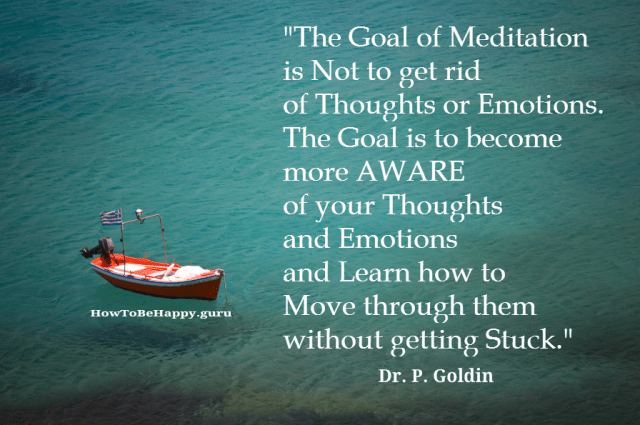
Goal of meditation


If you have ever tried to meditate, everything tries to intrude on your quiet space: the noises of people and equipment; shopping lists for later; and memories from the past. You name it, and it will come to mind.

In the West, we think this means that we’ve failed to meditate properly. That is because we think our minds should be empty. So, when a thought impinges on our consciousness, we become obsessed.

A simple technique to overcome this tendency  is to view each thought as a boat on a river. Watch it go by, without jumping into the water and trying to swim towards it. I’ve written about this before here. But it bears repeating:


Staring

We’re taught from any early age that it’s rude to stare, and yet that is probably the best way to “see”. Have you ever watched someone looking into the ‘middle space’? They’re there in body, but not in spirit. They’re somewhere else.


gaze+to+look+at+someone+or+something+for+a+long+time,+giving+it+all+your+attention,+often+without+realizing+you+are+doing+so+ᅳsynonym+stare.


Carlos Castaneda was taught by Don Juan that in order to catch sight of spiritual entities, he had to stare straight ahead, without seeing, and then become aware of energy in his peripheral vision.

We need to do the same. So, the next time you need to work something out, don’t focus on it: look somewhere else, and the answer will come to you, seemingly unbidden.


Posted in personal, spirituality | Tagged , , , , | Leave a comment