Josephus: Jewish-Born Roman Myth-Maker

Titus Flavius Josephus (37 – 100 AD)

If you’re going to ensure that your life improves after being captured by your enemy, you need to embrace your new family as if God had foreordained their victory over you and your countrymen. That’s what Yōsef ben Matiṯyāhu did in 67 AD. (And just to state out loud one interesting echo: Jesus’ uncle (brother of Mary) is named Joseph of Arimathea, in the Gospels. Is this ‘proof’ of Josephus being their author? Maybe…)

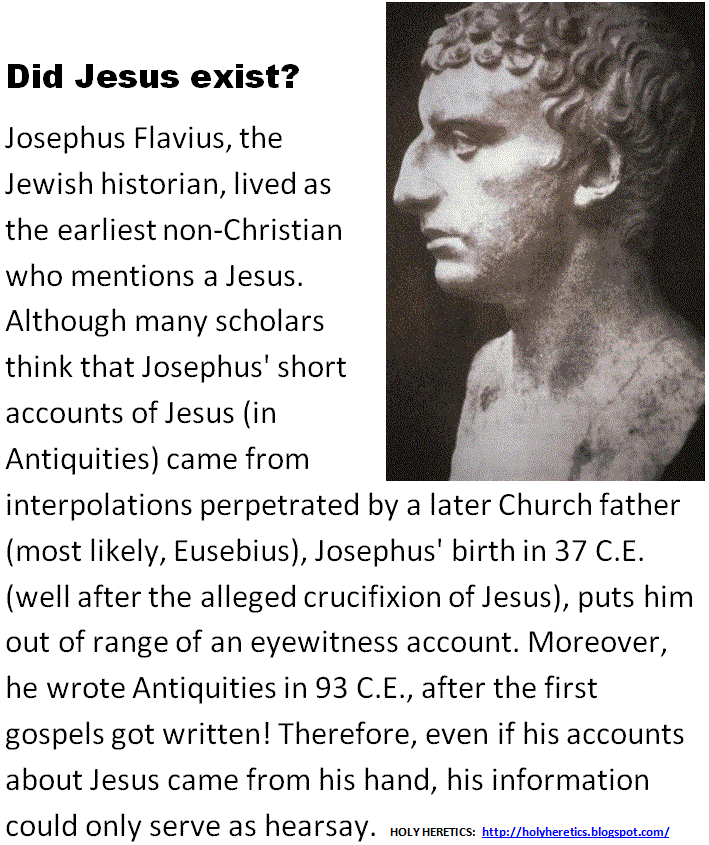
Because his birth details are unknown, it could be said that he is as untraceable as Jesus, on the world stage of 1st century Palestine and Rome. If he hadn’t written so much, would we even know about him? That’s the same paradox as the search for Jesus. Maybe Josephus is a myth created by Roman writers. Who really knows?

The discovery of the Flavian invention of Christianity creates a new understanding of the entire first century C.E. Such a revelation is disorienting, and the reader will find the following points useful in understanding the new history that this work presents.

• Christianity did not originate among the lower classes in Judea. It was a creation of a Roman imperial family, the Flavians.

• The Gospels were not written by the followers of a Jewish Messiah but by the intellectual circle surrounding the three Flavian emperors: Vespasian and his two sons, Titus and Domitian.

• The  Gospels  were written following the 66–73 C.E. war between the Romans and the Jews, and many of the events of Jesus’ ministry are satirical depictions of events from that war.

• The  purpose  of  Christianity was supersession.  It was designed to replace the nationalistic and militaristic messianic movement in Judea with a religion that was pacifistic and would accept Roman rule.

Caesar’s Messiah: The Roman Conspiracy to Invent Jesus: Flavian Signature Edition (p. 19). Kindle Edition.

“One of the individuals involved with the creation of the Gospels was the first-century historian Flavius Josephus, who, as he related it, led a fabulous life. He was born in 37 C.E. into the royal family of Judea, the Maccabees. Like Jesus, Josephus was a child prodigy who astounded his elders with his knowledge of Judaic law. Josephus also claimed to have been a member of each of the Jewish sects of his era, the Sadducees, the Pharisees, and the Essenes.”

Caesar’s Messiah: The Roman Conspiracy to Invent Jesus: Flavian Signature Edition (p. 21). Kindle Edition.

OK, now we’re getting somewhere. Josephus inserted himself into the story by having his experience (at age 14) of questioning the teachers about points of Jewish law become a description of Jesus at the Temple in Jerusalem at age 12. That’s mythos.

The next point of reference is the use of legendary individuals’ stories as a basis of Jesus’ life narrative:

Of these individuals, only Horus would have any ‘real’ properties to convince a skeptical Roman crowd, but Mithra would have run a very close second. (Christians would not have noticed the precedents/precedence.) Certainly, I have tackled this thorny issue before, especially in discussing the book “The Pagan Christ“. However, this does not diminish Jesus’ importance in the cosmic story, just our human curiosity.

I know it’s gilding the lily to suggest that Jesus and Horus are ‘identical’. Most of the problems with this stem from the need by modern Christians not to feel bamboozled.

The simple fact that Josephus may have been the source for the writers of the four Gospels is enough to finally set aside the problem of a Pagan Christ. Jesus’ life story may be a fabrication around his sayings, in order to give them context, but my instinct tells me that the message was clear, even if the myth-making was not.
Posted in history, spirituality | Tagged , , , , , , , , , , | 3 Comments

By Killing the Messenger, Can You Kill the Message?

Jesus and the Cosmic Christ

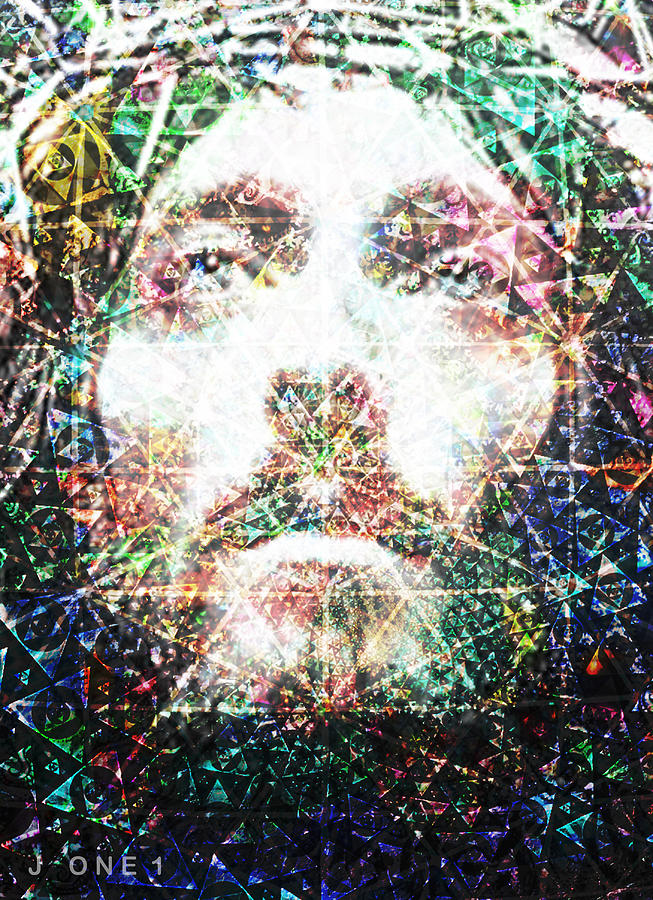
Image based on “Jesus of Nazareth”

Everyone wants their version of Jesus to be the ‘right’ one. If only it were that simple.

I have never really understood what Grace is, and so I asked Daniel to tell me something about this.

Daniel: Grace is a gift of love and healing from the highest level. God going the extra mile to meet us upon the road of life. We considered that we were living in a time of Grace, and we felt that this Grace centered around Jesus. He was the bringer of our Grace because many cosmic energies focused around him, and made possible breakthroughs in consciousness, and a transformation in the lives of those who came into his presence.

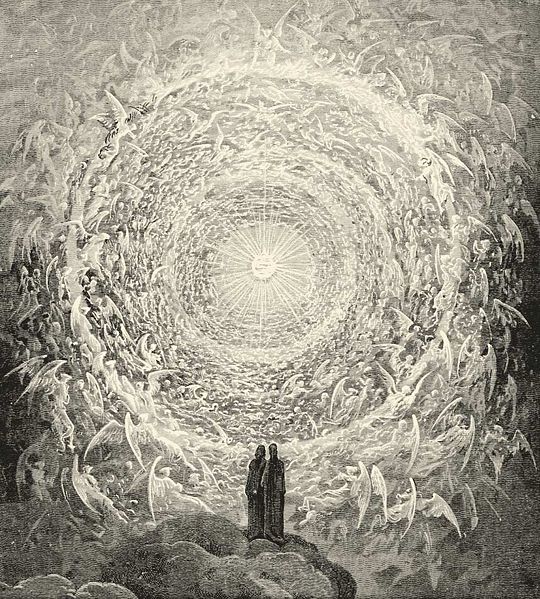
Some ones, who had sight upon very high levels, told me that when they looked at Jesus they did not see only his aura, they saw this vast vortex of cosmic energy whirling around him. They said it was like the layers of an onion, an infinite number of transparent layers of energy moving out and out into the universe. So that he was the center of all things, the center not only of our drama but the whole drama of the planet. He was the center of all things, and forces were gathered around him that made many things possible. Others who were attuned to the higher reaches of the angelic realm said that around Jesus they sensed the presence of very high angels.

He was the bringer of Grace – who else could be a focus for all these energies? And because all these energies were focused together we could move through our experience faster. It quickened everything. You could not be anywhere near him and not move more quickly along your path.

Joanna: Tell me more about this vortex of energy surrounding Jesus.

Daniel: We were aware that a whole vortex of cosmic energy revolved around Jesus, and that anyone who encountered him stepped into that vortex. That was really the miracle for us. Not that he did this or that remarkable healing, but that his whole being was a focus of cosmic energy, and thus he could bring profound changes into the lives of all those he met who could accept these energies.

As his work flowered he became more a timeless being, talking about timeless things which would be relevant in any age. Time did not touch him, he escaped from time and that was part of his work and part of his gift. But we knew that in the end time might dilute and distort the message he came to bring. Once the Teacher is no longer physically present, the Teaching may become changed and weakened. What needs to go forward is the essential message that Jesus was trying to convey: unconditional love working through the heart, and the surrendering of the will to the Divine Presence within.

The more one surrenders one’s will to the Divine Presence, the more one merges with that Presence which is within every human being, the more the path opens and the way becomes clear and straight. Then one can go forward and rise in consciousness and ascend into new frequencies of being. All of this was what Jesus was trying to teach his disciples and the groups around him. He was trying to teach this but many did not want to hear this message, and would much rather have rigid structures. The inner truth is of the Spirit and lives, and anything which is of the letter has its day, flowers and is gone.

Remember always that Jesus lived in a difficult and troubled time. Many people were frightened, and in their fear they clung to the comforting thought of a strong Father who would protect them. They preferred a strong external perception of Deity, a strong Father rather than the Divine Presence within. They saw the within as weak, and the external forces as strong and threatening. Jesus came to show them how strong the Divine Presence could be. How it could burn like a great Light within him and illumine the lives of all those around him, but many in their fear were not able to see this.

He was offering them a chance to step out of the child state and become fully adult in the spiritual sense, but this step was too much for them. They wished to be the powerless children of a loving Father for a little while longer. You know, he never blamed them for that. He used to say that we should have faith in the ability of every human being to awaken at exactly the right time, like a flower which opens in its due season. If we choose to awaken and become spiritually adult we can become creators with God, but many were not ready for that. They wished to slumber a little longer, to be the passive children of creation, walking hand in hand with the Father but unwilling to share in Divine knowledge and Divine power.

Joanna: And the vortex of energy around Jesus helped people to awaken at the right time?

Daniel: Yes. Because of all the vortex of power around Jesus he was able to pull people out of an obsession with the past and into the moment. When they were in his presence, the past disappeared. They realized that nothing was important but the moment, and that they were free to act within that moment. This was one of the gifts Jesus brought for many ones, the ability to focus and act in the present in a way they had never experienced before he came. If you can forgive completely the past disappears for you. If you forgive completely you don’t need to worry about the future either, you can function as fully aware beings, fully conscious beings, working and moving in the moment and focusing the energies of the Divine Presence.

Nothing else is important, nothing else will exist for you. That is why Jesus excited so many people, they could feel themselves being pulled out of time and into timelessness, out of the past into the everlasting present which is the only place in which you have power. The past and the future, if you are entangled with guilt or with worries and anxieties, rob you of your power. Only the present gives you power, and forgiveness is the key to ensuring you stay within that focus, expanding your awareness and living fully within the moment. This is living as God intended. This is joy, this is freedom – and this is what Jesus taught. This is the most wonderful gift which he gave to us.

We feel that this section was one of Daniel’s greatest gifts, too. It made us see the work of Jesus in a totally new light, and we realized that it is as much needed today as when he taught this wisdom two thousand years ago. Somehow in these words of Daniel all the dead weight of centuries of dogma and doctrine fell away, and the message – and the gift – of Jesus shone through.

Stuart Wilson. The Essenes: Children of the Light (Kindle Locations 1546-1586). Kindle Edition
Dante’s Paradise

There is a strong astrological and cosmic element to Jesus’ presence on Earth during the 1st century AD. But it has been drowned out by the voices of the Opposition. Do we throw out the baby with the bathwater, or do we simply accept that an individual named “Jesus” was born, lived, and died in Palestine during the Roman occupation? Straining to prove his existence by sifting through the New Testament and other pseudo-documentation can put the meaning of his message in jeopardy. Hopefully the passage I quoted above brings it all back into sharp focus for you.

Orion

Posted in history, spirituality | Tagged , , , , , , , , | Leave a comment

What Happened When a Revolution was “Stolen”

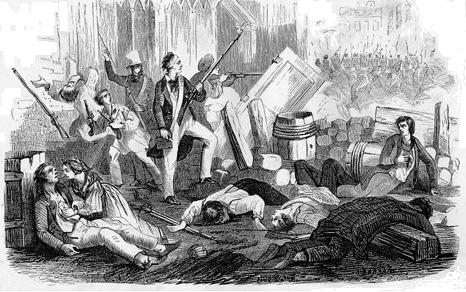
June Rebellion (June 5-6, 1832)

Courtesy of Wikipedia

Paris is a hotbed of rebellion: always was; always will be. The French Republic took more than 45 years to finally settle into the permanent version we know today. This skirmish was romanticized in the Victor Hugo book, Les Misérables.

The republicans were led by secret societies formed of the most determined and ferocious members of their movement. These groups planned to provoke riots similar to those that had led to the 1830 July Revolution against the ministers of Charles X. The “Society of the Rights of Man” was one of the most instrumental. It was organized like an army, divided into sections of twenty members each (to evade the law that forbade the association of more than twenty persons), with a president and vice president for each section.

The republican conspirators made their move at the public funeral of General Lamarque on 5 June. Groups of demonstrators took charge of the cortege and redirected it to the Place de la Bastille, where the Revolution had begun in 1789.

Parisian workers and local youth were reinforced by Polish, Italian and German refugees, who had fled to Paris in the aftermath of crackdowns on republican and nationalist activities in their various homelands. They gathered around the catafalque on which the body rested. Speeches were made about Lamarque’s support for Polish and Italian liberty, of which he had been a strong advocate in the months before his death. When a red flag bearing the words La Liberté ou la Mort (“Liberty or Death“) was raised, the crowd broke into disorder and shots were exchanged with government troops. The Marquis de Lafayette, who had given a speech in praise of Lamarque, called for calm, but the outbreak spread.

The subsequent uprising put the roughly 3,000 insurgents in control of much of the eastern and central districts of Paris, between Chatelet, the Arsenal and the Faubourg Saint-Antoine, for one night. Cries were heard that the rioters would sup at the Tuileries Palace that evening. However, the rebellion failed to spread further.

During the night of 5–6 June the 20,000 part-time militia of the Paris National Guard were reinforced by about 40,000 regular army troops under the command of the Comte de Lobau. This force occupied the peripheral districts of the capital.

The insurgents made their stronghold in the Faubourg Saint-Martin, in the historic city center. They built barricades in the narrow streets around rue Saint-Martin and rue Saint-Denis.

On the morning of 6 June the last rebels were surrounded at the intersection of rues Saint-Martin and Saint-Merry. At this point Louis-Philippe decided to show himself in the streets to confirm that he was still in control of the capital. Returning to Paris from Saint-Cloud, he met his ministers and generals at the Tuileries and declared a state of siege, then rode through the area of the rising, to the applause of the troops.

The final struggle came at the Cloître Saint-Merry, where fighting continued until the early evening of 6 June. Total casualties in the rising were about 800. The army and national guard lost 73 killed and 344 wounded; on the insurgent side there were 93 killed and 291 wounded. The forces of the insurrection were spent.

Insurrections (from Wikipedia)

I have set the time for 12:00 noon as this would have been the hour when the funeral procession started. There are three inconjuncts, only one of which is dependent on the time being correct. That conjunction between the Moon and the Ascendant in Virgo is significant, too. These kinds of events don’t happen if the people aren’t behind them.

Moon Inconjunct Pluto

This aspect means that your emotions are very intense and not always easy to deal with. Often your feelings make you want to do or say something without knowing why. Also you may have very intense moods in which you withdraw from those around you into a world of your own. This should not be a very serious problem unless you have been brought up to have all sorts of fears and worries. In that case your actions will be driven by your fears, and you may behave quite strangely. If you do not feel accepted and emotionally supported at home, you may constantly feel guilty for what you think you have done to others, or jealous that people aren’t paying enough attention to you, or generally possessive of those around you.

Saturn Inconjunct Pluto

If either of these planets is close o conjunction or opposition with the Ascendant or Midheaven, its effects can be quite strong. It signifies a feeling that you must work extremely hard merely to keep your life running smoothly on a day-to-day level. Often this aspect is associated with quite a bit of tension, especially in your muscles, but also in your emotional approach to life. You need to learn that the world is not always a place of struggle and that occasionally it is good to let go and relax. If your home life has been harsh or difficult, it will bring out the worst side of this aspect, and in time you will develop a cynical attitude toward the world in general. You will become intolerant of your own and others’ weaknesses, and you will take advantage of every opportunity, even if it means hurting someone else. But this is likely to happen only if you have not been given a reasonable break or if you haven’t been allowed to be a child, to be weak and make mistakes.

Uranus Inconjunct Ascendant

Your need to be free and do what you want is often in conflict with what others require of you and even with what you feel you ought to do. Sometimes this conflict can cause considerable physical and emotional tension. The task you face is to organize your life in a disciplined way that will enable you to satisfy your need for freedom through your everyday activities. One way to accomplish this is by figuring out your own methods of doing your work. Or your may choose to do the most interesting and exciting tasks, which are often the most difficult, so that others shy away from them. You need to be challenged by puzzles and problems in all your activities. You are not good at routines and repetitious tasks.

Conclusion

The parallels that run between this historical event and the ‘insurrection’ of January 6, 2021 in Washington, D.C. are many. So, the government of the United States of America must keep on its (national) guard or the Republic may end up as some other format.

Posted in history, paranoia | Tagged , , , , , | Leave a comment

What Really Happened to Jesus After the Crucifixion?

Chapter 24: The Empty Tomb

Cover courtesy of Amazon.ca

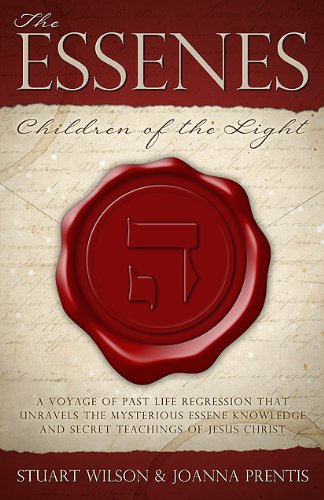
So there was a Passover Plot after all! Through the magic of hypnotic regression, we have been allowed to know what really happened, as described in this book.

Eyewitness accounts of the secrets of the mystery school of the Essenes at Qumran; and Jesus’ and Joseph of Arimathea’s connection with the Essenes. The information was gained through regressive hypnosis, conducted by Joanna Prentis.

Amazon.ca

(To simplify matters, I shall be quoting part of the chapter here..).

In the Interlife sessions with Daniel we were able to get more information on the events surrounding the crucifixion. I began by asking Daniel if he had investigated the drama around the crucifixion after his own death.

Daniel: Of course! The first question I asked when I woke up in the Interlife was, “What happened to Jesus? ” I remember they laughed, the ones assigned to help me. They said, “All the Essenes are asking us this! Be patient, you will know soon enough. ” And indeed through the Angelic Record I was able to review it all.

After Jesus was taken down from the cross it was clear that he was far out of his body, for he did not move at all. I saw him being placed in the tomb, and the great stone being rolled across the entrance. Then I saw the Light around Jesus increase greatly. One part of that Light rose and ascended into the heavens, but the other part continued to focus around the body.

Then I learned how well the core group had prepared for it all. His tomb wasn’t really a tomb at all, but a healing chamber. If it was widely known that he had survived, there would have been many out looking for him, and not with good intent. So what appeared to be a tomb was a chamber into which healers could enter to do their healing.

Joanna: But surely the entrance to the tomb was sealed with a large stone and there were soldiers guarding it. How could anyone have got into the tomb to do the healing?

Daniel: (with a chuckle) More easily than you might think! The Essenes had constructed a tunnel leading from the back of the tomb and running some distance underground to Joseph’s house which was nearby. It was cut through the rock for a little way and then sloped down into the earth. One could walk along this tunnel, not at full height but stooping a little. It went through the earth, and then led up into a space behind the tomb. The door into the tomb was cleverly made of thick wood, but the outer side of it, which would be visible to anyone standing inside the tomb, was treated so that it looked like rock.

The door fitted into slots so that as you went down the tunnel towards the tomb the door had to be lifted up in these slots, and then it could be pulled out and laid on one side. You could then crawl through a hole into the tomb itself. So even if someone stood inside the tomb with the door in place, they would see only rock.

The door and the tunnel were skillfully done, but remember that much time was available to prepare the tomb. We knew the Teacher would come, and would go through a ritual death experience, so the need for the tomb to act as a healing chamber was clear from the beginning. Under the direction of the Kaloo and the core group our people simply worked towards that need. It was a secret operation, of course. All the work had to be done most secretly, and very few even of the Essene Brotherhood knew about it. Certainly whilst I was living I heard no whisper of it. It must have been the most secret project in the whole of our land.

Stuart Wilson. The Essenes: Children of the Light (Kindle Locations 1396-1416). Kindle Edition.

Now, on its own, this sounds like a fantasy. But I also read here about the Essenes not being allowed to ‘distant view’ the events in the tomb, because it had to remain a secret.

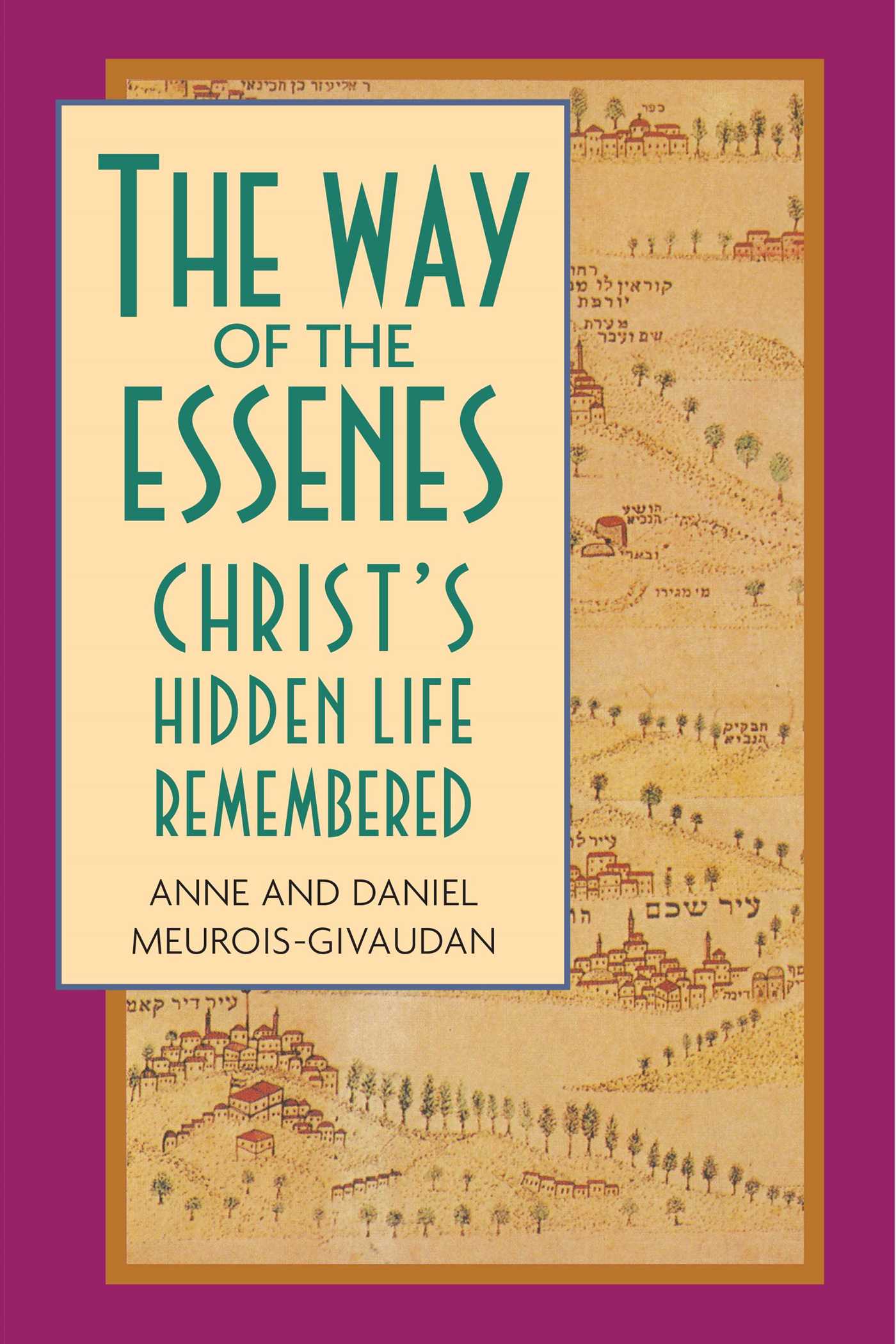
Two thousand years after the fact, new light is shed on Christ’s hidden life as an initiate in the mystical society of the Essene Brotherhood. In the first English-language edition of the European bestseller, Anne and Daniel Meurois-Givaudan describe the way of life in the Essene communities of first-century Palestine. Through direct revelation, the authors received–over a two-year period–detailed knowledge of the Essene teachings and their role in preparing Christ for his mission. At once unpretentious and astonishing, this beautifully written and evocative story lucidly recreates the life and personality of Christ and his role in the spiritual development of humankind.

Since the discovery of the Dead Sea Scrolls, questions continue to arise as to the identity of the Essenes and what role they might have played in the life of Jesus. This account complements the gospels, clarifying and enlarging upon mysterious parts of the record–including Christ’s mystical and metaphysical teachings of Essene techniques for spiritual advancement. The authors’ retelling of the Passion of Christ and its aftermath is an extraordinary account that may forever reshape our understanding of these biblical events.

Synopsis (from Abebooks.com)

So, just to be clear, if two different books using two different methods of reviewing the Akashic Records say essentially the same thing, I am most likely to believe them.

Amen, again.

Posted in history, spirituality | Tagged , , , , , , | 1 Comment

Farce: Did the Disciples Mistake Lazarus’ for Jesus’?

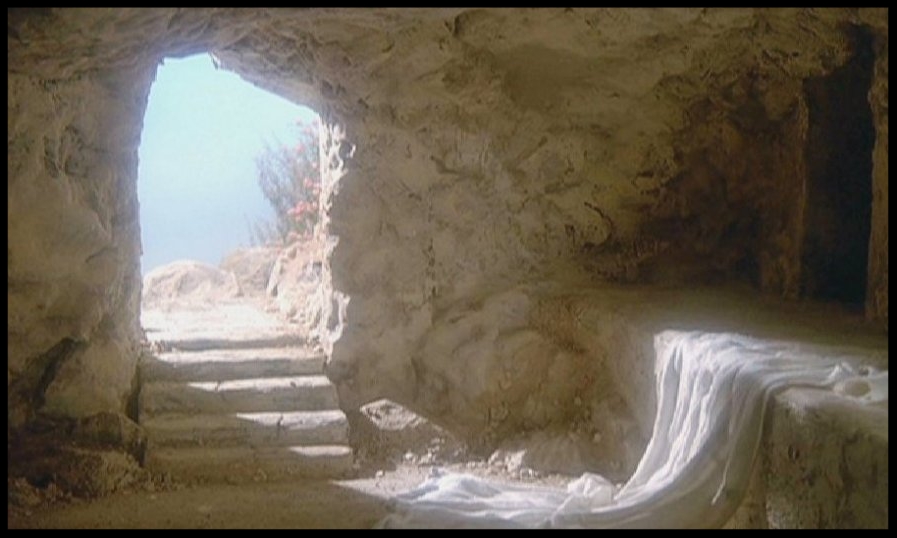
The Empty Tomb

As General Frederick “Boy” Browning said: “Well, as you know, I always felt we tried to go a bridge too far.” And I think the same thing about the author of “Caesar’s Messiah”.

It is thus possible to create a combined story out of the four different versions of the first visit to Jesus’ tomb that has a different meaning than the individual versions and is without contradiction. None of the statements of fact that make up its story line contradict any other within the combined story. The combined story is logical, whereas the different versions are contradictory. The authors’ ingeniousness deserves note. Their puzzle is constructed so that readers who are illogical will believe that the passages indicate that Jesus rose from the dead, while those who are logical will see the passages as a comedy of errors.

Caesar’s Messiah: The Roman Conspiracy to Invent Jesus: Flavian Signature Edition (p. 203). Kindle Edition.

His reasoning is that the original Greek versions of the four Gospels show a time sequence based on the position of the sun. Here’s his recounting of it:

“Below are the related passages in the original Greek with their English translations.

“John 20:1 | th de {But on the} mia {first [day]} twn {of the} sabbatwn {week} maria {Mary} h {the} magdalhnh {Magdalene} ercetai {comes} prwi {early} skotiaV {dark} eti {still} oushV {it being} eiV {to} to {the} mnhmeion {tomb} kai {and} blepei {sees} ton {the} liqon {stone} hrmenon {taken away} ek {from} tou {the} mnhmeiou {tomb}.

“Matthew 28:1 | oye de {Now late} sabbatwn th {on sabbath,} epifwskoush {as the sun was dawning}

“Mark 16:2 | kai {and} lian {extremely} prwi {early in the morning} thV {on the} miaV {first day} sabbatwn{of the week} ercontai {they come} epi {to} to {the} mnhmeion {tomb,} anateilantoV {having risen} tou {the} hliou {sun}.

“Luke 24:1 | th de {But on the} mia {first [day]} twn {of the} sabbatwn orqrou {week} baqeoV {early in the morning} hlqon {they came} epi {to} to {the} mnhma {tomb}.”

Caesar’s Messiah: The Roman Conspiracy to Invent Jesus: Flavian Signature Edition (pp.191-2). Kindle Edition.

Because Lazarus was ‘raised from the dead’ only one week earlier, the author thinks that Mary Magdalene came to a tomb in the dark and wondered why the stone blocking the entrance was rolled away. From that moment on, it reads like a French farce.

The fact that Mary Magdalene is described as being in the dark not only establishes that this is the beginning of the combined story, it is also the start of the lampoon. In the dark, Mary sees a tomb that has had its stone moved away. Of course, in the dark it is easy to make a mistake about whose tomb it is, especially if there is another tomb close by that also has had its stone rolled away. In fact, the Gospel of John describes just such a tomb. The tomb of Lazarus. ‘Then Jesus, deeply moved again, came to the tomb; it was a cave, and a stone lay upon it. Jesus said, “Take away the stone.”’ John 11:38–39

Caesar’s Messiah: The Roman Conspiracy to Invent Jesus: Flavian Signature Edition (p. 192). Kindle Edition.

Okay, I think that’s enough foolishness for now. The contradictions of the four versions of the Resurrection have always made me wonder why they didn’t agree on the details. To some that was proof that the differences were due to individual points-of view. But if Josephus wrote the whole sequence to make fun of the disciples and then split the narrative equally among the four Gospels to hide the fact, he very much succeeded. Christianity, which had already started the moment Jesus was resurrected, became a Roman conscript to pay homage to their new Messiah, Titus, conqueror of Judea.

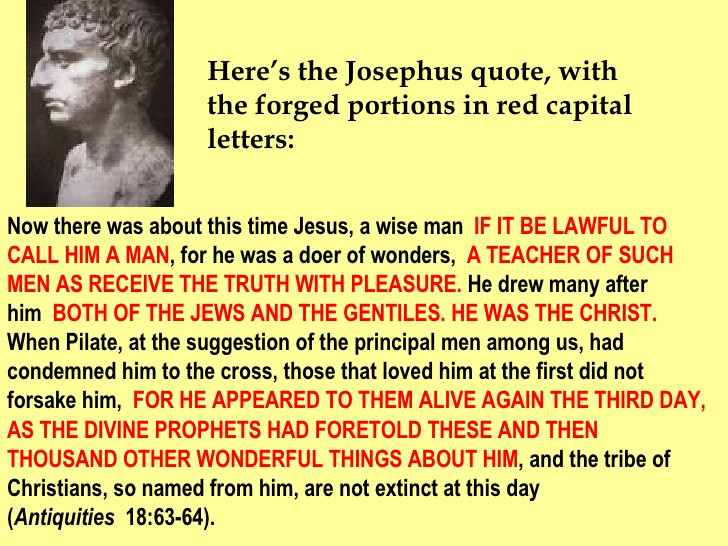
I have already questioned this fact in “The Star of Bethlehem”. And now I think this shows it clearly enough: “…Christians, so named for him, are not extinct at this day…”

Amen.

Posted in history, spirituality | Tagged , , , , , , , , , | Leave a comment

“He Whom God Shall Make Manifest”

Baháʼu’lláh (November 12, 1817 – May 29, 1892)

An ongoing discussion has been taking place between myself and someone who thinks he is the reincarnation of Jesus. This gets us into very interesting territory, as you can imagine. If you compare their birth charts, which I won’t do here, there are several connections. And yet, I still have my doubts.

Today I looked at a list on Wikipedia of people who were claimed to be Jesus reincarnated: It’s a long list. Some are self-proclaimed, others are thought to be so by their followers. This man, pictured above, stood out from the crowd.

The timing is rectified to his first marriage at 18 (Venus) and his hearing about the Bab at 27 (Mercury). There is one inconjunct only, which is not dependent on a correct time.

Venus Inconjunct Pluto

With this aspect you must learn a great deal about the kinds of friends you want and the kinds of experiences you will have through other people. Even while you are still young, you may meet persons who are quite difficult to get along with, but who seem to be impossible to get away from, even when you want to. You may be fascinated by such persons, or circumstances may force you to stay with them. These people do have a definite role to play in your life, but it may not always be a pleasant one. They will teach you something about life or about yourself.

At the age of 27, Baháʼu’lláh converted to the Babi faith after receiving a letter from the Báb, through Mulla Husayn. The Báb, was a Persian merchant who began preaching that God would soon send a new prophet similar to Moses, Jesus, or Muhammad. He and thousands of his followers were executed by the Iranian authorities for their beliefs. Baháʼu’lláh faced exile from his native Iran, and in Baghdad in 1863 claimed to be the prophet the Báb foretold. Thus, Baháʼís regard Baháʼu’lláh as a Manifestation of God, fulfilling the eschatological expectations of Islam, Christianity, Zoroastrianism and other major religions.

Wikipedia

But is he a reincarnation of Jesus?

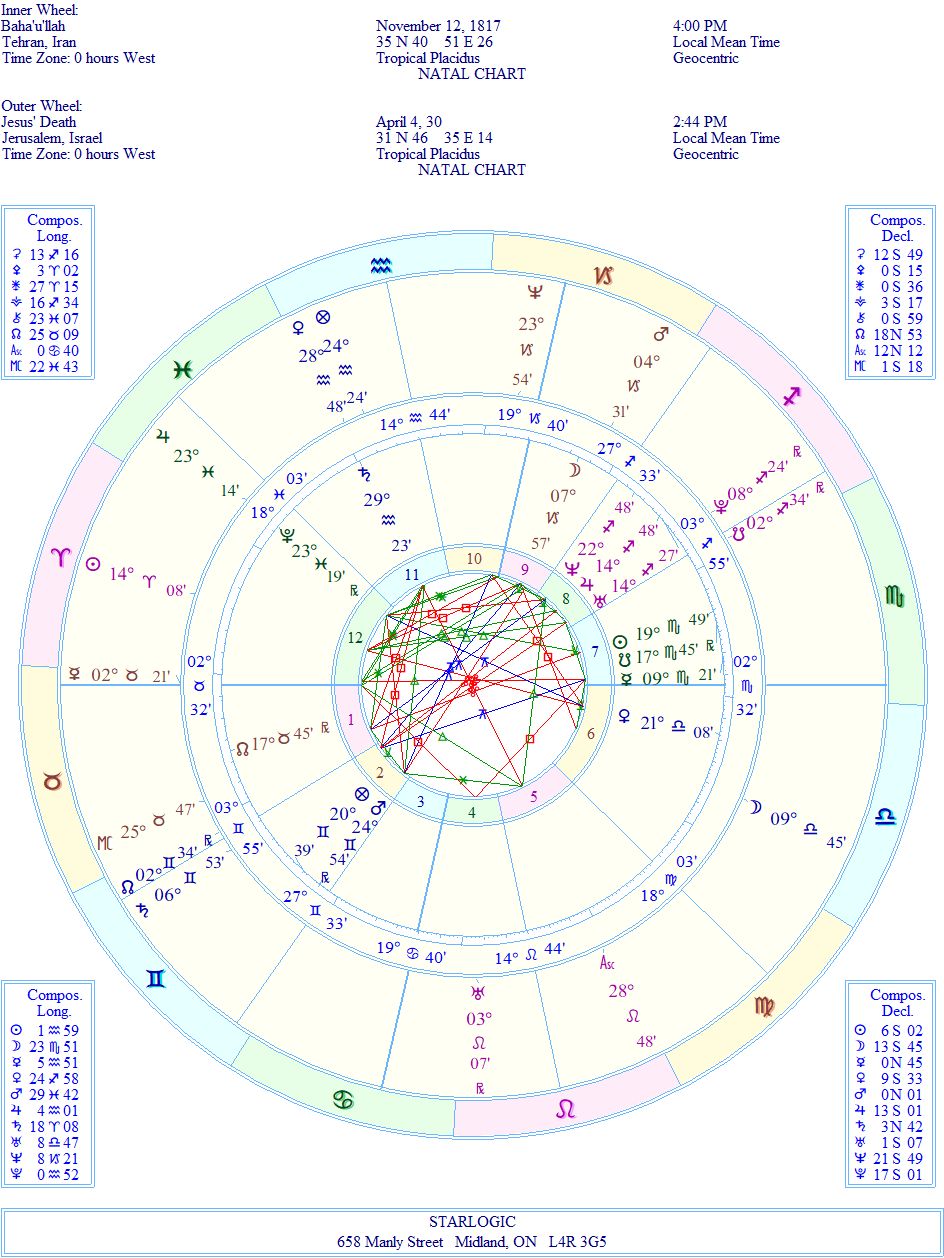
At first glance, the answer is “yes”. Especially powerful is the conjunction between Baháʼu’lláh’s Ascendant at 2 degrees Taurus and Jesus’ ‘fatal’ Mercury: the Word made flesh, as it were. Baháʼu’lláh’s Pluto is almost exactly conjunct Jesus’ ‘fatal’ Jupiter: the world-wide revelation of Jesus’ ministry. Finally, Baháʼu’lláh’s Saturn in Aquarius is within 1 degree of Jesus’ ‘fatal’ Venus: bringing Jesus’ Universal Love into existence.

Amen.

Posted in history, spirituality | Tagged , , , , , , , , | Leave a comment

When an Author Names a Character to Make a Point

Les Misérables: Cosette

Image courtesy of Wikipedia

It’s a very wee example of the irony that comes from the naming of characters in a story. Victor Hugo has an advantage over the rest of us: he was there during the Paris uprising. So, whether the characters are ‘real’ or made up is totally unknown.

Hugo does not give the narrator a name and allows the reader to identify the narrator with the novel’s author. The narrator occasionally injects himself into the narrative or reports facts outside the time of the narrative to emphasize that he is recounting historical events, not entirely fiction. He introduces his recounting of Waterloo with several paragraphs describing the narrator’s recent approach to the battlefield: “Last year (1861),on a beautiful May morning, a traveller, the person who is telling this story, was coming from Nivelles …” The narrator describes how “[a]n observer, a dreamer, the author of this book” during the 1832 street fighting was caught in crossfire: “All that he had to protect him from the bullets was the swell of the two half columns which separate the shops; he remained in this delicate situation for nearly half an hour.” At one point he apologizes for intruding—”The author of this book, who regrets the necessity of mentioning himself”—to ask the reader’s understanding when he describes “the Paris of his youth … as though it still existed.” This introduces a meditation on memories of past places that his contemporary readers would recognize as a self-portrait written from exile: “you have left a part of your heart, of your blood, of your soul, in those pavements.” He describes another occasion when a bullet shot “pierced a brass shaving-dish suspended … over a hairdresser’s shop. This pierced shaving-dish was still to be seen in 1848, in the Rue du Contrat-Social, at the corner of the pillars of the market.” As evidence of police double agents at the barricades, he writes: “The author of this book had in his hands, in 1848, the special report on this subject made to the Prefect of Police in 1832.”

The Narrator

My focus, today, is on the young child, Cosette, who grows into a young woman during this story.

Cosette (formally Euphrasie, also known as “the Lark”, Mademoiselle Lanoire, Ursula) – The illegitimate daughter of Fantine and Tholomyès. From approximately the age of three to the age of eight, she is beaten and forced to work as a drudge for the Thénardiers. After her mother Fantine dies, Valjean ransoms Cosette from the Thénardiers and cares for her as if she were his daughter. Nuns in a Paris convent educate her. She grows up to become very beautiful. She falls in love with Marius Pontmercy and marries him near the novel’s conclusion.

Wikipedia

When I first heard her name, I thought of “cosset’. The Mirriam-Webster dictionary defines ‘cosset’ as a pet lamb. So, if you extrapolate that word further, you can use it ironically as something pampered, or something abused. Considering what her life was like, until Jean Valjean rescues her, the second idea is the truth. After he rescues her, the first idea takes over. See what I mean?

Posted in showbusiness | Tagged , , , , , , , | Leave a comment

Satire: The Gospels as a “Jewish War” Prequel

Caesar’s Messiah (2005)

Courtesy of Amazon

I’ve always had this nagging feeling of unease when reading the stories of Jesus in the New Testament. I wrote of it before, preferring The Gospel of Thomas to the other ‘authorized’ gospels, even John’s. That a source document (Q) was used by the synoptic gospels (Matthew, Mark and Luke) seems obvious, with very few changes between them. But the idea that Josephus and his ‘Antiquities of the Jews‘ was that source document seems logical now that I’m reading “Caesar’s Messiah“. (The winners always get to write their version of the story, while the losers get to limp away and lick their wounds.) What happened to the Truth? It got buried in the desert along with the ‘other’ gospels, now considered Gnostic and pseudo. Did Christianity exist before the Gospels were written down? Of course, how else would Nero have had a scapegoat religion full of low-life followers to sacrifice in the Bread and Circus extravaganzas of his reign? That fire in Rome? Started by the Christians, of course. The new Roman Emperors starting with Vespasian, were newly converted Christians. Titus was his son.

It’s the use of the word Satire that gets stuck in my craw. If the Gospels were only meant to amuse the Flavian family, it’s a shame that they survived to the present day, because people now take every word as ‘gospel’. All except the Jews, of course, because they are made out to be the villains of the piece. And Jesus made a new religion, which was not his intention. Portraying Jesus as ‘not of this world’ makes him mythic from the very beginning. To be a pacifist in an ongoing struggle between the Jews and Romans seems to be misguided at best, utterly useless at worst. No wonder the early Christians were scathing of those who didn’t have Gnosis, the inner knowing that told truth from fiction.

Make no mistake: the New Testament is antisemitic. The Jews are painted in such a poor light that it’s no wonder that they reject Jesus as their true Messiah; this is propaganda at its most effective result. The QAnon effect in this day and age is testament to that fact.

“By their fruits ye shall know them…”

Posted in history, paranoia | Tagged , , , , , , , , , , | 2 Comments

It’s the Dawn of a Brand New Day

More Galleries | Tagged , , , , , | Leave a comment

How the “Son of Man” Became the Son of a God

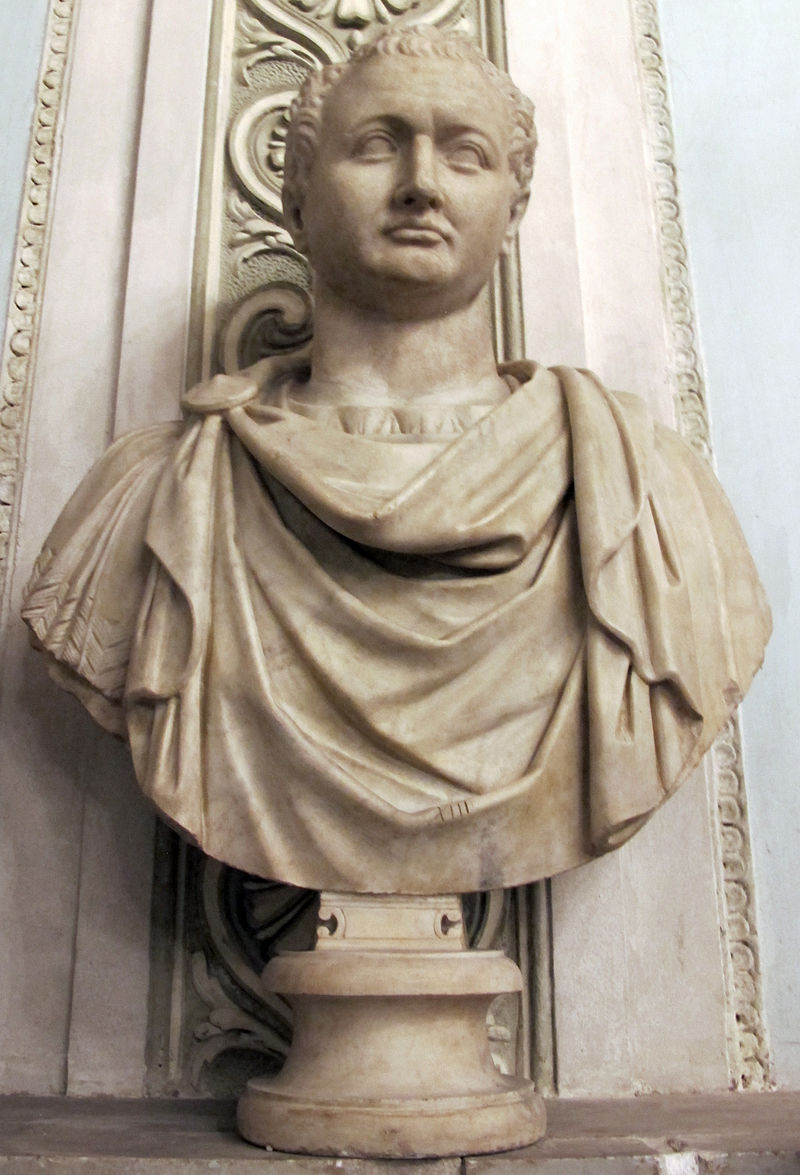
Titus (December 30, 39 AD – September 13, 81 AD)

Bust of Titus

Just when I thought I was done with Roman Emperors, another one makes me take notice. This is due to starting to read “Caesar’s Messiah” yesterday (and continuing today). This will cause some Christians distress, as the book essentially states that Jesus’ story is a fiction to create a new religion which shows Romans in a good light. Flavius Josephus may have fabricated the Gospels in order to backdate prophecies about Titus, and the destruction of the Jerusalem in 70 AD. So is there any validity to this tale?

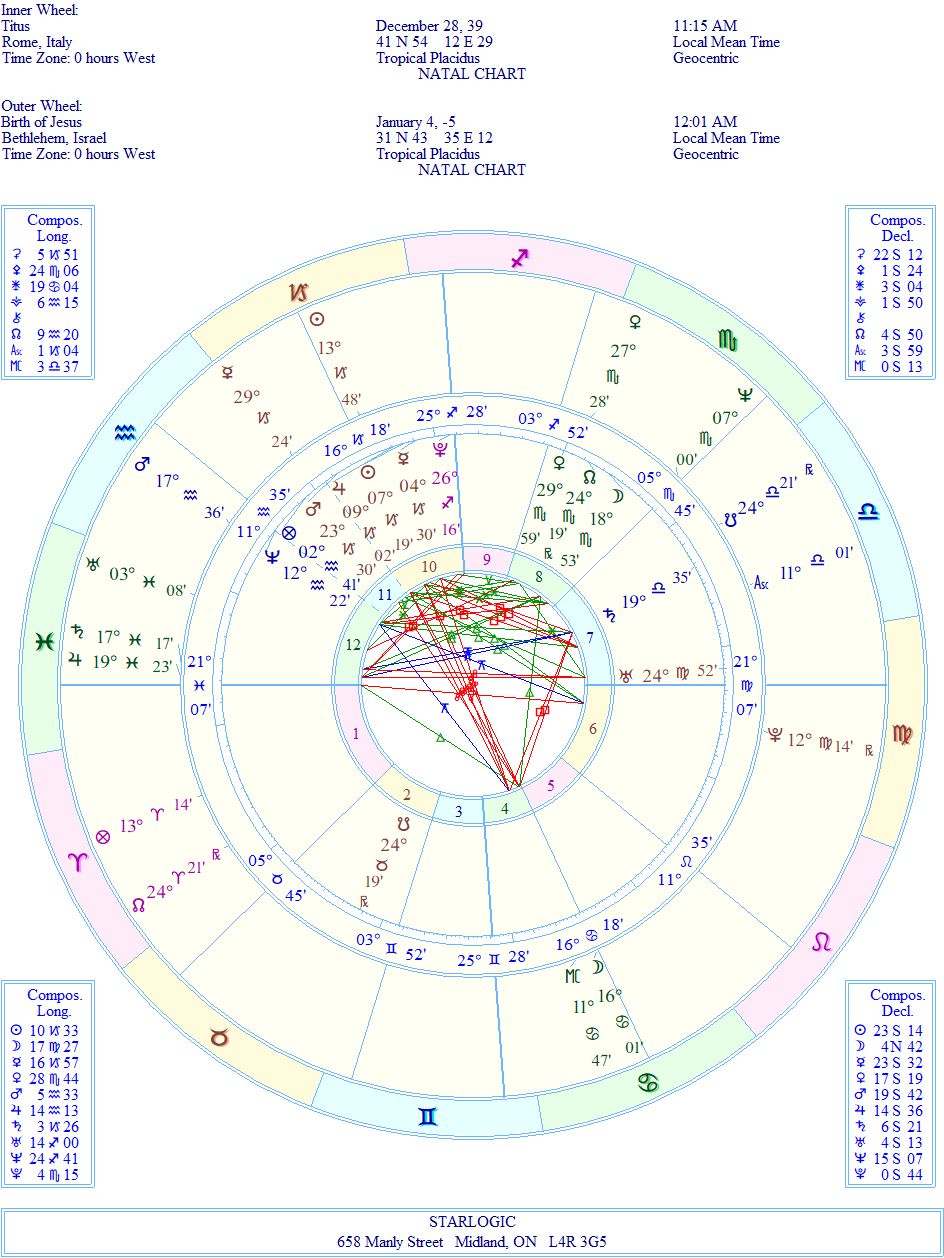
This chart is rectified to Titus’ coming to power as a Roman Emperor at age 40 (Saturn).

Saturn Inconjunct Ascendant

With this aspect you probably have a rather serious attitude toward life and other people. It may be quite difficult for you to simply go out and have a good time. You want to be serious and to spend all your time performing significant tasks. This attitude may have developed because you were discouraged from enjoying yourself when you were younger. You may have been made to feel that only work is important, that play serves no useful purpose.

On occasion this aspect indicates frail physical health, which can be corrected only by paying a great deal of attention to hygiene, personal health habits and proper diet. However, this aspect may also signify that you worry too much about your health. Try not to be so concerned about it unless a physician has diagnosed a definite problem.

You may find it rather difficult to express yourself to other people. This is another expression of your lack of self-confidence, which will change if you get positive emotional support from the people around you.

(Titus died within two years of his ascension to power in Rome.)

Was Jesus the invention of a Roman emperor? The author of this ground-breaking book believes he was. “Caesar’s Messiah” reveals the key to a new and revolutionary understanding of the origin of Christianity, explaining what is the New Testament, who is the real Jesus, and how Christ’s second coming already occurred. The clues leading to these startling conclusions are found in the writings of the first-century historian Flavius Josephus, whose “Wars of the Jews” is one of the only historical chronicles of this period. Closely comparing the work of Josephus with the New Testament Gospels, “Caesar’s Messiah” demonstrates that the Romans directed the writing of both. Their purpose: to offer a vision of a “peaceful Messiah” who would serve as an alternative to the revolutionary leaders who were rocking first-century Israel and threatening Rome. Similarly, “Caesar’s Messiah” will rock our understanding of Christian history as it reveals that Jesus was a fictional character portrayed in four Gospels written not by Christians but Romans. This Flavian Signature edition adds Atwill’s latest discoveries of numerous parallel events in sequence which ultimately reveal the identity of the true authors of the Gospels.

Amazon.ca

So, Was Jesus Just an Literary Invention?

Remember what I’ve written previously about being a front-row witness to Jesus’ life (and death)? Well, that hasn’t changed. And neither has Edgar Cayce’s reading of the Akashic Records. So, what exactly is going on here? Could there be something else in operation, like reincarnation?

The comparison of Titus’ birth chart with Jesus’ death chart shows a number of close links: Titus’ Ascendant and Jesus’ death Jupiter; Jesus’ death Mars with Titus’ Mercury; Jesus’ death Neptune with Titus’ Mars. This is indicative of reincarnation.

Comparing their birth charts also shows some links: both charts have Venus conjunct; Jesus’ Moon/Midheaven conjunction is part of a dynamic T-square with Titus’ Saturn and Jupiter, while Jesus’ Ascendant is magnifying that dynamic with a square to Titus’ Jupiter/Sun conjunction. Finally, Jesus’ Jupiter/Saturn (Star of Bethlehem) conjunction in Pisces is close to Titus’ Ascendant. I think we are on safe ground.

Mostly what this proves is that the Second Coming of Christ, as understood in 1st century Palestine, has already happened, and the expectations of Christians everywhere are based on a false narrative, perpetrated by the Roman Church over the last 2,000 years. Oh, dear…

Cicero was quoted by the author of this book:

We must persuade our citizens that the gods are the lords and rulers of all things and what is done, is done by their will and authority; and they are the great benefactors of men, and know who everyone is, and what he does, and what sins he commits, and what he intends to do, and with what piety he fulfills his religious duties. Cicero, The Laws, 2:15–16

Caesar’s Messiah: The Roman Conspiracy to Invent Jesus: Flavian Signature Edition (p. 42). Kindle Edition.

I should like to add this sharp reminder:

Posted in history, spirituality | Tagged , , , , , , , , , | 11 Comments